






Buying guides
Best Double Dog Leashes: Is a Two-Dog Leash Right for You?
A two dog leash works best for two dogs that already walk well on a loose leash, are similar in size and pace, and get along. Look for matching strength, an adjustable split and a shock-absorbing bungee section. It is the wrong tool for pullers, lungers or dogs that only tolerate each other. See our double dog leashes once your dogs pass that test.
By Matt GarnettUpdated November 14, 20264 min read2 sources
Is a coupler right for your two dogs
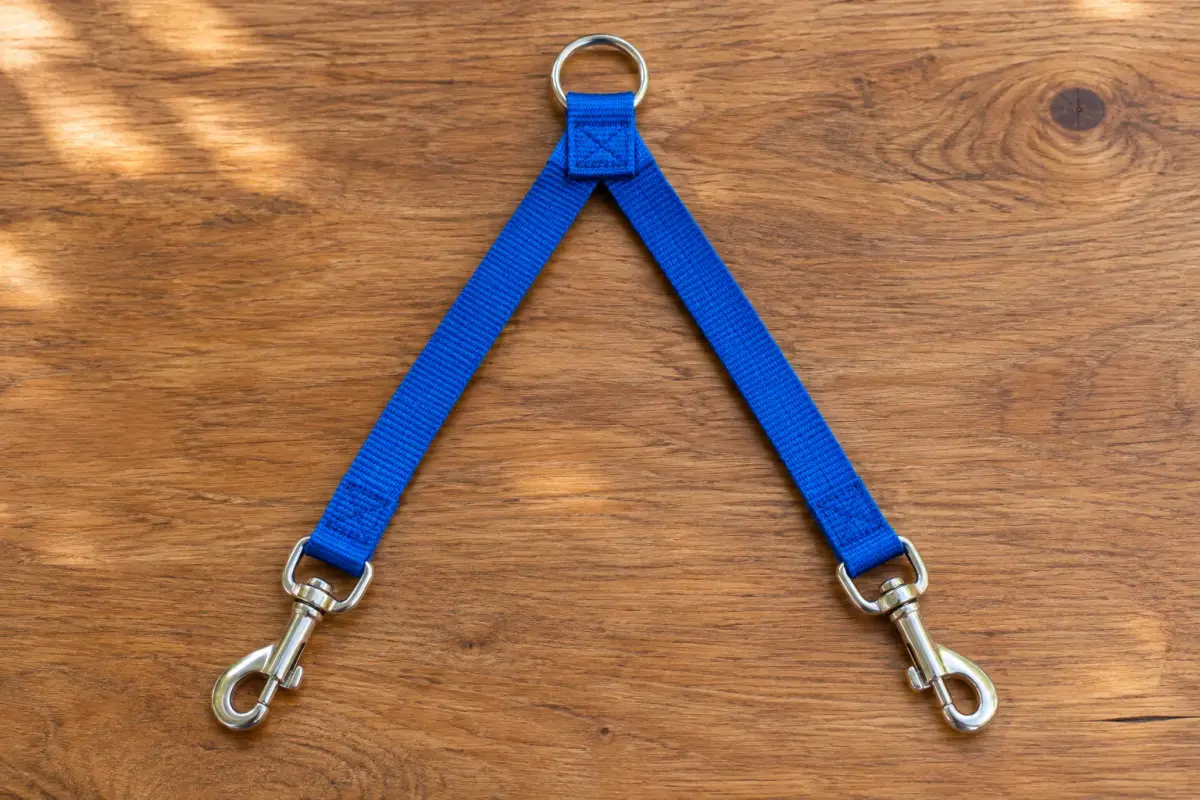
The American Kennel Club says double leashes are most appropriate for dogs that are already well trained and can walk on a loose leash. A coupler lets you hold one handle while the leash splits so each dog has its own section, which cuts down on two separate leashes crossing over each other.
It does not fix a walking problem, and it can make one worse. Dogs with different walking styles or goals can frustrate each other and the handler, and the AKC advises avoiding couplers with dogs that bark, lunge, growl, stare or snarl on walks, or that merely tolerate each other. Without the option to move away, they may fight.
Train each dog first
The AKC says each dog should have a solid loose-leash foundation before sharing a coupler: walking in any direction you choose, responding to cues the first time, focusing on you and keeping the leash loose at different paces. Walk each dog alone first and make sure each feels relaxed.
Pulling is the main danger. The AKC warns to use extreme caution with dogs that pull, even small ones, because handler injury is a risk, especially when two dogs pull in different directions. Keep up one-on-one walks as well, so you can watch each dog's posture and behavior and keep up their training.
Matching size, strength and length
Coupler leashes suit dogs of similar size and energy. A heavy-duty design suits large breeds and a lighter one suits small dogs, and some models let you adjust each side so that two dogs of different heights can walk comfortably. The AKC's advice for any pair is to match leashes in strength, length and material, with similar handles.
Check the hardware as well as the webbing. Swivel connectors let each section turn, and reflective tape helps in low light. For two large dogs, look at the stated strength before anything else. A double handle pull leash is another design to look at, so compare it with the split couplers.
Bungee, rope and tangle control
The AKC recommends bungee leashes for multiple dogs because they soften a sudden stop and reduce pulling, and bungee ends are meant to ease strain on your arm. An anti-tangle double lead with a bungee section is the type of design to compare on that feature.
Rope leads are another option. A no-tangle double rope lead and a braided double-ended rope lead for two dogs are both worth comparing. If leashes do tangle, stop and fix it before you move on. Avoid retractable leashes for multiple dogs, which the AKC says can tangle and cause injuries.
Alternatives: hands-free and separate leashes
A waist leash with a hook on each side keeps two dogs separated and leaves your hands free to guide them, and the AKC suggests it for walking multiple dogs. Two separate matching leashes are the simplest option if your dogs are different in size or pace, since each dog stays independent.
Harnesses are preferred over collars because they do not pressure the neck or trachea, and a no-pull front-clip harness can help a dog that pulls when it is fitted and used properly. Browse our dog leashes and dog harnesses to compare the walking gear for a pair.
Walking two dogs safely
Walk only as fast as your slowest dog, and start in a calm stationary spot before adding distractions. Do not move forward while the dogs are pulling or distracted; wait until everyone is together. Keep walks short and positive, ending before problems arise.
If you have more than two dogs, start with two and add the third later. An older, low-energy dog can take a shorter route home. If your dogs do not suit a coupler, ask a qualified trainer or your vet for advice, then see our double dog leashes for the options that fit.
Common questions
Are double dog leashes safe?
They can be for two dogs that already walk well on a loose leash and get along. The AKC warns against them for pullers, lungers or dogs that only tolerate each other, because there is no room to move away.
What is the best way to walk two dogs?
Train each dog to walk well alone first, match the leashes in strength and length, walk at the slowest dog's pace and stop to fix tangles. A hands-free waist leash is another option.
Can two different-sized dogs use a coupler?
Sometimes. Some couplers let you adjust each side's length for dogs of different heights, but the dogs need a similar pace and energy. If they differ a lot, separate leashes may suit better.
Do bungee leashes help with two dogs?
The AKC recommends bungee leashes because they simulate a slow stop and are less likely to trigger a pull back, and bungee ends can reduce strain on your arm.
Sources we checked
This guide is general information, not veterinary advice. If your pet is unwell or injured, contact your veterinarian.


