






Buying guides
Best Modern Cat Trees: Good-Looking Trees Cats Still Use
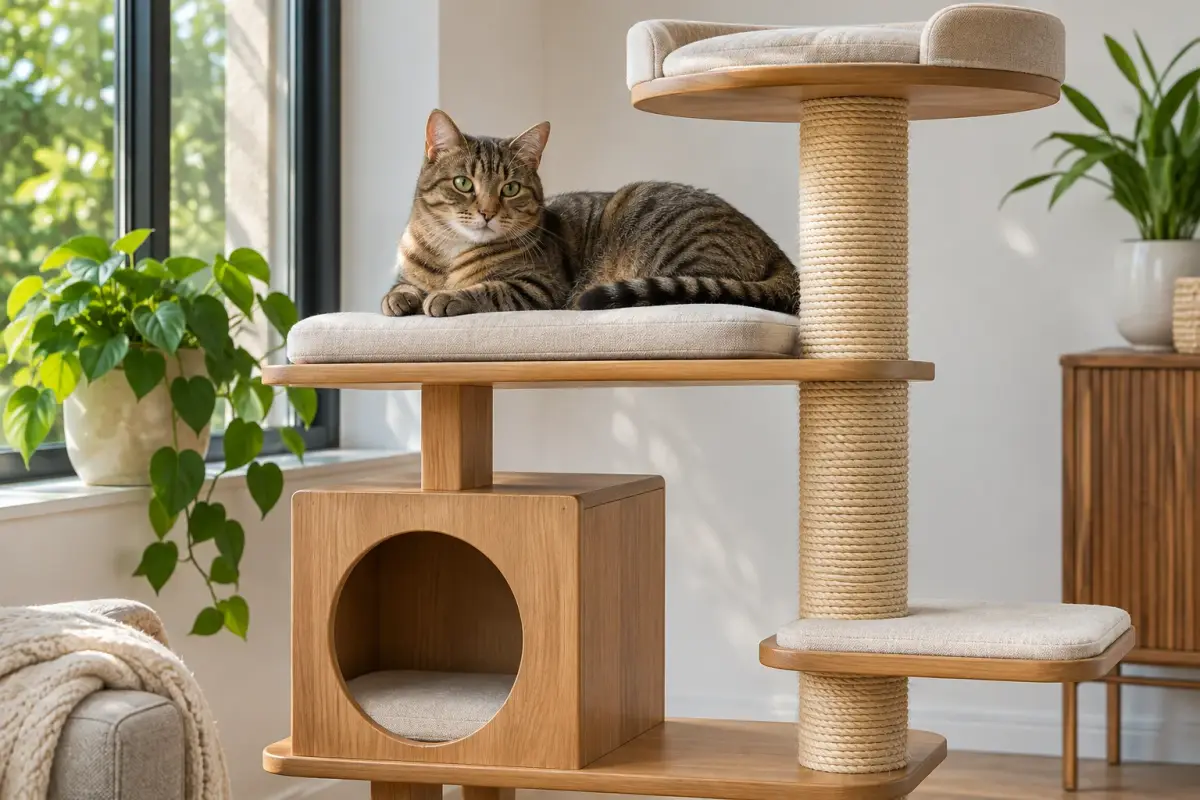
A good-looking cat tree still has to be a good cat tree: stable enough not to wobble when a cat leaps on it, with at least one tall sisal scratching post and perches wide enough to lie on. Modern designs use solid wood, plywood and neutral fabrics instead of carpet, which look better and often last longer. Check the base width, the perch size and how the sisal can be replaced.
By Matt GarnettUpdated November 14, 20264 min read2 sources
What matters most: stability, scratching and perches
Cats use a modern cat tree to climb, scratch, watch and sleep. VCA's guidance on enrichment for indoor cats stresses vertical space and scratching surfaces, and a tree that delivers both earns its place. Stability comes first: a tree that wobbles when your cat jumps on it will be avoided. Look for a heavy, wide base, thick posts and the option to anchor tall trees to a wall.
Scratching is next. Sisal rope or sisal fabric gives the shredding texture most cats prefer, and a vertical post should be tall enough for your cat to stretch full length. Perches come third: platforms and beds should be big enough for your cat to lie on, with raised edges for cats that like to curl.
Modern materials compared
Solid wood and plywood frames look like furniture, resist wobble and wipe clean. Many modern trees, such as a cattail weave cat tree with washable cushions, use felt, wool, faux sheepskin or removable cushions on the perches, which can be washed or replaced. Carpet-covered trees are cheaper but hold hair and odor and often look tired quickly.
Sisal is the best scratching material in any style; some modern designs use sisal sparingly for looks, so check there is enough. Replaceable sisal posts and pads keep a tree looking good for years. Metal frames with fabric hammocks suit minimal interiors but can be less stable for heavy cats.
Best style for each home and cat
For apartments, a slim, tall tree against a wall, or wall-mounted shelves and perches, saves floor space and gives vertical territory. For large cats such as Maine Coons, choose solid wood with wide perches and thick posts rated for heavy cats. For multi-cat homes, a tree with several perches at different heights reduces competition.
For senior cats, lower designs with ramps or steps between levels. For kittens, a smaller tree with sturdy toys and low perches. For style-focused homes, trees that look like plant stands or sculptures, such as a hand-woven water hyacinth tree, can work well, as long as they pass the wobble and scratch tests.
What to avoid
Avoid trees that look good but wobble, perches too small to lie on and designs with little or no sisal. Avoid trees with dangling string toys if your cat is unsupervised; VCA warns that swallowed string can tangle in the intestines. Avoid placing a tall tree where a fall would hit hard furniture.
If your cat stops climbing, hesitates before jumping or prefers low perches, that change may be pain, such as arthritis, and is worth a vet visit. Lower perches or steps can help an older cat keep using its tree.
How to choose size and placement
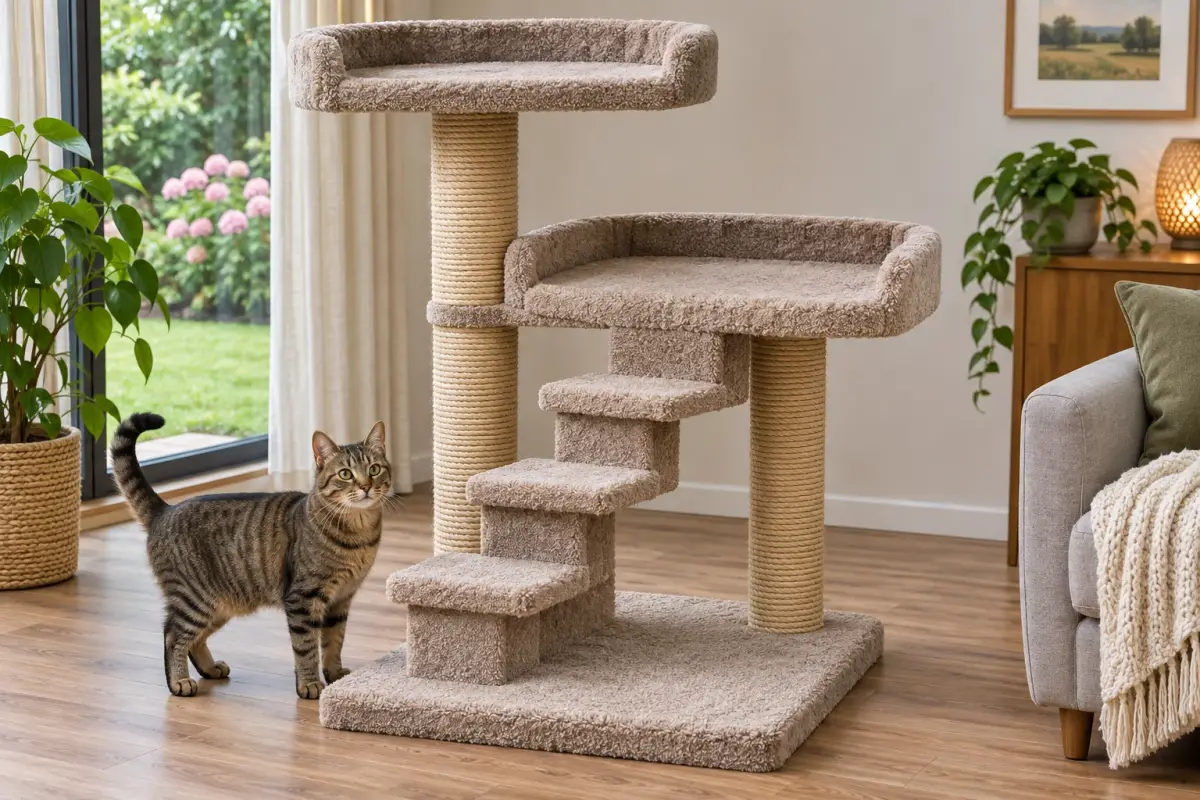
For an average cat, perches of at least 12 by 16 inches are comfortable; large cats need more. A scratching post should be at least as tall as your cat stretched upright, often 30 inches or more. Taller trees need wider bases or wall anchors.
Place the tree near a window, where cats can watch birds, or in a room where the family spends time. Cats like height and a view of the room. Moving an existing scratcher next to the new tree helps your cat transfer the habit.
Care and lifespan
Vacuum perches and wash removable cushions regularly. Tighten bolts every few months, since climbing loosens joints. Replace worn sisal before it is shredded through, which keeps the tree looking tidy and keeps scratching off your furniture.
A solid wood tree with replaceable parts can last many years; carpet trees usually need replacing sooner. A tree your cat actually uses is the best-looking tree in the house.
Watch where your cat actually scratches and naps in the first few weeks, and move the tree if it is being ignored. Larger homes and bigger cats can browse the full range of cat trees, or start with our cat tree buying guide.
Climbing furniture materials and removable pieces
| Component | Construction described | What to inspect |
|---|---|---|
| Wood or plywood frame | Rigid boards and posts | Connections and base stability |
| Cushioned perch | Fabric or padded surface on a platform | Whether the exact cover or cushion is removable |
| Carpet covering | Carpet fixed around the body | Hair retention and surface wear |
| Sisal post or pad | A separate scratching area | Coverage and replacement method |
| Metal frame with fabric | Metal supports a softer resting section | Frame joints and fabric attachment |
Common questions
Are modern cat trees as good as carpet ones?
Often better. Wood frames are sturdy and easy to clean, and washable cushions stay fresh. Check there is enough sisal and that the tree does not wobble.
What is the best cat tree for an apartment?
A slim, tall tree against a wall, or wall-mounted shelves, which give vertical space without taking much floor. Anchor tall trees for stability. Wall shelves can add climbing routes without a big footprint.
How tall should a cat tree be?
Tall enough for a full-length scratching stretch, often 30 inches or more, with height for a high perch near a window. Taller trees need wide bases or wall anchors.
What is the best cat tree for large cats?
A solid wood tree with thick posts, wide perches and a heavy base rated for heavy cats. Check perch sizes so a large cat can lie down fully.
Sources we checked
This guide is general information, not veterinary advice. If your pet is unwell or injured, contact your veterinarian.


