






Buying guides
Best Leather Dog Leash: How to Choose One That Lasts
The best leather dog leash is a standard 4 to 6 foot length with solid stitching, strong hardware and a width matched to your dog's size. Leather feels good in the hand and lasts, but it needs care and is not ideal for every dog. Browse our leather dog leashes once you know which build suits your walks.
By Matt GarnettUpdated November 14, 20264 min read2 sources
What matters most in a leather leash
Start with length. The AKC says standard flat leashes measure 4 to 6 feet and that many trainers recommend starting with a standard 4- to 6-foot leash for training. Leather leashes follow the same range, and a shorter length keeps a strong dog closer to you. Longer leashes make sense for open spaces, but a standard length is the safest default for everyday walks.
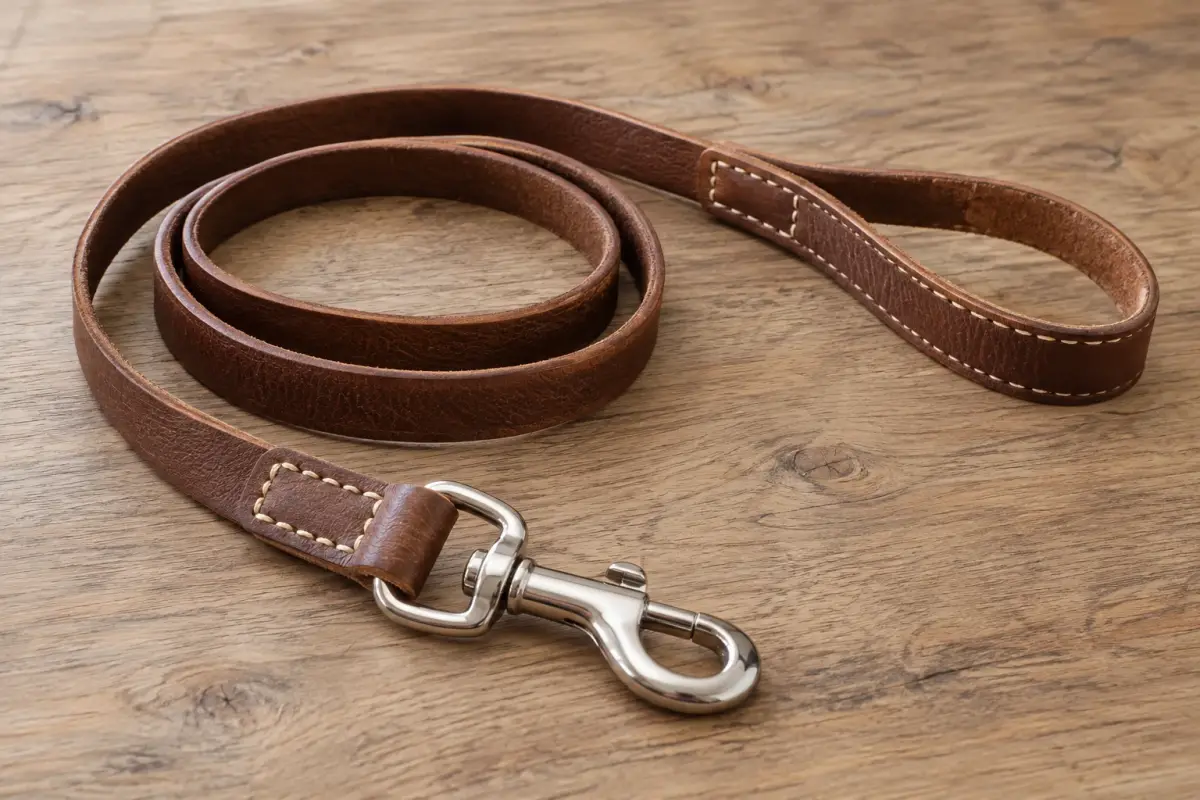
Next, check width and construction against your dog. The AKC says small dogs suit narrow, lightweight leashes that are easy to handle, while large dogs, dogs that pull and dogs still learning leash manners suit thicker, wider, heavier leashes. With leather, look at the stitching at the handle loop and clasp end, since that is where a leash fails first. Leather that feels supple but not flimsy, with even edges and no cracks, is a good sign.
Leather compared with nylon and other materials
The AKC describes nylon as durable, affordable, waterproof and easy to clean, while noting that some people prefer the feel and durability of leather. In its harness guidance, the AKC calls leather durable and long-lasting but more expensive, and says it needs regular care to prevent drying and cracking. In practice, that means leather rewards owners who will wipe it down and condition it.
If you walk in heavy rain or let your dog swim, nylon or another waterproof material is easier to live with, because the AKC says leather leashes should not be soaked. If you want a leash that softens over time and feels good in the hand, leather is worth it. A padded handle can also add comfort for a big dog; the AKC notes it can help prevent leash burn. See our rope dog leashes for another natural-feeling style.
Flat, braided and clasp styles
A flat leather lead is the classic and easiest to grip. A genuine leather dog lead is the simplest example of this shape. A braided or woven lead trades flatness for a rounder, thicker feel and can look more decorative; a handwoven leather dog lead with a brass clasp shows that style.
Hardware matters as much as leather. A solid metal clasp that opens smoothly and closes firmly is more important than a pretty finish, and a leather dog lead with a metal clasp is the type to look for. Some leads are designed to take strain from a puller, such as this pull-resistant leather leash, but no leash teaches a dog to walk politely, so pair any of them with training.
Best choice for each dog
For a small dog, pick a narrow, light leather lead so the weight of the clasp does not drag. For a medium or large dog, choose a wider, thicker lead with reinforced stitching at the handle. For a dog that pulls hard, the AKC recommends a thicker, wider, heavier leash, and our guide on how to stop a dog pulling on the leash covers the training that actually fixes it.
For a chewer, think twice. The AKC says chain leashes with a nylon or leather handle can help dogs that chew through fabric, which suggests a full leather lead may not be the right choice for a dog that mouths the leash. If your dog is happiest in a harness, a leather dog harness pairs naturally with a matching lead, and a leather dog collar completes the set.
What to avoid
Avoid leather that is stiff, cracked or peeling at the edges, stitching that looks loose, and hardware that wobbles. Avoid any leather leash with a rough finish that could rub your hands during a pull. Avoid using a thin decorative lead with a strong dog just because it looks good.
Keep a leather leash dry when you can. The AKC tells owners not to soak leather leashes. If a dog chews the leash, replace it rather than trusting a weakened section, and check the clasp and stitching each month. Never use a leash with visible damage near the handle or hardware.
Cleaning, conditioning and lifespan
The AKC says to wipe dirt from a leather leash with a damp, soft sponge and use a dog-safe leather conditioning cream to keep the material supple and prevent drying or cracking. Let it dry naturally, away from heaters, and hang it rather than leaving it in a damp car or bag.
Treat the leash as a long-term item, and check the handle loop, stitching and clasp regularly. Replace it when cracks reach the stitching, when the leather splits or when the clasp no longer closes firmly. For other styles and materials, compare our general dog leashes, or read the broader guide to the best dog leash.
Leather strap shapes and hardware
| Feature | Physical construction | Inspect before choosing |
|---|---|---|
| Flat strap | A flat leather body | Width,edges and thickness |
| Braided body | Leather woven into a thicker shape | Braid condition and joins |
| Padded handle | Additional layers at the grip | Padding placement and stitching |
| Clasp | A metal opening and closing attachment | Closure action,swivel and strap fixing |
Common questions
Are leather dog leashes better than nylon?
Neither is better in every case. Leather is durable and many owners like its feel, but needs care to avoid drying and cracking. Nylon is waterproof, affordable and easy to clean.
What length leather leash should I buy?
The AKC says standard leashes are 4 to 6 feet long, and many trainers recommend starting with that range for training. A standard length keeps your dog close and is easiest to control.
How do I clean a leather dog leash?
Wipe it with a damp, soft sponge and do not soak it, then use a dog-safe leather conditioning cream to keep it supple. Let it dry naturally rather than near direct heat.
Is a leather leash good for a dog that pulls?
A thicker, wider, heavier leash suits dogs that pull, according to the AKC. Leather can work if it is well stitched, but training is what fixes pulling, so use the leash alongside it.
Will my dog chew a leather leash?
Some dogs will. The AKC suggests chain leashes with a nylon or leather handle for dogs that chew through fabric, so a dog that mouths the leash may need a different style.
Sources we checked
This guide is general information, not veterinary advice. If your pet is unwell or injured, contact your veterinarian.


