






Buying guides
Best Dog-Proof Cat Feeding Stations: What Works
A dog-proof cat feeding station works by making the food reachable for your cat and not for your dog, using height, a cat-sized opening, or a feeder that opens only for your cat. The best choice depends on your cat's agility and your dog's size. Whatever you pick, set it where your cat feels safe and away from the litter box.
By Matt GarnettUpdated November 14, 20264 min read2 sources
Why dogs and cat food do not mix
Dogs love cat food because it is rich and strongly flavored. The AKC explains that cats are obligate carnivores and dogs are omnivores, so cat food carries much more meat-based protein and lacks the balance of nutrients dogs need. Regular snacking can cause stomach upset, weight gain and pancreatitis, and the AKC notes that the high protein can also be hard on the liver and kidneys.
An occasional bowl raid may cause only vomiting or diarrhea, according to the AKC, but it varies by dog. A cat that finds its bowl empty is also a problem, since a nervous cat may eat less. A station that keeps the dog out solves both, and our cat feeding stations are built around that idea.
What matters most in a dog-proof station
Think about the three ways a dog gets in: reaching up, pushing through, and knocking it over. A good station stops all three. Height beats most dogs but not all, so match it to your dog. A small terrier will be blocked by a counter-height perch, while a large dog can stretch up a lot. Whatever the design, it needs a stable base so a nudge does not tip the food out.
The entrance matters just as much. A cat-sized opening works only if the dog cannot get its muzzle or head through, so measure your dog's head and compare it to the opening. Size it to your cat, too, since a doorway that is too tight discourages a larger cat from using it. Wipeable surfaces make daily cleaning easier.
Station types compared
Elevated stations put the bowl on a stand, shelf or perch. A raised bowl on a stand such as our elevated cat bowl with an iron stand helps with posture but only keeps food from a short dog, so pair it with a high surface. A cat tree with a feeding platform, like this corner cat tower with a feeding station, gives the cat a safe, high place to eat, but only if your cat likes to climb.
Enclosed stations hide the bowl in a box with a cat-sized opening. Microchip or tag-activated feeders go a step further and open only for your cat, which helps if the dog is determined or large. Our guide to microchip cat feeders covers those, and the microchip cat feeders collection lists them.
Best type for each situation
Small dog and agile cat: an elevated platform or shelf is often enough. Large dog and any cat: choose an enclosed station or a microchip feeder, because height alone rarely stops a tall dog. A senior or arthritic cat that cannot jump needs a low station with a cat-sized entrance, not a high one.
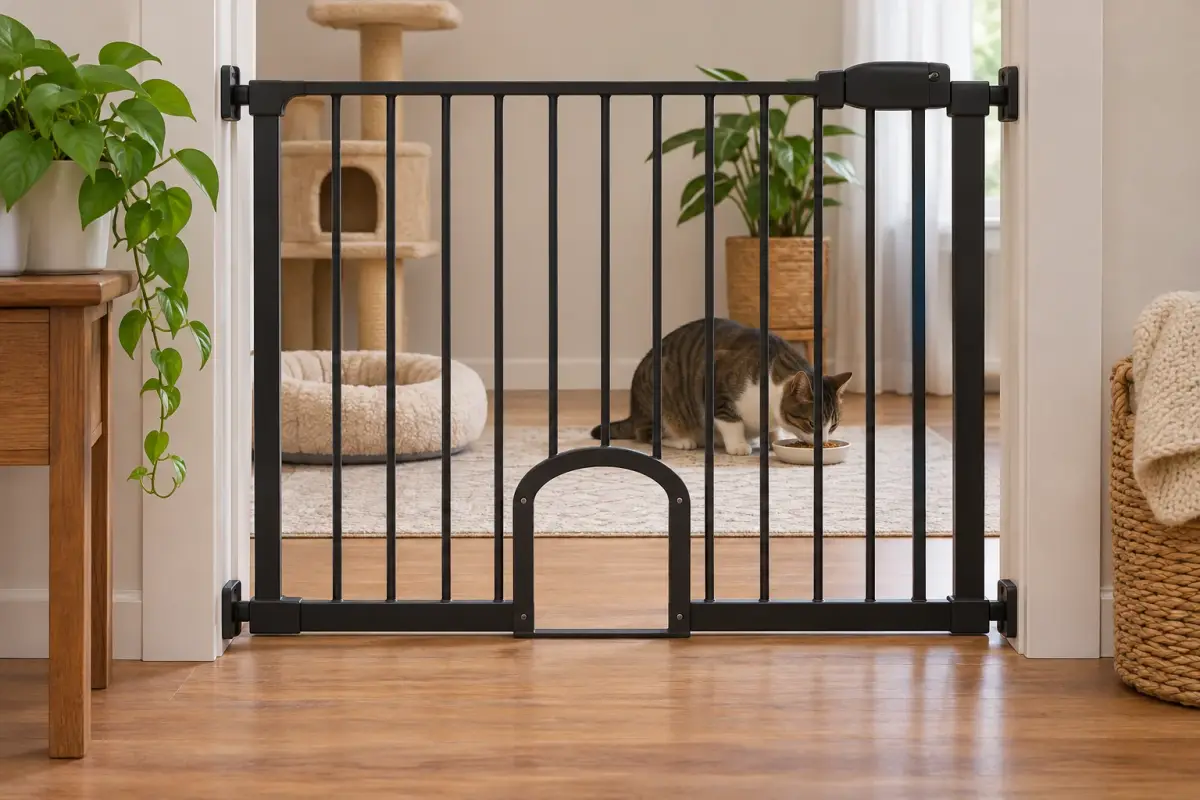
Several cats: give each cat its own station or schedule meals so no one is blocked. If space is tight, a spare room with a cat-sized gate gap can work. Whatever you choose, ask your vet before changing a cat's diet or feeding routine, particularly with a cat that has a medical condition.
Where to put the station
Cornell's Feline Health Center notes that cats prefer to eat and eliminate in separate areas, and it advises keeping the litter box away from the feeding area. So avoid tucking a feeding station next to the litter box just because it is the only dog-free corner.
Choose a quiet spot where your cat can eat without being ambushed, with a clear way out. If you also want to browse bowls for a different spot, see our elevated cat bowls. Keep fresh water nearby, but not touching the food.
What to avoid
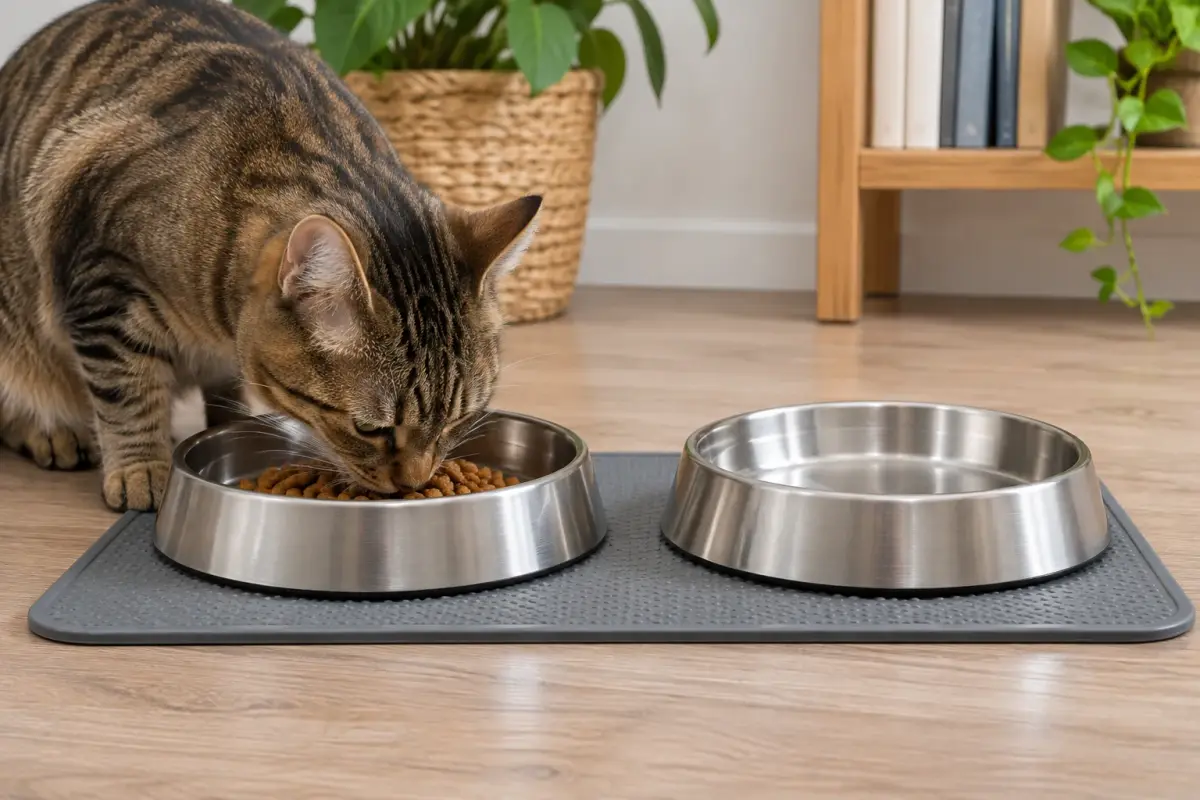
Avoid flimsy stations that tip, thin plastic a dog can chew, and openings wide enough for a snout. Avoid placing food where the dog can reach it from a chair or couch, and avoid leaving food down all day if the dog is persistent.
Do not rely on a barrier that also keeps your cat out, such as a standard baby gate with no cat-sized gap. A cat that cannot reach its food reliably will tell you by hiding, yowling or skipping meals. If your cat stops eating, call your vet.
When to call your vet
Call your vet if your dog has eaten a lot of cat food or shows signs of pancreatitis, which the AKC lists as abdominal pain and a hunched back, lethargy, loss of appetite, vomiting, diarrhea and a distended abdomen. Pancreatitis needs immediate veterinary care.
Other changes also warrant a call, such as a cat that eats noticeably less than usual. Teach your dog a firm leave-it cue and consider feeding the dog at the same time, so neither is tempted. This page is general information, not veterinary advice, and it cannot replace an examination by the vet who knows your pet.
Feeding-station access arrangements
| Arrangement | Physical access difference | Check before choosing |
|---|---|---|
| Raised bowl | Bowl sits above the floor | Actual height and stability |
| Tree feeding platform | Bowl placed within a climbing structure | Platform dimensions and cat access |
| Enclosed station | Bowl inside a box with an entrance | Opening size and cleaning access |
| Chip or tag feeder | An identifier controls the lid | Supported identifier and exact access mechanism |
Common questions
How do I keep my dog out of my cat's food?
Put the food where only the cat can get it: on a high surface, in an enclosed station with a cat-sized opening, or in a microchip feeder, and pick up unfinished food between meals.
Is cat food bad for dogs?
The AKC says it can cause stomach upset, obesity and pancreatitis because it is far higher in meat-based protein than dogs need. An occasional nibble may cause only vomiting or diarrhea.
Will an elevated feeder keep a big dog out?
Not always. A tall dog can reach up, so elevation works best against small dogs. For a large dog, an enclosed station or a microchip feeder is more reliable.
Where should I put my cat's feeding station?
Somewhere quiet that the dog cannot enter, and away from the litter box. Cornell notes cats prefer to eat and eliminate in separate areas.
What are the signs my dog ate too much cat food?
Vomiting or diarrhea can follow. The AKC lists belly pain, a hunched back, lethargy, no appetite and a swollen belly as signs of pancreatitis, which needs immediate veterinary care.
Sources we checked
This guide is general information, not veterinary advice. If your pet is unwell or injured, contact your veterinarian.


