Buying guides
Best Dog Car Seat for Small Dogs: How to Choose Safely
The best car seat for a small dog is one that holds the dog in place, fits its measurements and is secured to the car. The AKC says dogs should ride in a crate or be secured with a crash-tested seat belt, never loose, and a carrier or belt-secured seat fits a small dog in both cases. Browse car seats for small dogs after reading what to check.
By Matt GarnettUpdated November 14, 20265 min read3 sources
Containment first, comfort second
The AKC states that dogs shouldn't be riding on the driver's lap or unrestrained in the car, and that they should be in a dog crate or secured with a crash-tested dog seat belt. For a small dog that does not mean a crate in the cargo area. It means choosing a seat or carrier that keeps the dog in one spot, and that is itself held to the vehicle.
A cushy seat that the dog can climb out of is comfort, not restraint. Ask of any small-dog seat: what stops the dog leaving it, and what holds the seat to the car? If the answer to either is nothing, keep looking. Our larger guide to the best dog car seat and its companion on the safest dog car seat go deeper on safety.
The main types for small dogs
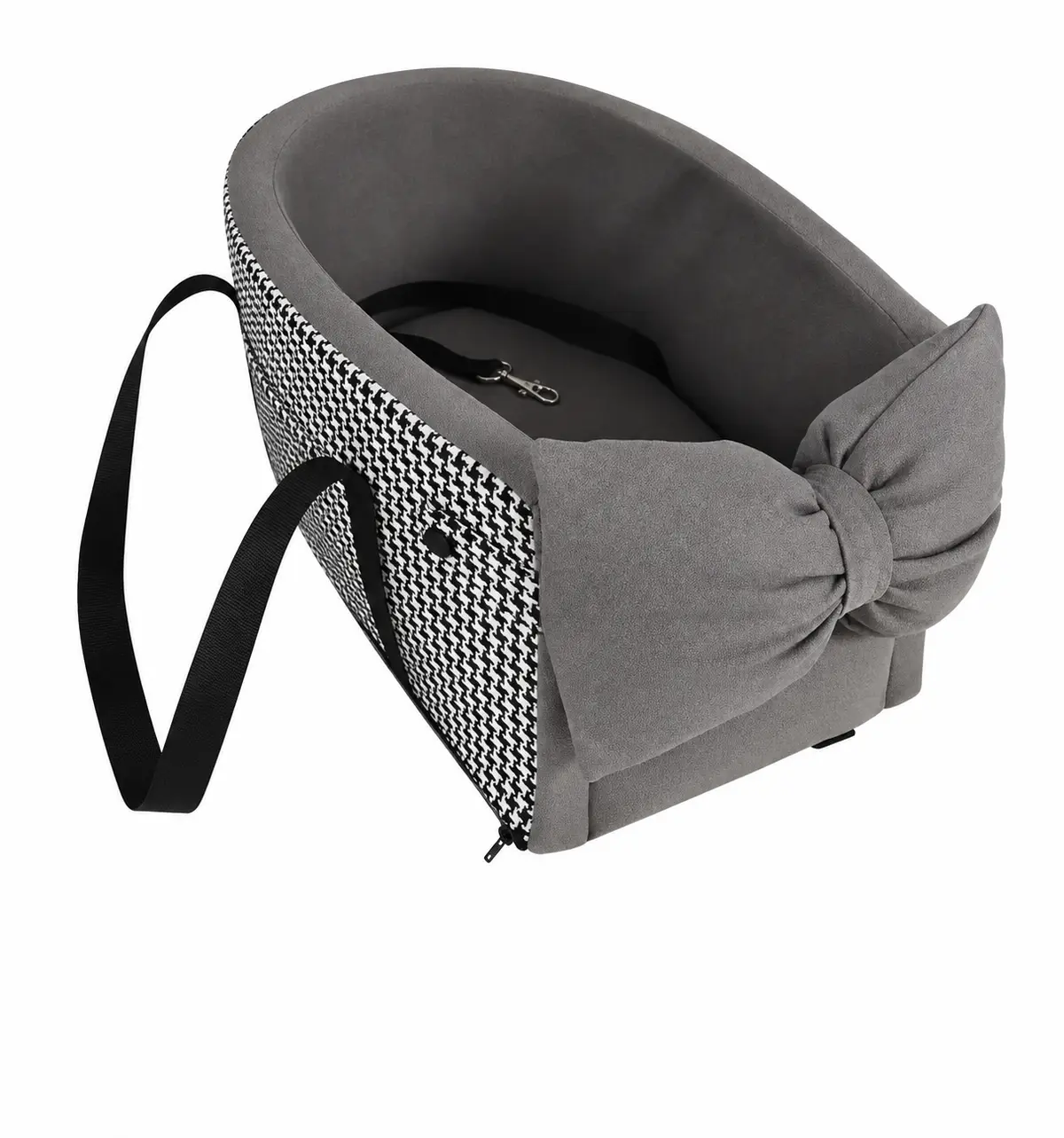
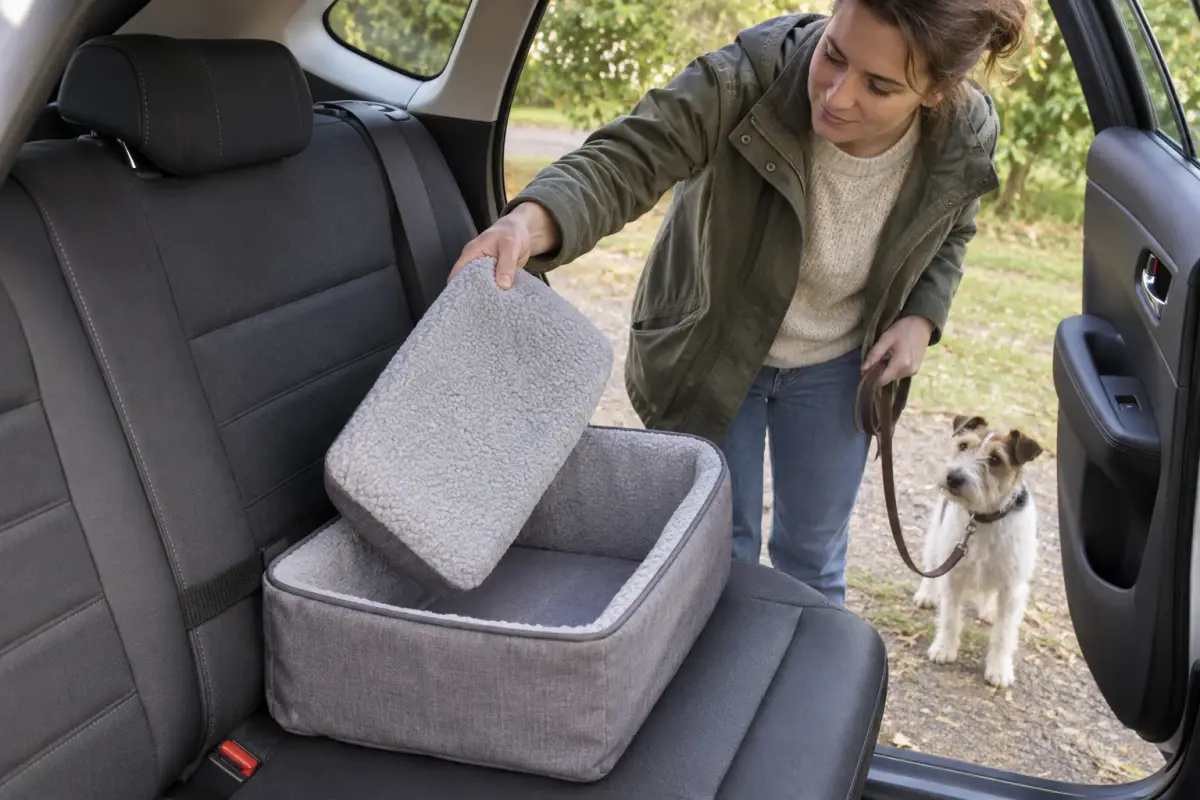
Carrier-style car seats combine a carrier with a seat: the dog sits in a padded, enclosed space that is strapped to the seat, such as this dog carrier travel car seat or a pet car seat carrier with storage pockets. The AKC describes soft-sided carriers as one of the most popular styles for transporting small dogs, and says a carrier keeps your dog safe while riding in a vehicle.
Booster seats raise a small dog so it can see out of the window, and some have a short strap that clips to the dog's harness, like this small dog car booster seat with safety strap. A seat belt harness is a third option, and the AKC says seat belts are great options if your vehicle isn't large enough for an appropriately sized crate. See seat belts and car harnesses for that route.
Independent testing and what it means
The Center for Pet Safety is a nonprofit that runs a certification program. Its certified products page says manufacturers who take part commit to meet independently developed safety standards, monitor product quality control and be truthful in marketing, and that CPS does not accept funding from pet product manufacturers. When the page was checked for this guide, its certified list was made up of carriers and kennels.
That is worth knowing because words like safe, tested or crash-ready on a product page are marketing unless something independent stands behind them. Look for a named test or certification you can check, and treat a vague claim as no claim. We do not test products ourselves, so the guide ranks features, not individual seats.
How to measure and what to check
The AKC's carrier advice works for car seats too. Measure your dog's back length from the neck, where the collar sits, to the base of the tail, and its height from the shoulder to the paws on the ground. Then add a few inches to each measurement. Its example is a 9-inch-tall Dachshund, for whom a carrier at least 12 inches tall is better than a cramped 9-inch one. The dog should be able to stand up, turn around and stretch out lying down.
Also check the maker's weight limit against your dog's current weight, how the seat attaches to the car's seat belt or anchors, and whether the sides are mesh. The AKC notes it can get hot inside a travel carrier even with air conditioning, and that mesh panels allow proper airflow. Wipeable or washable lining makes the seat easier to live with after muddy walks or motion sickness.
Getting a small dog used to the seat
The AKC suggests getting your dog comfortable and familiar with the restraint equipment before getting in the car, using treats and praise in short, fun sessions. For a carrier it describes introducing it in a calm spot like the living room with the entry open, placing familiar items inside and rewarding each interaction, then closing the dog in for short increments.
Do the same with a car seat: put it on the floor at home, let the dog sniff and climb in, feed a few treats there, then try the seat in the parked car before the first drive. Keep early trips short and end them somewhere good. A dog that has learned the seat is a safe, rewarding place travels more calmly, and a calm dog is easier to keep restrained.
What to avoid and when to ask your vet
Avoid letting a small dog ride on your lap or loose on the seat; the AKC says dogs shouldn't ride on the driver's lap. Avoid a seat that only perches on the headrest without strapping firmly to the car, or one whose strap you must attach in a way the instructions do not describe. In the AKC's example of a belted dog in the back seat, the child locks are on so the dog cannot paw at the door.
If your dog drools, vomits or panics in the car, a seat will not fix that on its own, so ask your veterinarian about motion sickness or anxiety rather than loosening the restraint to settle the dog. Check the seat after any hard braking or collision and retire it if anything looks stretched, cracked or torn. For wider options see carriers for small dogs.
This page is general information, not veterinary advice, and it cannot replace an examination by the vet who knows your pet.
Small-dog vehicle travel formats
| Format | Physical arrangement | Verify before using |
|---|---|---|
| Carrier-style | An enclosure placed on a vehicle seat | Exact vehicle attachment instructions |
| Booster seat | A raised padded seating area | Base fixing and any harness tether instructions |
| Vehicle harness | Harness connected to a stated vehicle attachment | Exact-model fit,installation and testing |
Common questions
What is the safest way for a small dog to ride in a car?
The AKC says dogs should ride in a crate or be secured with a crash-tested seat belt. For a small dog that usually means a carrier-style seat or a belt-secured restraint, held to the car, rather than a loose cushion.
How do I know what size car seat my small dog needs?
Measure back length from collar to tail base and height from shoulder to paws, then add a few inches to each, as the AKC advises. The dog should stand, turn around and stretch out lying down.
Is a booster seat enough for a small dog?
A booster lets a small dog see out and may keep it in one spot, but ask what holds the dog in and what holds the seat to the car, and look for independent testing before relying on any claim.
Can I put my small dog's car seat in the front seat?
The AKC's belted-dog example uses the back seat, and it says dogs should not ride on the driver's lap or unrestrained. Check your vehicle manual and the seat's instructions for where it can safely go.
Sources we checked
This guide is general information, not veterinary advice. If your pet is unwell or injured, contact your veterinarian.