






Buying guides
Best Dog Car Seat Covers: Hammock, Bench or Bucket?
The best dog car seat cover is waterproof, has a non-slip backing and anchors that keep it in place, and leaves the seat-belt buckles reachable so your dog can be restrained. A hammock style protects the back seat and footwells and stops a dog sliding into the gap; a bench cover suits calm dogs; a bucket cover protects a single seat.
By Matt GarnettUpdated November 14, 20263 min read2 sources
What matters most: grip, waterproofing and belt access
A cover that slides around on leather or slick upholstery puts your dog off balance at every turn. Look for a rubberized non-slip backing, headrest straps, and seat anchors that tuck between the seat cushions. A waterproof layer, rather than water-resistant fabric, keeps mud, drool and accidents off the seats.
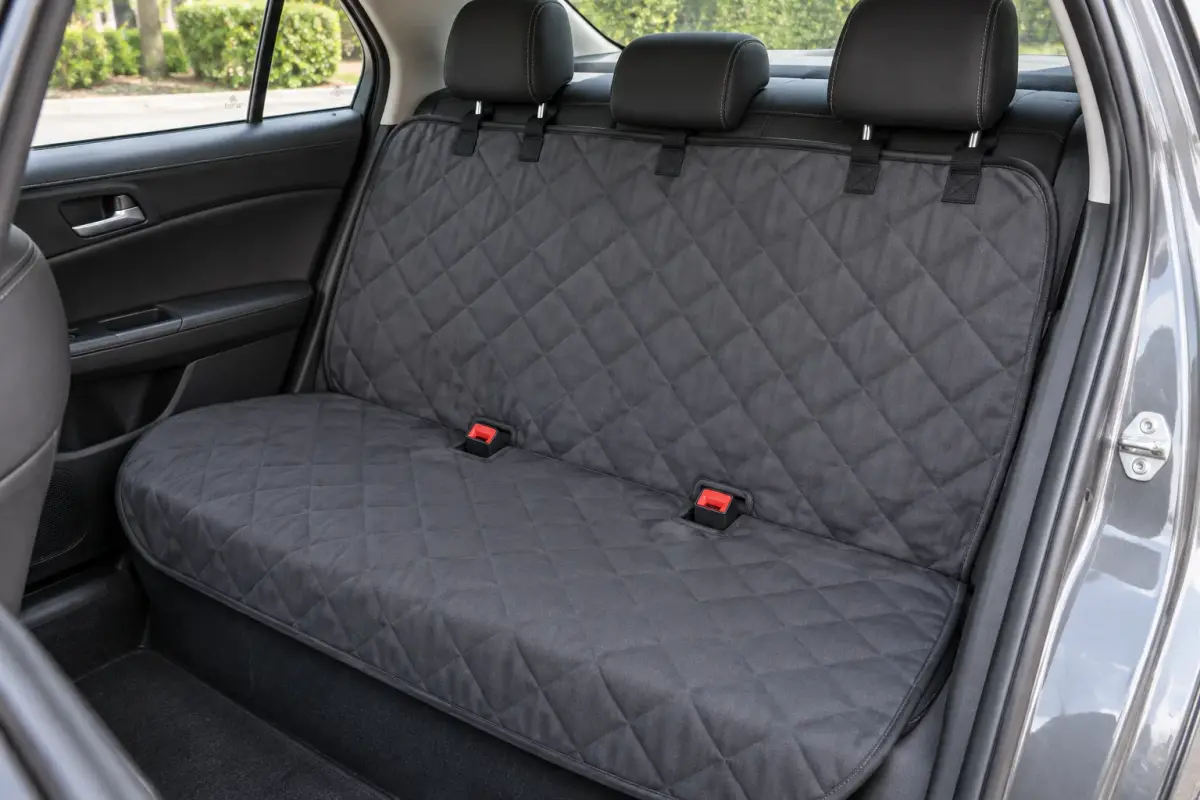
Belt access is the safety feature many covers get wrong. The ASPCA advises that a pet riding without a crate should be in the back seat in a harness attached to a seat belt, and the AKC warns that a loose dog in a sudden stop can become a projectile. Choose a cover with openings for the buckles so you can clip in a crash-tested harness or tether. Browse our dog car seat covers to compare styles.
Hammock, bench and bucket covers compared
Hammock covers clip to the front and rear headrests, making a sling that covers the seat, the back of the front seats and the footwell. Examples include a quilted dog car seat hammock cover and a waterproof back-seat hammock cover; see all dog car hammocks. They keep a dog from falling into the footwell and block it from climbing forward, which makes them popular for active dogs and long trips.
Bench covers lie flat across the back seat and down the front edge. They are quicker to fit and let passengers share the seat. Bucket covers protect a single front or back seat. Cargo liners cover an SUV's rear area, usually where a crate rides.
Best cover for each vehicle and dog
For SUVs and crossovers (browse seat covers for SUVs), a hammock or bench cover sized for a wider rear seat, with side flaps to protect doors from scratching. For pickup trucks, check whether the rear bench splits, folds up, or has a center console, and buy a cover cut for crew or extended cabs. See seat covers for trucks.
For large dogs, a heavier, quilted fabric resists claws. For dogs that ride in crates, the ASPCA calls a secured crate the safest option in an accident, so a cargo liner under a strapped-down crate may be all you need. For small dogs, a bucket cover under a booster seat or carrier.
How to size and fit a car seat cover
Measure the rear seat width from door to door at the seat base, the seat depth and the height of the seat back, and compare to the chart. Standard covers fit most sedans; larger SUVs and trucks often need an XL. Check whether your car has a fold-down center armrest or split seats you still want to use.
Fit the cover with the anchors pushed deep between the cushions, the headrest straps tight and the belt openings lined up with the buckles. Check side airbag locations in your car's manual and keep them clear. Never let a dog ride on the front seat, where an airbag can cause serious injury.
Care, lifespan and car safety
Shake out hair after trips, wipe spills promptly and machine-wash on a gentle cycle as the label directs; high dryer heat can crack waterproof backings. Replace a cover when the backing peels or the straps fray. A cover cannot replace a restraint, so keep using a harness, seat or crate on every trip. Browse dog car seat covers when it is time to replace one.
The ASPCA also warns never to let your dog ride with its head out of the window, and never to leave a dog alone in a parked car, where heat or cold can become dangerous quickly. If your dog drools heavily or vomits in the car, ask your vet about motion sickness.
Seat-cover layouts and attachment areas
| Cover layout | Area it covers | What to check |
|---|---|---|
| Hammock-style | Rear seat with fabric extending toward front headrests | All attachment points and footwell configuration |
| Bench | Across the rear seat and its front edge | Seat width and passenger access |
| Bucket | One individual seat | Seat shape and fastening route |
| Cargo liner | The rear load area of an SUV | Floor footprint and the crate arrangement |
Common questions
Is a hammock or bench seat cover better for dogs?
A hammock protects the seat, footwell and seat backs and stops a dog sliding forward, which suits active dogs. A bench cover is quicker and lets passengers share the seat.
What is the best back seat cover for dogs?
One that is waterproof, has a non-slip backing and seat anchors, and has openings so you can clip your dog's harness to the seat belt.
Do dog seat covers work with seat belts?
Good ones have openings for the buckles. Keep using a crash-tested harness or tether, because the ASPCA advises securing dogs in the back seat. Line the openings up before each trip.
What seat cover fits a pickup truck?
Choose a cover cut for your cab style, measured across the rear bench, and check whether your seats split, fold or have a center console.
Sources we checked
This guide is general information, not veterinary advice. If your pet is unwell or injured, contact your veterinarian.


