






Buying guides
Best Dog Brushes: How to Choose One for Your Dog's Coat
The best dog brush is the one built for your dog's coat. Short, smooth coats do best with a rubber or bristle brush; long, curly and wiry coats need a slicker brush; double coats that shed heavily need an undercoat rake or deshedding tool. Most dogs need two tools at most, used often and gently, rather than a drawer of gadgets.
By Matt GarnettUpdated November 10, 20263 min read2 sources
Match the brush to the coat
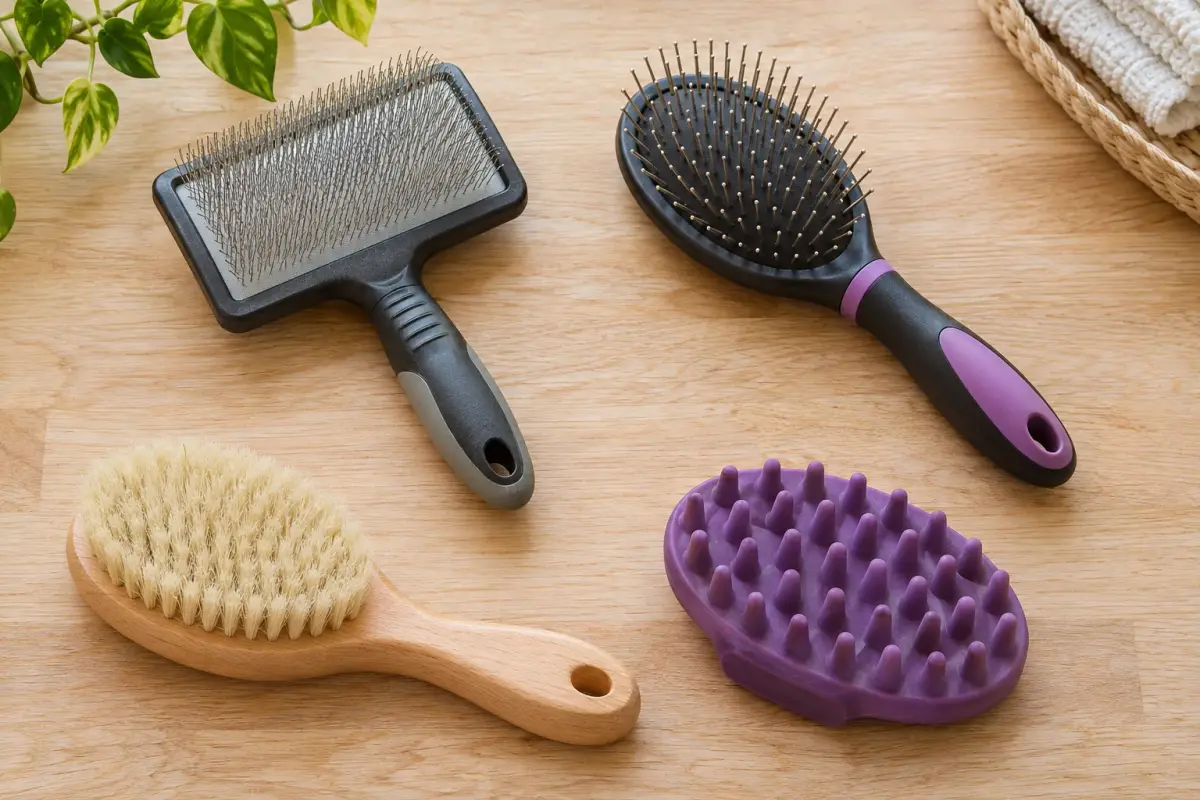
Coat type decides everything. The AKC describes slicker brushes, with short, fine wire pins angled to work through the coat without scratching the skin, as suited to medium, long, wiry and curly coats, where they lift mats and loose hair. Bristle brushes suit short coats and add shine as a finishing brush. Pin brushes, with rubber-tipped pins, finish long, silky coats.
Undercoat rakes reach through the top coat to pull out dead undercoat from double-coated breeds, and the AKC notes you need the right pin length for the coat. Rubber brushes and curry mitts work best on short coats, loosening hair and dirt while massaging the skin. Identify your dog's coat first, then choose; for curly doodle coats, see the best brush for doodles.
The best brush for shedding
For a short-haired dog that sheds, such as a Labrador or Beagle, a rubber curry brush used daily lifts a surprising amount of loose hair, followed by a bristle brush for finish. For double-coated breeds such as German Shepherds, Huskies and Golden Retrievers, the AKC suggests switching to a coat rake or shedding tool when shedding picks up, typically during the spring and fall coat blows.
Bladed deshedding tools remove undercoat very efficiently but can cut or thin the top coat if overused, so use them lightly, on dry fur, for short sessions. For long-haired shedders, combine an undercoat rake with a slicker brush and a wide-toothed metal comb to check you have reached the skin.
Brush types compared
Slicker brushes, such as a self-cleaning slicker brush, are the workhorse for most long and curly coats, but pressing hard can cause brush burn, so let the pins do the work. Bristle brushes are gentle and cheap but do little on thick coats. Pin brushes are kind to long coats and skin, but do not remove undercoat or mats well. Rubber brushes are ideal for short coats and dogs that dislike grooming.
Undercoat rakes and deshedding tools target double coats, like this handheld deshedding comb. Metal combs, with wide and narrow teeth, are the best way to find hidden tangles before they become mats. A good grooming kit for most dogs is one main brush for the coat type plus a comb, such as this retractable pet comb.
What to avoid
Avoid using a deshedding blade on single-coated or curly breeds, where it can damage the coat, and avoid shaving double-coated breeds to reduce shedding, which most groomers advise against because it interferes with the coat's insulation. Avoid brushing over mats, which pulls the skin and hurts; work mats out gently from the ends, or ask a groomer to clip them.
Avoid brushes with sharp, uncapped pins on thin-skinned dogs, and stop if you see redness or scratches. Hair loss in patches, scabs, a strong smell or constant scratching are not brushing problems; ask your vet to check the skin.
How often to brush, and caring for brushes
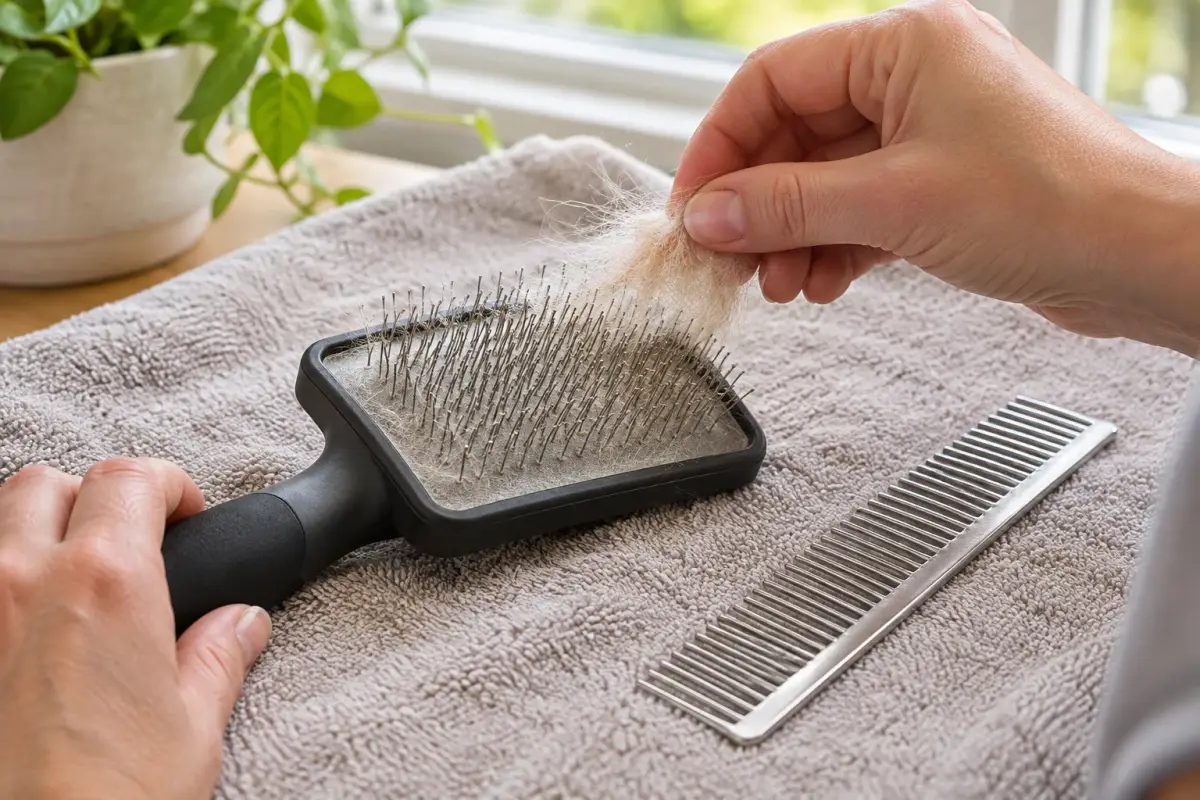
Short coats need brushing about once a week, more during shedding seasons. Medium and double coats benefit from brushing a few times a week, and daily during heavy shedding. Long, silky and curly coats usually need daily brushing to prevent mats. Short, frequent sessions with treats make grooming easier for dogs that dislike it.
Clean hair out of brushes after each use and wash them in warm, soapy water every few weeks, drying them fully. Replace slicker brushes when pins bend or the pad splits, and rakes when teeth loosen. A well-kept brush lasts years. Browse all our dog brushes when you are ready. For heavy shedders, our best deshedding tools guide goes further.
Brush and comb working surfaces
| Tool | Contact surface | Inspection focus |
|---|---|---|
| Slicker | Fine brush pins | Pin tips and pressure in the maker’s directions |
| Bristle brush | Rows of bristles | Bristle condition and the coat surface |
| Pin brush | Individual pins | Pin ends and spacing |
| Rubber brush | Rubber contact points | Surface damage |
| Undercoat rake | Rake-like teeth | Tooth length and spacing |
| Metal comb | Wide and narrow tooth sections | Smooth teeth and accessible spacing |
Common questions
What is the best brush for a dog that sheds a lot?
For short-haired shedders, a rubber curry brush plus a bristle brush. For double-coated breeds, an undercoat rake or a deshedding tool used gently during shedding season works best.
What brush is best for short-haired dogs?
A rubber brush or curry mitt to loosen hair, followed by a soft bristle brush for shine. Slicker brushes and rakes are usually unnecessary on very short coats.
Is a slicker brush good for all dogs?
Slicker brushes are excellent for medium, long, wiry and curly coats but can be harsh on very short, thin coats. Use light pressure on any dog to avoid irritating the skin.
How often should I brush my dog?
Short coats about weekly, double coats a few times a week and daily when shedding heavily, and long or curly coats daily to prevent mats from forming. See our guide on how often to brush a dog.
Sources we checked
This guide is general information, not veterinary advice. If your pet is unwell or injured, contact your veterinarian.


