






Care & how-to
Labrador Retriever Grooming: A Simple Routine for the Coat
Labrador grooming is simple but regular. A Lab has a short double coat that needs no trimming, so the routine is weekly brushing to lift loose undercoat, more often when the coat sheds heavily, an occasional bath, and a quick look at the ears. This guide walks through each step and the tools that make it easier.
By Matt GarnettUpdated November 13, 20264 min read2 sources
What kind of coat does a Lab have?
The American Kennel Club lists the Labrador Retriever among short double-coated breeds. That means a dense, weather-resistant topcoat over a soft undercoat. The undercoat sheds more than the topcoat, and the heaviest loss comes when the seasons change, a period the AKC calls blowing coat.
The AKC says these coats typically do not require trimming. That makes Labs low-skill to groom: there are no scissors, clippers or styling. What the coat does need is regular removal of the loose hair, which otherwise ends up on your floors and furniture. If your main question is how much hair to expect, see our guide on whether Labs shed.
Brushing: how often and how
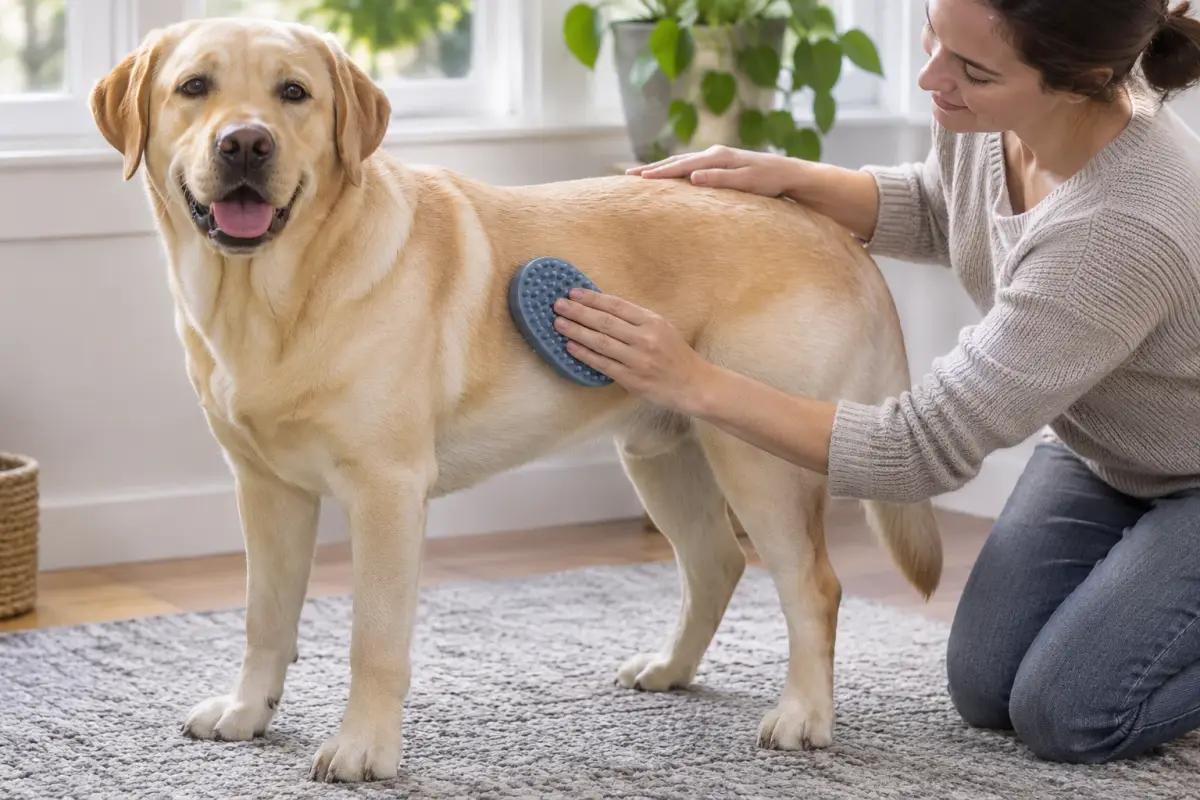
According to the AKC, weekly brushing removes loose undercoat and helps manage shedding in double-coated dogs. During a coat change you will likely want to brush more often, because the undercoat comes out in clumps. Work in the direction the hair grows, cover the neck, chest, back, thighs and the feathering along the tail, and finish with a pass over the whole body.
A slicker brush works on areas of denser coat, and a grooming rake or quality steel comb lifts loose undercoat, as the AKC notes. Avoid combs with bent teeth. A rubber or silicone mitt, such as a deshedding grooming glove, is a gentle option for dogs that dislike a rake, and our dog brushes collection covers the main types. For a full breakdown by tool, read how to choose a brush for a Lab.
Never shave a Lab
It can be tempting to shave a shedding dog in summer, but the AKC says grooming experts generally advise against shaving double-coated breeds. Shaving removes both layers, and the undercoat can regrow faster than the topcoat, leaving an uneven coat.
The AKC also notes that shaving does not cool a dog and raises risks such as sunburn, dry skin, ingrown hairs and overheating. The main reasons to shave are surgery or, as a last resort, severe matting. A Lab that is hot is better helped by shade, fresh water and a thorough brushing that removes the insulating undercoat.
Bathing a Lab
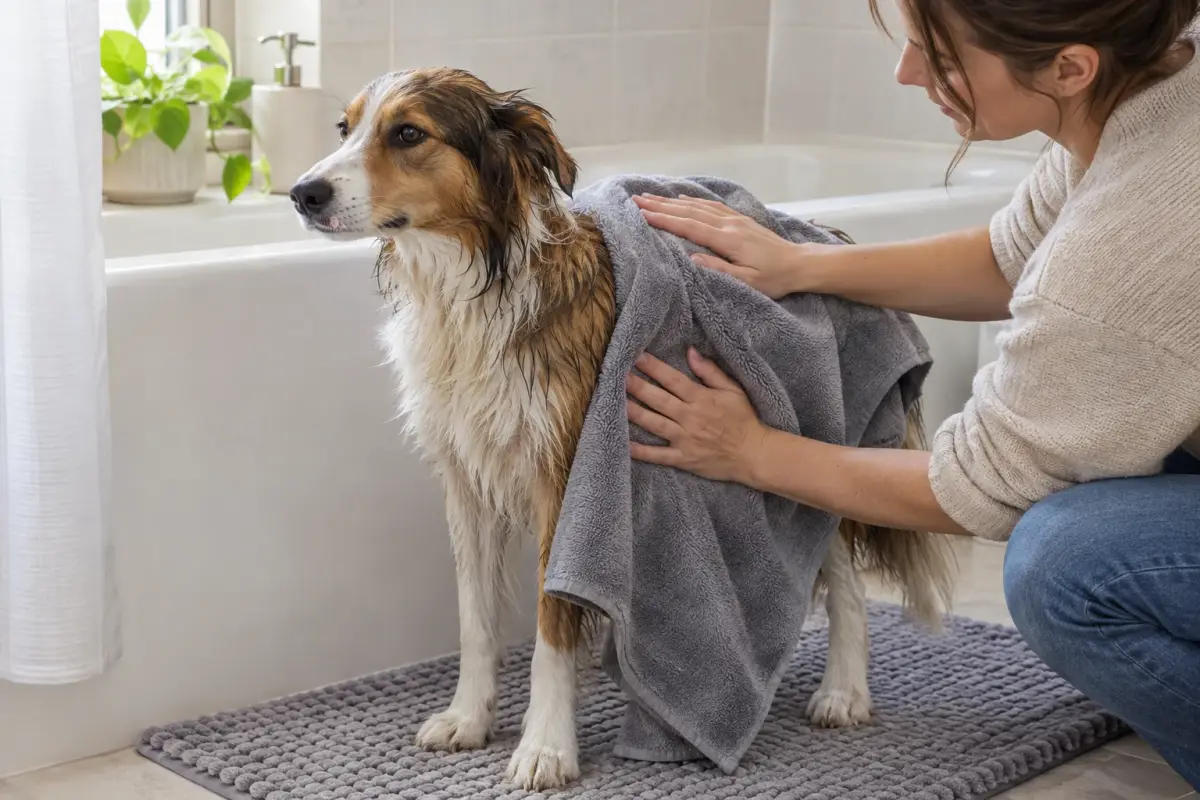
The AKC recommends routine bathing as part of regular grooming for double coats, because it helps loosen undercoat and improves airflow to the skin. Brush the coat first so that loose hair does not tangle, then wet the dog thoroughly down to the skin, since the dense coat resists water.
Use a dog shampoo, work it in with your hands or a soft silicone bath brush, and rinse until no residue is left. Leftover shampoo can irritate skin. Finish by drying with towels, and brush again once the coat is dry. Browse more dog bath brushes if you want a tool that also massages.
Ears, nails and the quick checks
Labs have drop ears, so it is worth looking inside after every bath or swim. VCA Animal Hospitals says how often to clean depends on the dog, and that dogs prone to ear infections often benefit from more frequent cleaning, but you should avoid over-cleaning because it can irritate the canal. Use a proper ear cleaner and cotton balls or gauze, not cotton-tipped swabs.
VCA also says that if your dog's ears are red, inflamed or painful, you should consult your veterinarian before cleaning, since these signs may point to an infection. Check the nails each time you groom as well; nails that click on hard floors are due for a trim. If you are not sure how to trim safely, ask your vet or a groomer to show you once.
A simple weekly routine
Pick a calm time, such as after a walk, and keep the session short. Step 1: brush the whole coat with a slicker brush or rake. Step 2: go over the dog with a mitt or comb to lift what is left. Step 3: look in the ears, check the nails and feel the skin for lumps, scabs or sore spots. Step 4: give a treat and praise so grooming stays something your Lab enjoys.
Bath only when the dog is dirty or smelly rather than on a fixed timetable. If you want everything in one place, a dog grooming kit bundles the basics. Report any new lump, patchy hair loss, constant scratching or a strong odor to your vet.
This page is general information, not veterinary advice, and it cannot replace an examination by the vet who knows your pet.
Common questions
How often should I brush a Labrador?
The AKC says weekly brushing helps remove loose undercoat and manage shedding on double-coated dogs. Brush more often while the coat is changing with the seasons, when loose hair comes out in larger amounts.
Can I shave my Labrador in summer?
Grooming experts generally advise against it. The AKC says shaving removes both coat layers, does not cool a dog, and raises the risk of sunburn and overheating. Brushing out loose undercoat and offering shade and water is the safer approach.
What brush is best for a Lab?
A slicker brush for denser areas and a grooming rake or steel comb for undercoat are the tools the AKC names for double coats. A rubber mitt is a gentle extra for finishing and for dogs that dislike brushes.
How do I clean a Labrador's ears?
VCA advises a good-quality ear cleaner with cotton balls or gauze, not cotton swabs, and cleaning only as far as your finger reaches. If the ears look red, inflamed or painful, see your veterinarian before cleaning.
Sources we checked
This guide is general information, not veterinary advice. If your pet is unwell or injured, contact your veterinarian.


