Care & how-to
Do Labs Shed? Yes, a Lot: What to Expect
Yes, Labrador Retrievers shed a lot. Their short, dense, weather-resistant double coat sheds steadily year-round and heavily about twice a year, when the undercoat comes out in clumps. VCA rates Lab shedding at 4 out of 5. A weekly brush is enough most of the year, with daily combing during heavy sheds. Short coats do not mean less hair.
By Matt GarnettUpdated November 9, 20264 min read3 sources
How much Labs shed
The Lab's coat looks short and simple, but it is a true double coat: a straight, fairly short, thick topcoat over a soft, dense undercoat that insulates and waterproofs the dog for cold-water retrieving. VCA Animal Hospitals rates Lab shedding at 4 out of 5, describing it as average to above average. Because the hairs are short and stiff, they weave into carpets, upholstery and clothing and can be harder to pick up than longer hair.
Black, yellow and chocolate Labs all shed the same amount; color only changes how visible the hair is on your furniture. A Lab sheds every day, then sheds dramatically during its seasonal coat changes. A deshedding tool is the usual way to keep up with that volume.
When Labs shed most
The AKC notes that Labs shed heavily twice a year, losing coat in large clumps. These sheds usually come in spring and fall, triggered by changes in daylight and temperature, and can last a few weeks. During a coat blow you may be able to pull tufts of undercoat out with your fingers.
Indoor Labs often shed more evenly through the year. Shedding can also increase after a heat cycle in females, after puppies, or during stress such as a move.
Brushing and grooming a Lab
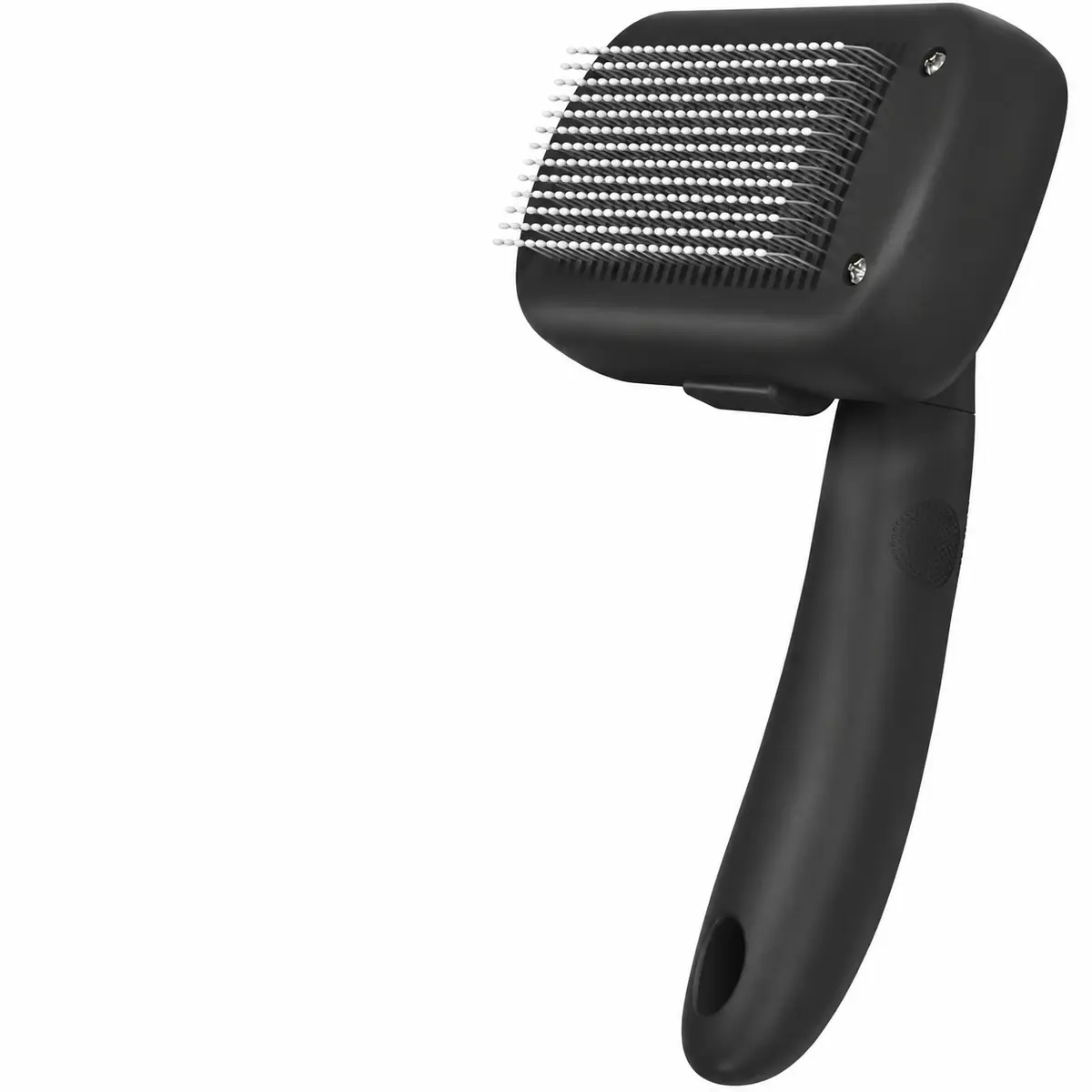
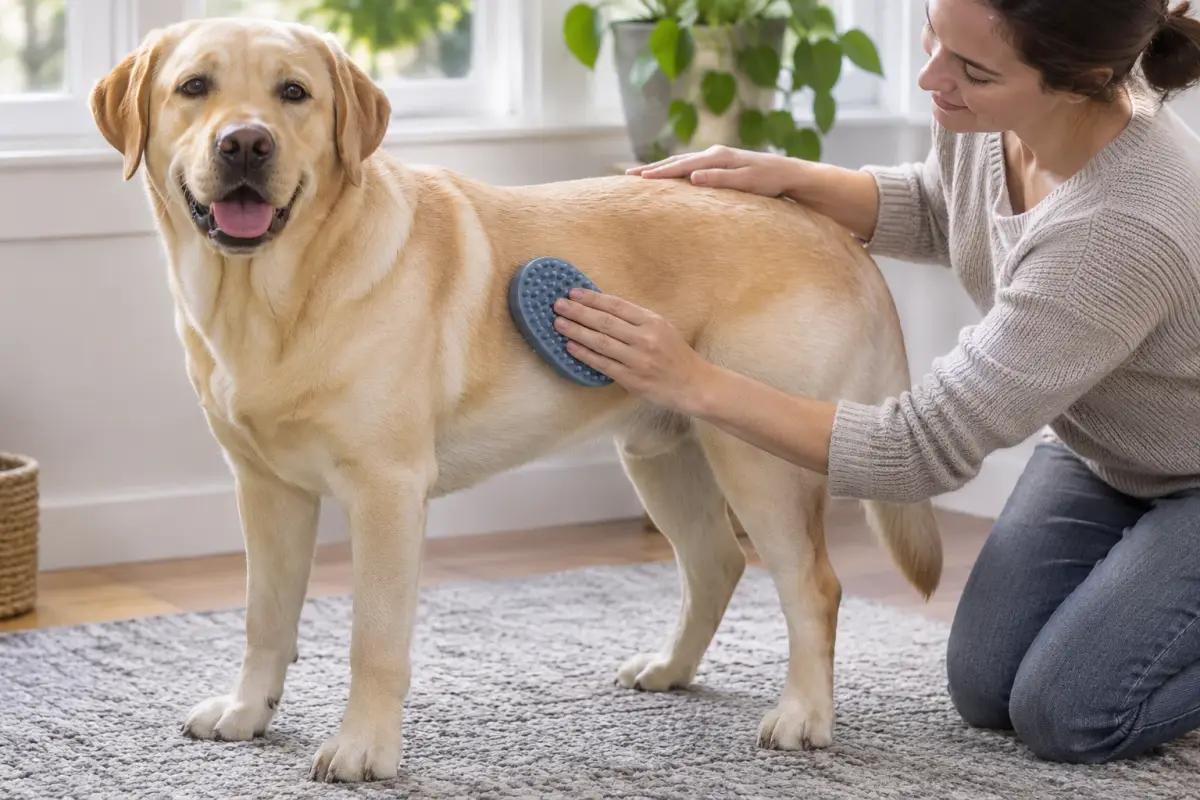
VCA suggests brushing a Lab once a week, more during shedding seasons, and the AKC recommends combing daily during heavy shedding. Good tools are a rubber curry brush or grooming mitt to loosen hair, a wide-toothed metal comb or undercoat rake to pull out loose undercoat, and a bristle brush to finish. Work in the direction of growth.
The AKC also advises that the Lab coat should never be clipped or trimmed, because the coat is what protects the dog in water and weather. Bathing roughly every four to six weeks for indoor Labs, and in warm water during a coat blow, helps loosen undercoat. A silicone bath brush can help work shampoo through a thick coat. Rinse after swims in pools, as chlorine dries the coat.
Living with Lab hair
Vacuum often with a vacuum designed for pet hair, and use washable throws on the couch and in the car. A rubber glove run over fabric lifts short hairs better than a lint roller. Brushing outdoors with a deshedding brush, especially during a coat blow, keeps a surprising amount of hair out of the house.
Good nutrition supports a healthy coat, and a dull, dry coat that sheds constantly can sometimes improve on a complete, balanced diet. Ask your vet before adding supplements. Labs are prone to weight gain, so keep treats in check.
Exercise, swimming and coat health
Labs love water, and their coat is designed for it, shedding water and drying quickly. After swims in lakes, rivers or the ocean, rinse your Lab with fresh water to remove algae, salt and sand, and dry the coat and ears thoroughly, since Labs are prone to ear infections when water sits in the ear. The AKC also recommends a bath after pool swims because chlorine can dry the coat.
Daily exercise keeps a Lab fit and helps keep weight in check, which supports healthy skin and coat. Overweight Labs often groom themselves less well and can develop skin problems in their folds. Feed measured meals, count treats as part of the daily amount, and ask your vet if you are unsure what your dog should weigh.
When to call your vet
Shedding with bald patches, red or scabby skin, a greasy or smelly coat, constant scratching or paw licking, or repeated ear infections is not normal Lab shedding. Labs commonly have skin allergies, and hormonal conditions such as hypothyroidism can also change the coat. The AKC also notes the dense coat can hide fleas and ticks, so check the skin regularly.
Book a vet visit for any of those signs, or if your Lab's shedding changes suddenly outside the usual seasons. Keep your Lab on flea and tick prevention as your vet recommends.
This page is general information, not veterinary advice, and it cannot replace an examination by the vet who knows your pet.
Common questions
Do black Labs shed more than yellow Labs?
No. All Lab colors shed the same amount. Yellow hair shows more on dark furniture and black hair on light surfaces, which is why some owners think one color sheds more.
Can I shave my Lab to stop shedding?
No. The AKC advises against clipping a Lab's coat. Shaving removes protection from sun, cold and water and does not stop shedding. Regular brushing is the effective way to manage it.
Do Labradoodles shed less than Labs?
Many do, but it depends on which parent's coat the puppy inherits. Some Labradoodles shed almost as much as a Lab. Ask the breeder about coat type before choosing a puppy.
Sources we checked
This guide is general information, not veterinary advice. If your pet is unwell or injured, contact your veterinarian.