






Care & how-to
How Often Should You Brush Your Dog?
How often to brush your dog depends on its coat. Long, silky or curly coats need daily brushing to prevent mats. Double coats need brushing at least weekly, and every day or two during spring and fall shedding. Short, smooth coats are fine with a weekly rubdown. Most dogs benefit from a few short sessions a week, which also lets you check their skin.
By Matt GarnettUpdated November 9, 20263 min read3 sources
Long, silky and curly coats: daily
VCA Animal Hospitals says dogs with long, silky or curly coats need daily brushing to keep hair from tangling and matting. This includes Maltese, Yorkshire Terriers, Shih Tzus, Havanese, Afghan Hounds, Poodles, Bichons and most doodles. Mats form quickly in these coats, especially behind the ears, in the armpits, on the chest and on the back of the legs, and they pull on the skin.
Use a slicker brush from our dog brushes, working in sections down to the skin, then a metal comb (our dog combs cover the options) to check you can comb from root to tip without catching. A short trim from a groomer every four to eight weeks makes daily brushing faster. Corded breeds such as the Puli need specialized care rather than brushing.
Double coats: weekly, daily in shedding season
The AKC recommends at least weekly brushing for most double-coated dogs, with more during shedding periods. Short double coats such as Labradors and Corgis do well with a weekly session most of the year. Medium and long double coats such as Golden Retrievers, German Shepherds, Border Collies and Australian Shepherds may need two or three sessions a week, and combing two to three times weekly in summer helps prevent mats.
During spring and fall coat blows, brushing every day or two with an undercoat rake, deshedding tool or hair removal comb, then a slicker brush, removes the loose undercoat before it spreads around your home. Huskies, Malamutes and Samoyeds can drop huge amounts of hair during these weeks.
Short, smooth coats: weekly
Dogs with short, smooth coats such as Boxers, Beagles, pit bull types, French Bulldogs and Dachshunds need the least brushing. The ASPCA suggests weekly brushing for smooth, short coats with a rubber brush followed by a bristle brush. A rubber curry brush or grooming mitt used in circles loosens dead hair, and a bristle brush or damp cloth lifts it away.
Short coats still shed, often more than people expect, so a quick extra session during seasonal changes helps. Weekly brushing also spreads skin oils, keeps the coat glossy and gives you a regular look at the skin.
Wiry coats: weekly plus stripping or clipping
Wire-coated breeds such as Schnauzers, many terriers and Wirehaired Pointers have harsh, low-shedding coats. Brush and comb about once or twice a week to prevent tangles, especially in beards and leg furnishings. The coat is usually kept tidy by hand-stripping, which removes dead hair by plucking, or by clipping, which is easier but softens the texture.
A groomer experienced with your breed can show you what the coat needs and how often, typically every six to eight weeks.
Why regular brushing matters, and when to see your vet
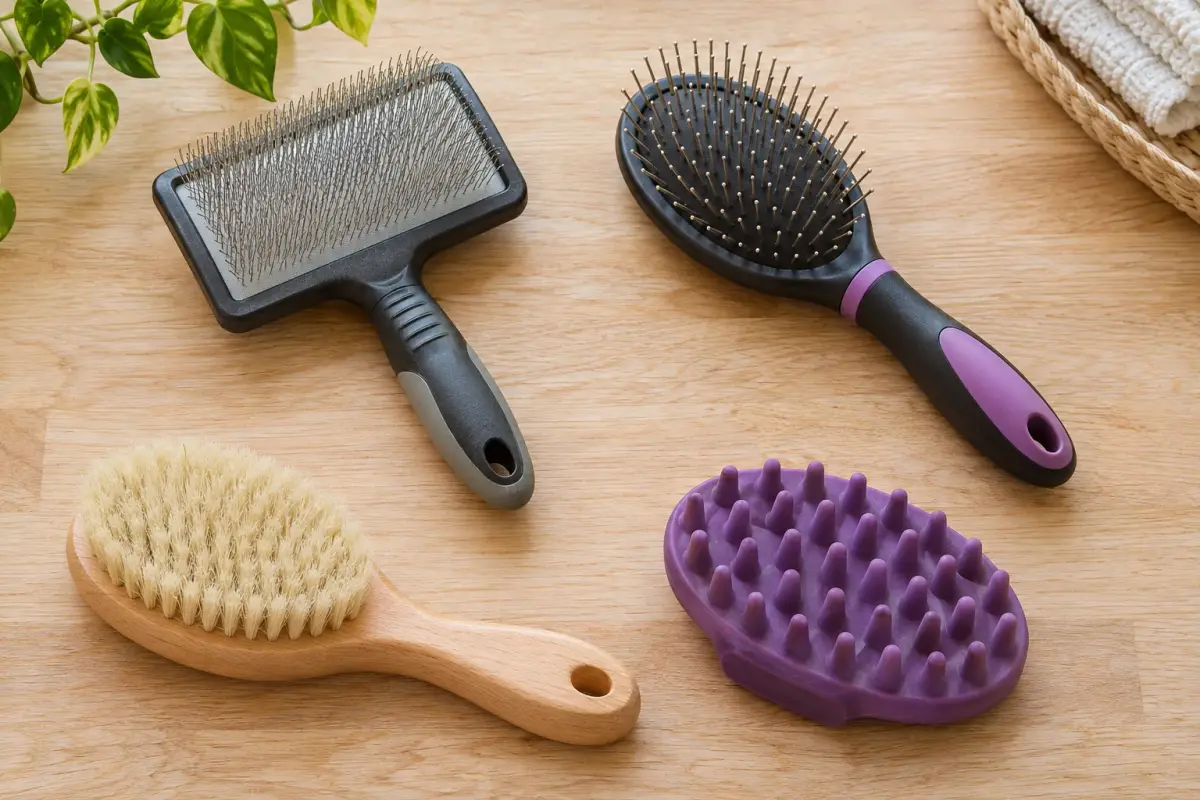
Brushing does more than reduce hair on your floor. It removes dead hair and debris, prevents painful mats, spreads natural oils and lets you find problems early. The AKC suggests checking for burrs, cuts and mats as you brush. Short, frequent, gentle sessions are easier on your dog than an occasional long one, and starting in puppyhood makes it a lifelong habit. Matching the tool to the coat is easier when you can compare dog brushes side by side.
While brushing, look for fleas or flea dirt, ticks, lumps, red or flaky skin, hot spots, bald patches or a bad smell. Call your vet if you find any of these, or if your dog suddenly resents being brushed in a particular spot, which can be a sign of pain.
This page is general information, not veterinary advice, and it cannot replace an examination by the vet who knows your pet.
Common questions
Can you brush a dog too much?
You can overdo it with blade-style deshedding tools or by pressing hard, which can irritate skin. Gentle brushing with the right brush, even daily, is fine for most dogs.
Should I brush my dog wet or dry?
Brush out tangles while the coat is dry, before a bath, because water tightens mats. After a bath, brush as you dry the coat to remove loosened undercoat and prevent new tangles.
How often should I brush a puppy?
Brush a few times a week, even if the coat is short, using a soft brush and treats. The aim is to get your puppy used to handling and grooming before its adult coat comes in.
Sources we checked
This guide is general information, not veterinary advice. If your pet is unwell or injured, contact your veterinarian.


