Buying guides
Best Cat Litter Scoop: What to Look For
The best cat litter scoop matches your litter: slots narrow enough to keep clean litter in the box but wide enough to let it fall through, a sturdy edge that gets under clumps, and a handle that suits your reach. Metal scoops handle clumping litter well, and a mesh or slotted design suits lighter or crystal litters. Since daily scooping is the habit that matters, pick one you will actually use.
By Matt GarnettUpdated November 14, 20264 min read3 sources
Why the scoop matters
A scoop looks like the smallest purchase in the litter routine, but it decides how easy the most important habit is. Cornell Feline Health Center advises that if you use clumping litter you remove stool and clumps daily and add clean litter as needed, and that the litter should be changed often enough that it looks and smells dry and clean. A scoop you dislike is a scoop you skip.
A clean box also protects the behavior you want. The ASPCA and Cornell both discuss litter box problems, and a dirty box is one of the first things to rule out when a cat stops using it. If your cat starts going elsewhere, check the box first, and talk to your vet if it continues, since house-soiling can have medical causes.
Metal, plastic and mesh compared
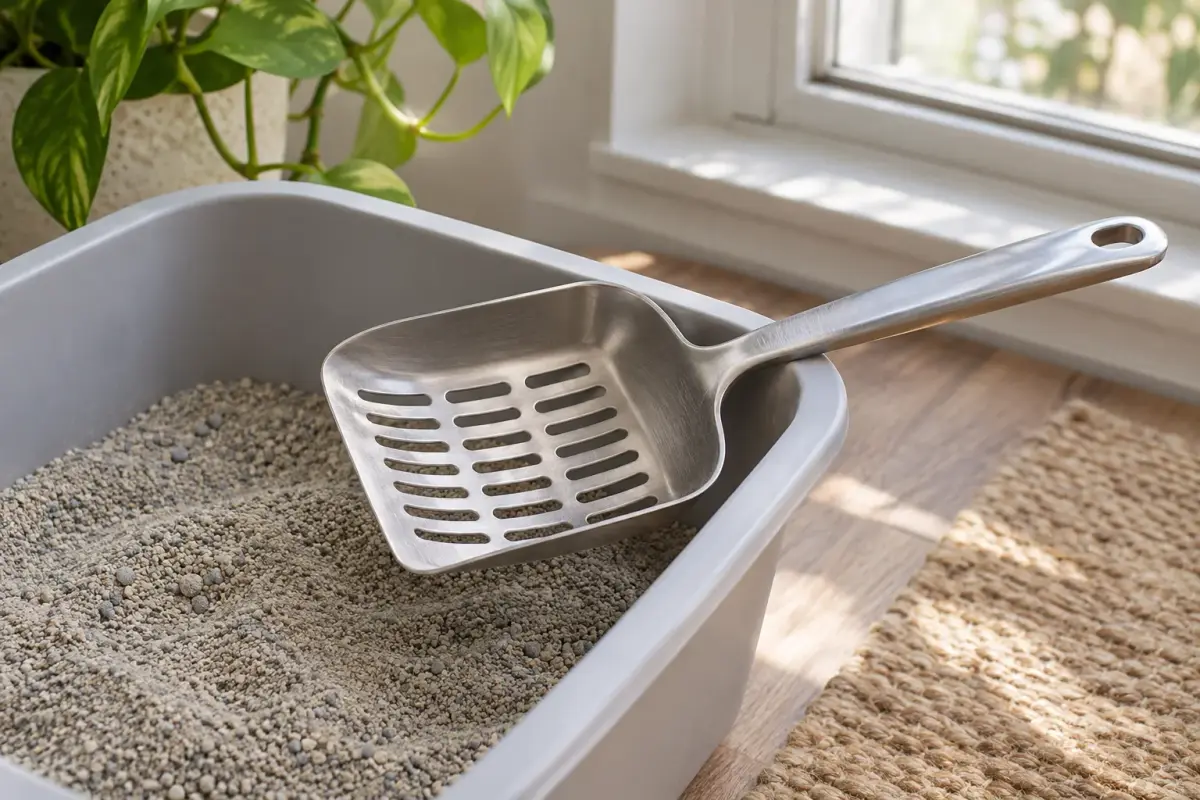
A metal scoop has a thin, firm edge that slides under a hardened clump without crushing it, and it does not hold odor the way scratched plastic can. A long-handled metal litter scoop is the type to look at if you use clumping clay or other clumping litter, since it lifts a firm clump cleanly and survives daily use.
Plastic scoops are lighter and cheaper, which suits a travel kit or a second box, but a thin edge can flex under a stubborn clump and old plastic scratches and holds smells. A mesh or slotted design, such as a mesh litter scoop with a lengthened handle, sifts clean litter through the openings and keeps only the waste. Mesh suits lighter litters and crystals best; check the opening size against your litter granule.
Slot size, edge and handle
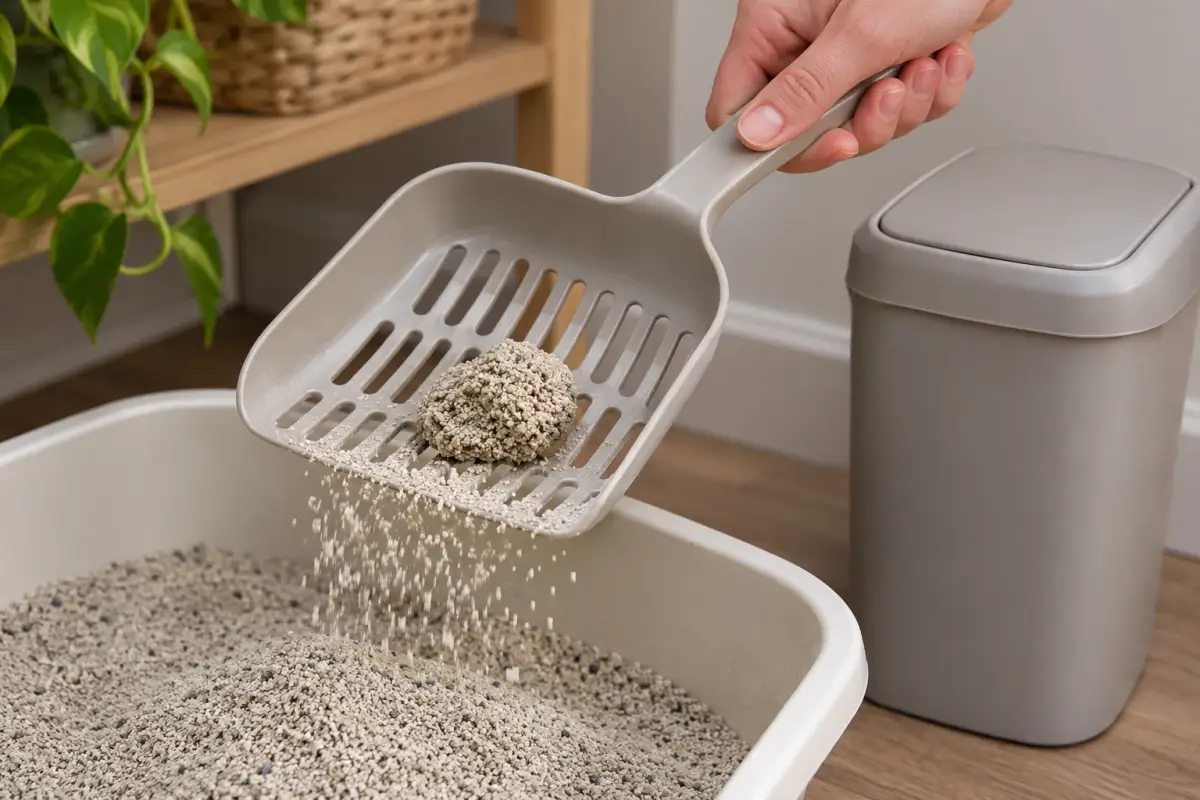
Slot size should match your litter. If the openings are too wide, small clumps and clean granules both fall through and you leave waste behind; if they are too narrow, clean litter does not shake free and you throw away more than you need. Fine, clumping litter generally calls for narrower slots than coarse pellets. Shake gently over the box and see whether the clean litter falls and the clump stays.
The edge matters as much as the slots. A flat, thin leading edge gets under clumps against the bottom of the box, which is especially helpful in a shallow-lined box. Handle length is personal: a longer handle keeps your hand away from the box and is easier on the back in a covered or tall-sided box, while a short handle gives more control in a small tray. Think about where you keep the box and how high the sides are.
Which scoop suits which household
For one cat on clumping litter, a sturdy metal scoop with fine slots is the straightforward answer. For several cats, the extra scooping makes a long handle and a comfortable grip worth more, because you will use it more than once a day. For non-clumping or crystal litter, pick a slotted or mesh scoop made for those granules, since a clump-style edge does not apply.
For kittens or older cats with low-sided boxes, keep the scoop within easy reach and scoop gently so the box stays inviting. VCA notes that young kittens, elderly cats and cats with mobility problems need boxes with low sides, and a scoop that fits the shallow box makes quick daily work of it. If you are choosing the box too, our litter boxes page and guide to the best litter boxes cover that side.
Disposal, storage and what to avoid
Keep the scoop close to the box, either in a holder or on a hook, and wash it with mild, unscented soap now and then, because the ASPCA warns that strongly scented cleaners can put a cat off a scent. Use bags to carry waste out; a pack of litter disposal bags keeps the process tidy. Never flush litter or clumps; follow your local waste rules.
Avoid a scoop that is flimsy, has sharp burrs on the metal, or has slots that clog. Avoid heavily perfumed gadgets and cleaners near the box, since the ASPCA says most cats prefer unscented litter and Cornell likewise advises unscented products. A litter mat beside the box catches stray granules, and our cat litter page covers the litter itself. All our litter accessories are on one page.
Litter scoop bodies and sifting openings
| Construction | Physical distinction | What to compare |
|---|---|---|
| Metal | A firm metal edge | Edge shape and handle connection |
| Plastic | A lighter molded body | Flex,scratches and edge condition |
| Mesh or slotted | Openings let loose litter pass through | Opening size against the litter granules |
| Long handle | More distance between hand and scoop | Grip and storage space |
Common questions
Is a metal or plastic litter scoop better?
Metal gives a firm edge for lifting clumps and does not hold odor as readily. Plastic is lighter and cheaper, which suits a travel kit. For clumping litter, most owners find metal easier.
How often should I scoop the litter box?
Cornell Feline Health Center advises removing stool and clumps daily if you use clumping litter, and adding clean litter as needed. Change the litter often enough that it looks and smells dry and clean.
What slot size should a litter scoop have?
Choose slots that let clean litter fall through while holding clumps. Fine clumping litter needs narrower slots than coarse pellets, so shake a scoop over the box to check.
How do I clean a litter scoop?
Wash it with mild, unscented soap and rinse it well. The ASPCA notes that strongly scented cleaners can put cats off a scent, so avoid perfumed products near the box.
My cat stopped using the litter box; is the scoop the problem?
A dirty box is a common cause, so scoop daily and keep it clean. If your cat keeps going elsewhere, call your vet, since house-soiling can have medical causes.
Sources we checked
This guide is general information, not veterinary advice. If your pet is unwell or injured, contact your veterinarian.