






Buying guides
Best Aquarium Substrate: Gravel, Sand or Planted Soil?
The best aquarium substrate depends on what lives in the tank. Gravel is the easy all-rounder, sand suits bottom-dwelling fish that sift the floor, and a loosely packed planted substrate suits rooted plants such as Amazon sword. PetMD lists gravel, sand, pebbles and planted substrate as the main options, and says to rinse non-bioactive gravel before use.
By Matt GarnettUpdated November 14, 20264 min read2 sources
What matters most in an aquarium substrate
Choose substrate for the animals and plants first and the look second. Ask what lives on the bottom: fish that dig or sift need a soft, smooth grain, rooted plants need something loose they can push roots into, and a tank with only floating or attached plants can use almost anything. Our aquarium substrate range spans gravel and decorative options, so narrow it down with those needs.
Grain size matters as well. Very fine particles pack tightly and can trap debris, while larger gravel lets water move between pieces but can swallow fish food. Pick a size your fish cannot swallow or get stuck in, with smooth edges that will not scrape delicate fins or barbels.
Substrate types compared
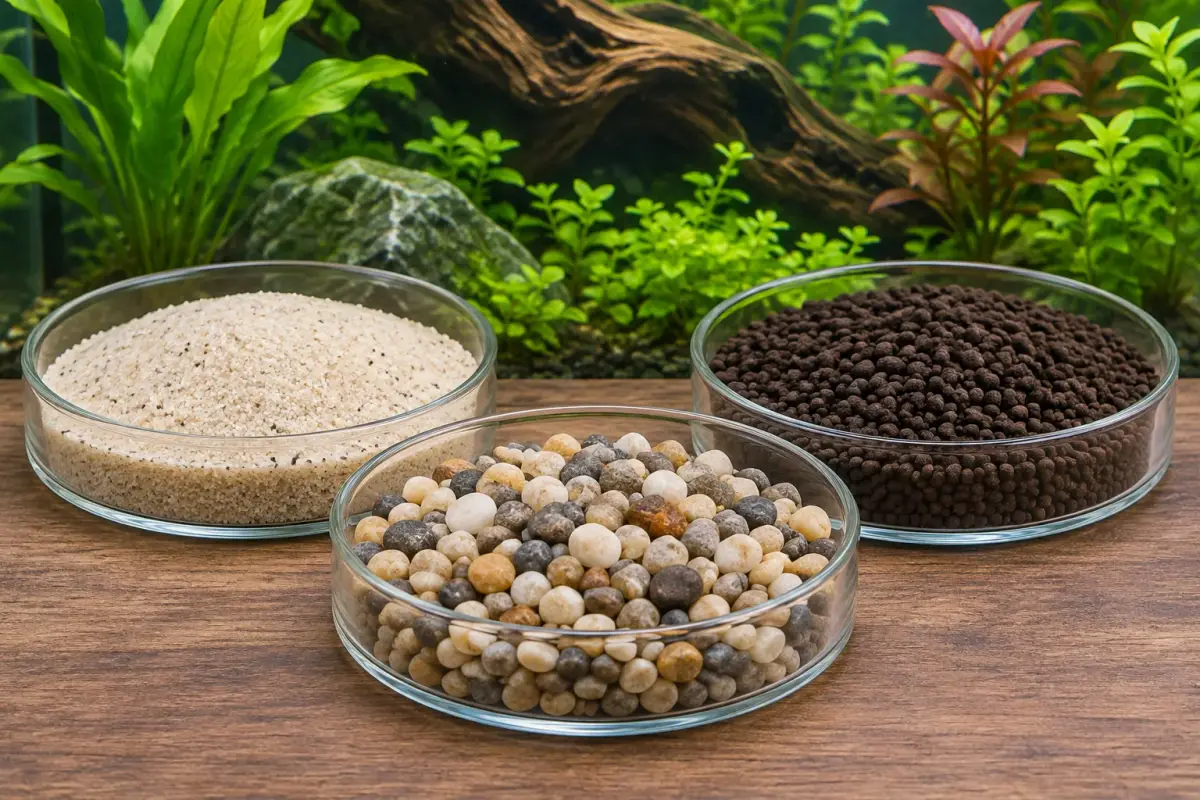
Gravel is the classic choice. It is easy to buy, easy to vacuum, and holds decorations and rooted plants reasonably well. Decorative potted gravel, like this decorative aquarium gravel, gives a finished look but still needs rinsing before it goes in the tank.
Sand has a natural look and suits bottom feeders, but it can compact and needs gentle stirring so waste does not settle in one spot. Pebbles are chunky and easy to rinse but leave gaps where food falls. Planted substrates are designed to feed rooted plants, and PetMD names Amazon sword as a plant that grows in most substrates, including gravel, but thrives in loosely packed plant substrate.
Best substrate for each situation
Community fish tank with few plants: gravel in a natural tone. Corydoras and other bottom-dwellers: smooth sand or fine rounded gravel. Heavily planted tank with rooted plants: a planted substrate, or gravel topped over a plant-friendly base, as PetMD suggests for Amazon sword.
If your plants are java fern or java moss, the substrate barely matters, because PetMD says java fern rhizomes do not like being buried and both plants attach to rock or wood. For those, choose whatever suits your fish. Our aquarium plants page and the best aquarium plants guide help you match plants to the base.
What to avoid
Avoid unrinsed substrate. PetMD says to rinse non-bioactive gravel before use, and cloudy water is the usual price of skipping it. Avoid sharp crushed rock and coarse shells unless your fish species needs the minerals, and check any decorative coating is labeled aquarium-safe.
Do not choose substrate on color alone. Dark substrate can make fish colors stand out but hides waste, and very bright dyed gravel may fade or flake in water. Also avoid mixing wildly different grain sizes in one layer, because the fine pieces sink and clog the gaps.
Setting up and rinsing substrate
Rinse small batches in a clean bucket with plain water, never soap, stirring until the water runs mostly clear. Add the damp substrate to the empty tank, slope it slightly higher toward the back if you like, then add water slowly onto a plate or bag so you do not blast a crater.
After setup, the tank still needs to cycle. PetMD says cycling takes four to six weeks naturally, or a few days with beneficial bacteria products, and that you should test for ammonia, nitrite and nitrate before adding fish. A cycled tank shows no ammonia or nitrite and low nitrate.
Cleaning and keeping substrate healthy
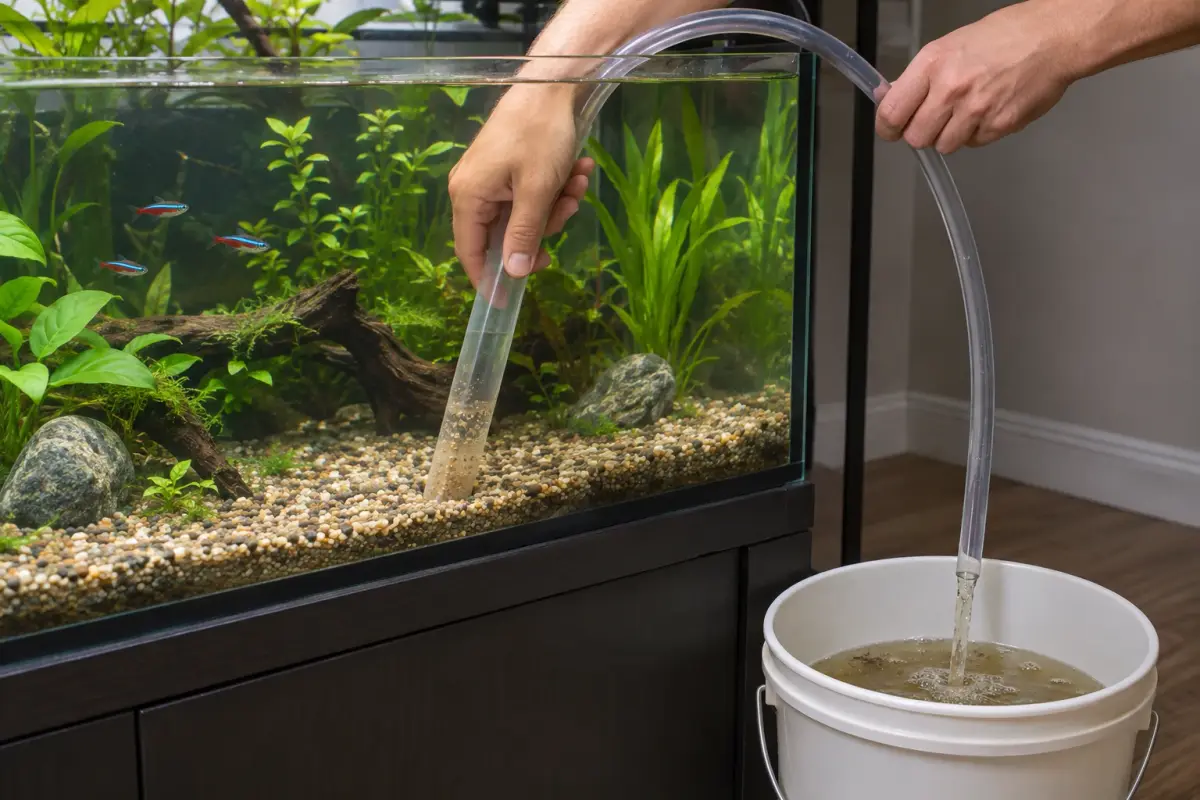
Vacuum the surface during water changes to lift out waste and uneaten food. A gravel vacuum or an electric gravel cleaner, such as this aquarium gravel cleaner kit, speeds the job, but go gently around plant roots.
Clean part of the tank at a time rather than stripping everything at once, since a sudden clean-out can upset water quality. For more tools, see our aquarium supplies, and for water flow see our guide to aquarium filters. If water quality turns bad or fish seem unwell, ask an aquatic vet or a good local fish shop for help.
Substrate forms and maintenance access
| Form | Physical distinction | What to check |
|---|---|---|
| Gravel | Small loose stones | Granule size and access for vacuuming |
| Sand | Finer loose particles | Compaction and the cleaning method |
| Pebbles | Larger stones with wider gaps | Gaps where debris may collect |
| Planted substrate | Material formulated for rooted plants | Exact composition and intended setup |
Common questions
Is sand or gravel better for an aquarium?
Neither is best for every tank. Gravel is easy to clean and suits most community tanks, while smooth sand suits fish that sift the bottom. Match the grain to your fish and plants.
Do I need to rinse aquarium gravel?
Yes. PetMD says to rinse non-bioactive gravel before use. Rinse it in small batches with plain water, no soap, until the water runs mostly clear, then add it to the empty tank.
What substrate do live plants need?
It depends on the plant. PetMD says Amazon sword grows in most substrates but thrives in loosely packed plant substrate, while java fern should not be buried and can attach to rock or driftwood.
How long should I wait before adding fish to a new tank?
PetMD says cycling takes four to six weeks naturally, or a few days with beneficial bacteria products. Test daily and add fish only when ammonia and nitrite read zero and nitrate is low.
Sources we checked
This guide is general information, not veterinary advice. If your pet is unwell or injured, contact your veterinarian.


