






Buying guides
Best Aquarium Plants: Live vs Artificial and How to Choose
The best aquarium plants are the ones that suit your light, your fish and the time you have. Beginners do well with tough live plants such as java fern, java moss and hornwort, while artificial plants are the low-maintenance choice and still give fish shelter. Check that your fish will not eat or uproot them, and never release unwanted plants outdoors.
By Matt GarnettUpdated November 14, 20264 min read3 sources
What matters most when choosing aquarium plants
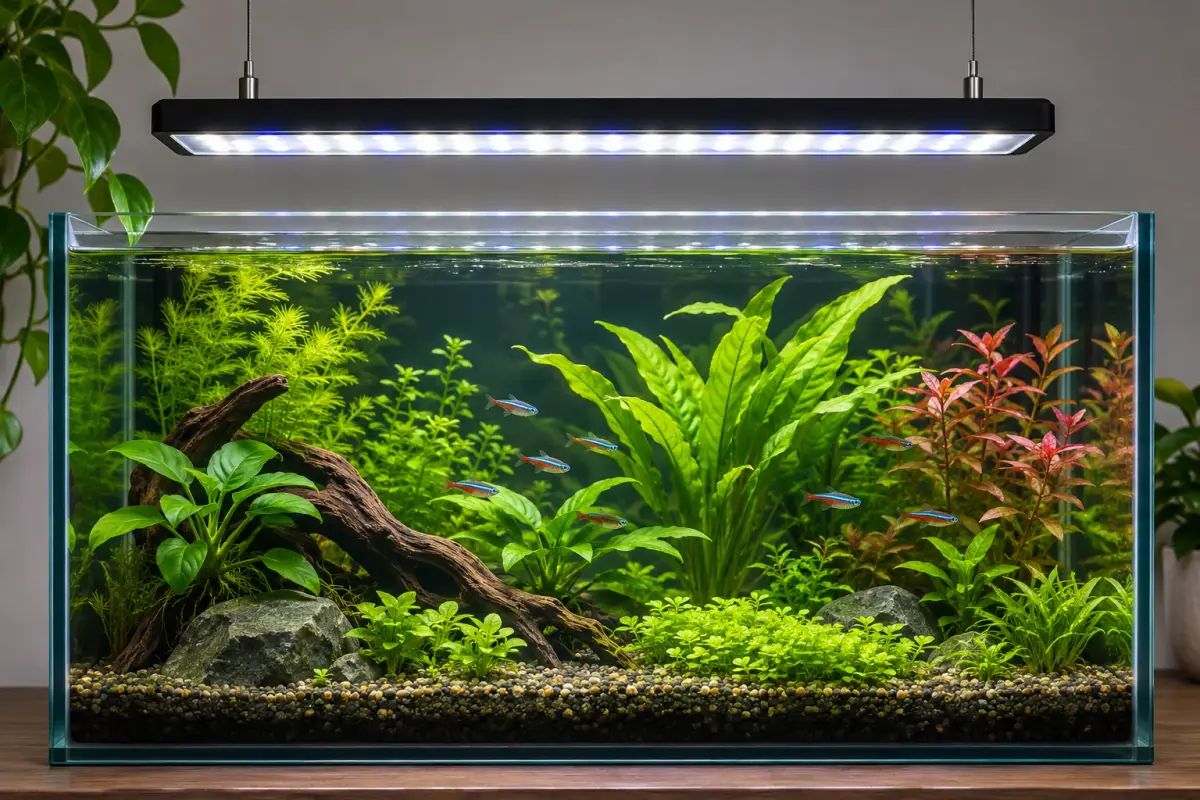
Start with three questions: how much light your tank gets, which fish you keep, and how much upkeep you want. Live plants can improve water quality and appearance but need more care, according to PetMD, while artificial plants are easier to maintain and still provide shelter. Our aquarium plants range covers both, so decide which route suits you before you shop.
Next, think about where each plant will sit. Tall plants belong at the back, low carpets and moss near the front, and floating plants at the surface where they shade the tank. Leave room for fish to swim, and avoid packing the tank so tightly that debris collects in the gaps.
Easy live plants for beginners
PetMD lists five forgiving species. Java moss grows in low or high light and attaches to gravel, rocks and driftwood. Java fern prefers subdued light and, importantly, its rhizomes do not like being buried, so you tie or glue it to rock or wood instead of planting it. Hornwort can be anchored or left floating, and grows much faster floating.
Amazon sword wants moderate to strong light and does best in a loosely packed plant substrate, and anacharis is planted with an inch or two between stems or left to float. All of these are widely sold and tolerate beginner mistakes better than delicate carpeting plants. Floating species also soak up light, so give them a trim before they shade out everything beneath.
Live vs artificial plants compared
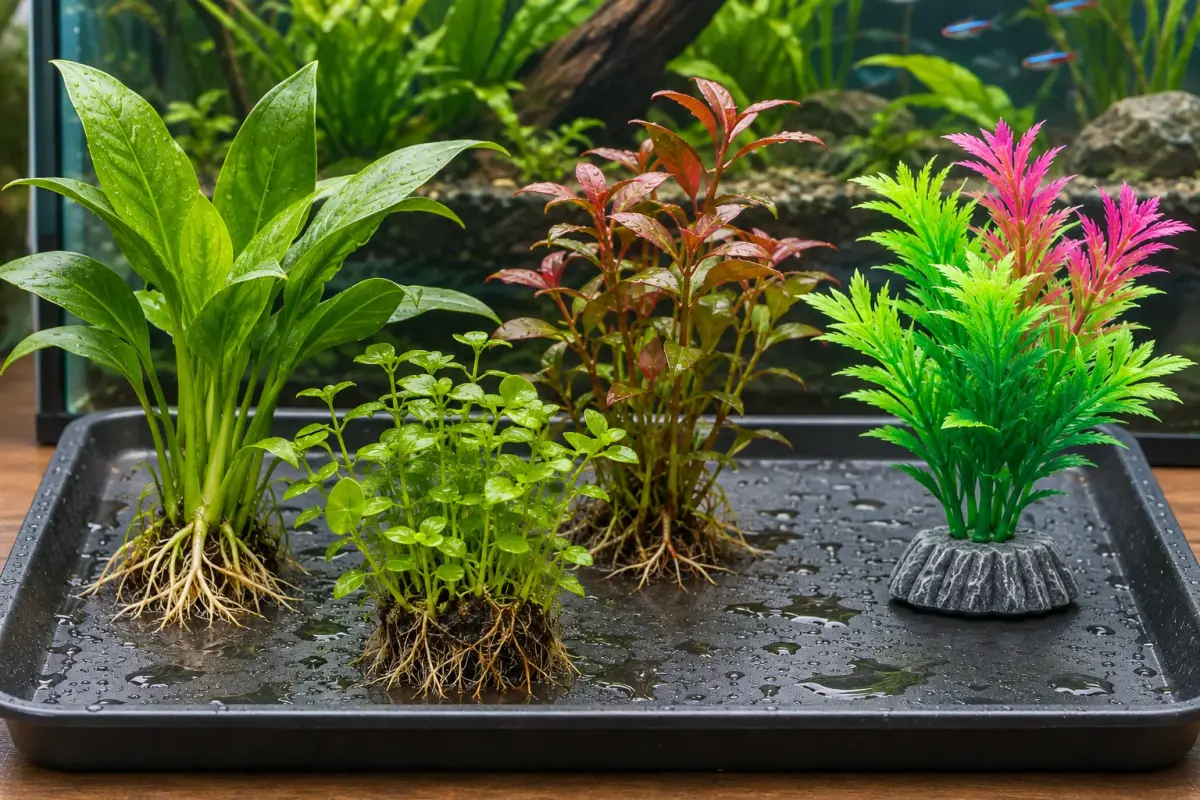
Live plants need light that suits the species and regular trimming, but they add natural cover and grow with your tank. Artificial plants need only an occasional rinse, never need light or trimming, and suit tanks with plant-eating fish or very dim lighting. Many hobbyists mix both.
If you choose artificial, look for smooth edges that will not snag fins, and a weighted base. Simple silk or plastic designs such as this artificial aquarium plant, a fish tank ornament plant or a plastic aquarium landscaping plant work for most community tanks. Rinse any new decoration in plain water first.
Best plants for each situation
Low light or a first tank: java fern and java moss, or artificial plants. Bright tank with peaceful fish: Amazon sword and anacharis. Fast growth to compete with algae for nutrients: floating hornwort. Tank with large or aggressive fish: artificial plants, since PetMD notes oscars, Texas cichlids and other rough fish may attack Amazon swords, and large aggressive fish uproot anacharis.
Match plants to your fish too. Gouramis and angelfish eat hornwort, according to PetMD, and snails and shrimp munch on its shed debris. Always check the species before buying, because plant-eating fish can strip a new planting in days.
What to avoid
Avoid buying plants without a scientific name, since common names are loose and some invasive plants are sold as pretty aquarium stock. Minnesota DNR warns that invasive plants such as hydrilla can grow rapidly and completely overtake aquarium habitats, and advises inspecting new purchases for stowaways such as eggs, seeds and plant fragments.
Also avoid planting rhizome plants like java fern deep in the substrate, and avoid sharp-edged decorations that could tear fins. If you use plant fertilizer, such as aquatic plant nutrition tablets, follow the pack instructions and check they suit your fish and any invertebrates.
Getting rid of unwanted plants safely
Minnesota DNR is clear: never release aquarium pets or plants into the environment, because releasing them into public waters is illegal and can harm the environment. Dispose of unwanted plants in a sealed plastic bag in the trash, and do not compost them, because seeds and reproductive parts may stay viable even after composting.
You can also freeze unwanted plants in a sealed bag to be sure they are dead, or give or trade extras with other hobbyists or a local aquarium society.
Next steps
Once you have chosen plants, pick the base they grow in. Our aquarium substrate range and the aquarium supplies page cover that, and a planted tank still needs a proper aquarium filter.
Introduce plants gradually, watch how your fish treat them for a few days, and adjust. Cycling the tank before adding fish matters too, and PetMD says that takes four to six weeks naturally, so use that time to let new plants settle in.
Living plants and artificial decorations
| Format | What changes over time | Inspect before choosing |
|---|---|---|
| Living plant | Growth and trimming change the shape | Exact plant needs and tank compatibility |
| Artificial silk-style | A fabric or flexible imitation remains fixed | Actual material,edges and attachment |
| Artificial plastic | A molded imitation remains fixed | Edges,base and aquarium-use instructions |
Common questions
What are the easiest live aquarium plants?
PetMD names java moss, java fern, Amazon sword, anacharis and hornwort as beginner-friendly. Java fern and java moss are the toughest in low light and do not need planting in the substrate.
Do I need live plants in my aquarium?
No. PetMD notes that artificial plants are easier to maintain and still give fish shelter, while live plants can improve water quality and appearance but need more care.
Why should I not bury java fern?
PetMD says its rhizomes do not like being buried. Attach java fern to rock or driftwood with thread or aquarium glue, or let it float, and it will anchor itself over a few weeks.
How do I get rid of aquarium plants I no longer want?
Seal them in a plastic bag and put them in the trash. Minnesota DNR says not to compost or release them, because seeds and fragments can survive and invasive plants can spread.
Sources we checked
This guide is general information, not veterinary advice. If your pet is unwell or injured, contact your veterinarian.


