






Buying guides
Best Aquarium Lights: What Actually Matters
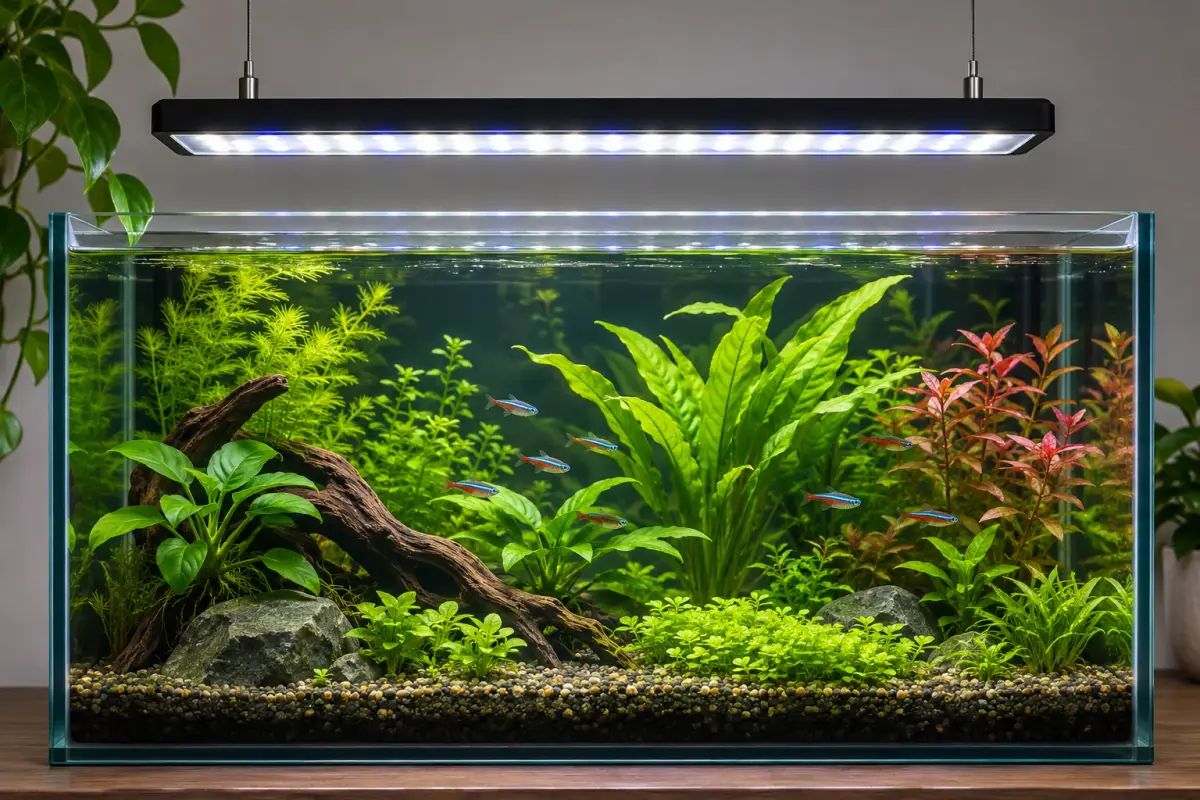
The best aquarium light is the one matched to what lives in your tank: fish-only tanks need modest light, while live plants need more. Fit, a timer and keeping the tank out of direct sun matter as much as the light itself. Browse our aquarium lights, then use this guide to decide what your tank needs.
By Matt GarnettUpdated November 14, 20265 min read3 sources
Start with what lives in the tank
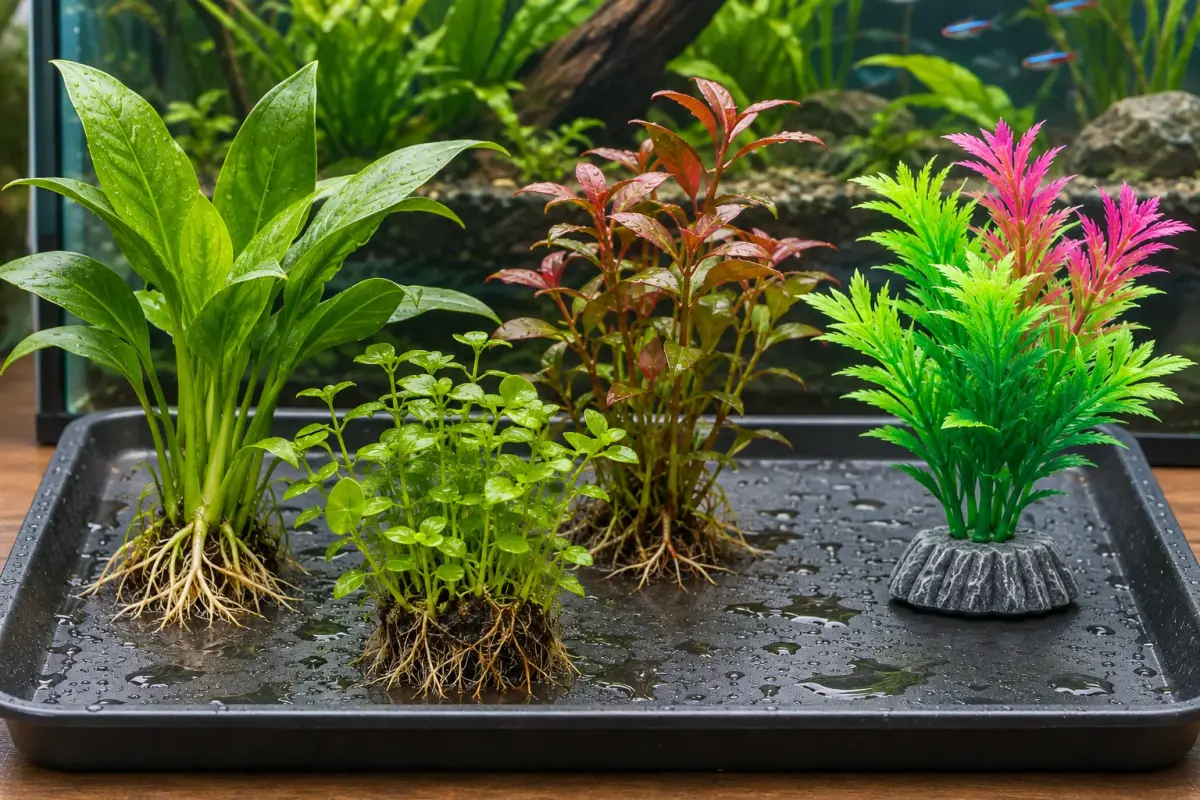
The first question is not which light, but what the light is for. A fish-only tank needs light mainly so you can see the fish and so they have a day and night rhythm. A tank with live plants needs more, because plants use light to grow. VCA Animal Hospitals notes that a tank light is needed to maintain a proper environment for fish and plant life, but it does not give a single recommended type or intensity.
That lack of one number is honest, because the right amount depends on the species and the setup. Hardy low-light plants and a few fish need little. Demanding plants need far more. Before buying, decide whether you plan to keep real plants now or later, and choose a fixture that has room to grow with your plan rather than one you will replace in six months.
Light types: LED, fluorescent and incandescent
Most modern aquarium lights are LED, because they run cool, use little power and last a long time. Older fluorescent tubes are still around and work well, but they need replacing as they age and give off more heat. Basic incandescent bulbs are the cheapest to buy but warm the water and use more power, and they are now uncommon.
For most home tanks, an LED fixture sized to the tank's length is the practical default. A compact aquarium lamp suits a small tank, while longer tanks need a fixture that spans most of the top so light is even. Check that the fixture is made for aquarium use, with a water-resistant or splash-proof housing, because it sits right over the water.
Size, fit and the tank lid
Measure the top of the tank, including any rim or brace, before you choose. A fixture that is shorter than the tank leaves dark ends, and one that is longer may not sit on the rim. Check how the light mounts: some rest on the glass, some clip to the rim, and some hang from above, and each needs a certain clearance.
Think about the lid, too. A tank with a hood or glass cover needs a fixture that fits under or on top of it, and covers help keep fish in and reduce evaporation. If you use a hood, make sure there is airflow so the light does not trap heat. Leave space to reach the equipment for feeding and cleaning without moving the fixture.
Light, algae and sunlight
More light is not always better. Algae grows where light, water and nutrients meet, and too much light with too little plant growth to use it is a common cause of green water and glass. PetMD advises keeping the tank away from direct sunlight to prevent algae growth, and that applies on top of whatever the fixture provides.
Sunlight also changes with the seasons and the time of day, so a window spot gives you light you cannot control. The Merck Veterinary Manual notes that sunburn can occur in surface-swimming fish and that providing shade solves the problem, a reminder that unmanaged sun is a hazard as well as an algae risk. Put the tank where only your own light reaches it.
Timers and a steady routine
Fish do best on a regular rhythm, so put the light on a timer rather than relying on switching it by hand. A plug-in timer is cheap and keeps the day and night length the same every day, including when you are away. A routine that changes from day to day, or a light left on overnight, upsets the fish and encourages algae.
If algae appears, the first adjustment is usually the length of the light period, not the fixture. Shorten the day a little, check the tank is away from windows and look at feeding and cleaning habits as well. Make changes one at a time and give the tank a couple of weeks before judging. If fish look stressed or ill, speak to a vet who treats fish.
Once you know what your tank needs, browse our aquarium supplies for the rest of the setup.
Who needs which kind of light
A beginner with a small fish-only tank can choose a simple, low-power LED and a timer. Someone who wants a planted tank should choose a fixture designed for plants and be ready to manage algae as the plants establish. Our aquarium plants range pairs with the lighting question, and the guide to best aquarium plants covers plant choice.
If you keep a larger tank, check that the fixture covers its length and that the stand and lid can carry it. Our guide to a fish tank stand covers the support side. Whatever you choose, buy for the tank and the animals you have now, with a clear idea of what you may add later.
Checklist before you buy
Run through a short list. Does the fixture span your tank and sit on its rim or lid? Is it made for aquarium use with a splash-resistant housing? Does it suit the fish and plants you have? Can it go on a timer? Is the tank out of direct sun? Answer these first and style comes last.
When you are ready, browse our aquarium lights and compare sizes against your tank. If your fish show signs of stress, stop eating or look unwell after a lighting change, put the light back to its old routine and ask a vet who treats fish. This page is general information, not veterinary advice, and it cannot replace an examination by the vet who knows your pet.
Common questions
What is the best light for a fish-only tank?
A modest LED fixture sized to the tank's length is usually enough, because fish need light mainly so you can see them and to give a day and night rhythm. Add a timer so the schedule is steady.
Do aquarium plants need special lights?
Live plants use light to grow, so they need more than a fish-only tank, and demanding plants need far more. Choose a fixture made for plants and be ready to manage algae while they settle in.
Why is my aquarium growing algae?
Algae grows when light and nutrients outpace what the plants can use. Keep the tank out of direct sunlight, as PetMD advises, put your light on a timer and try shortening the light period a little.
Should I put my aquarium light on a timer?
Yes. A plug-in timer keeps day and night the same every day, including when you are away, which suits the fish and helps keep algae under control compared with switching the light on and off by hand.
Can I put my fish tank near a window?
It is best not to. PetMD and VCA both advise keeping a tank away from direct sunlight and windows, since sun feeds algae and warms the water unevenly. Use your own light on a timer instead.
Sources we checked
This guide is general information, not veterinary advice. If your pet is unwell or injured, contact your veterinarian.


