Breeds
Alaskan Husky vs Siberian Husky: What Is the Difference?
The main difference between an Alaskan Husky and a Siberian Husky is that only the Siberian is a recognized breed. The AKC lists a Siberian Husky at 20 to 23.5 inches and 35 to 60 pounds. Alaskan Huskies are sled dogs selected for racing performance, not looks, so their size and coat vary widely from dog to dog. Researchers describe them as genetically distinct from the Siberian, even though Siberians are among their ancestors.
By Matt GarnettUpdated November 13, 20265 min read3 sources
The short answer: a breed versus a type of sled dog
The Siberian Husky is an AKC-recognized breed with a written standard. The AKC describes it as a thickly coated, compact sled dog of medium size and great endurance, developed to work in packs and pull light loads at moderate speeds over vast frozen expanses, and calls the breed friendly, fastidious and dignified. A male stands 21 to 23.5 inches and weighs 45 to 60 pounds; a female stands 20 to 22 inches and weighs 35 to 50 pounds, with a listed life expectancy of 12 to 14 years.
The Alaskan Husky is different. A genetics paper in the journal BMC Genetics notes that Alaskan sled dogs are not recognized by the American Kennel Club as a distinct breed and are not confined to a breed standard of size or appearance. They are informally called a breed because their working behavior is consistent. If you are planning for a husky-type dog, that single fact changes how much you can predict from the label.
Where each one comes from
The same research describes Alaskan sled dogs as selected strictly for racing performance, based solely on athletic prowess. Their ancestry includes the Alaskan Malamute and Siberian Husky, which contribute endurance, and the Pointer, which has been bred in repeatedly and is associated with speed. Saluki, Afghan Hound, Borzoi, Anatolian Shepherd and Great Pyrenees also showed up in the analysis. The study found them more genetically distinct than breeds of similar heritage such as the Malamute and Siberian Husky.
The researchers could even tell sprint dogs from distance dogs by their DNA: distance dogs carried about 11 percent more Malamute and Siberian Husky ancestry than sprint dogs. A Siberian Husky, by contrast, is bred toward a standard, so two well-bred Siberians are far more alike than two Alaskan Huskies from different kennels.
Size, build and coat
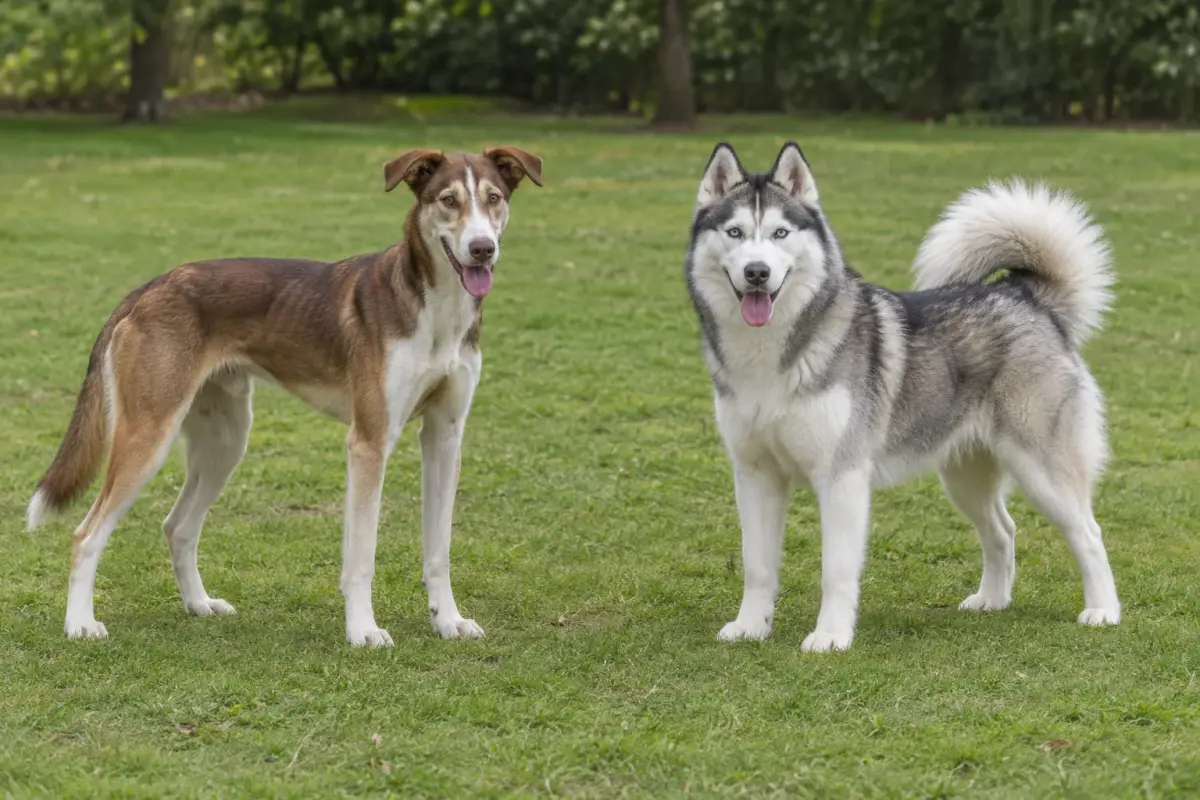
With a Siberian Husky you can use the AKC ranges above as a guide. With an Alaskan Husky there is no standard, so figures you find online vary and should be treated cautiously. The National Human Genome Research Institute notes that appearance varies widely in sled teams, with short-furred and long-furred dogs, and that some resemble Irish Setters or German Shepherds. Measure the individual dog and ask the breeder for the parents' sizes and coat types rather than relying on the name.
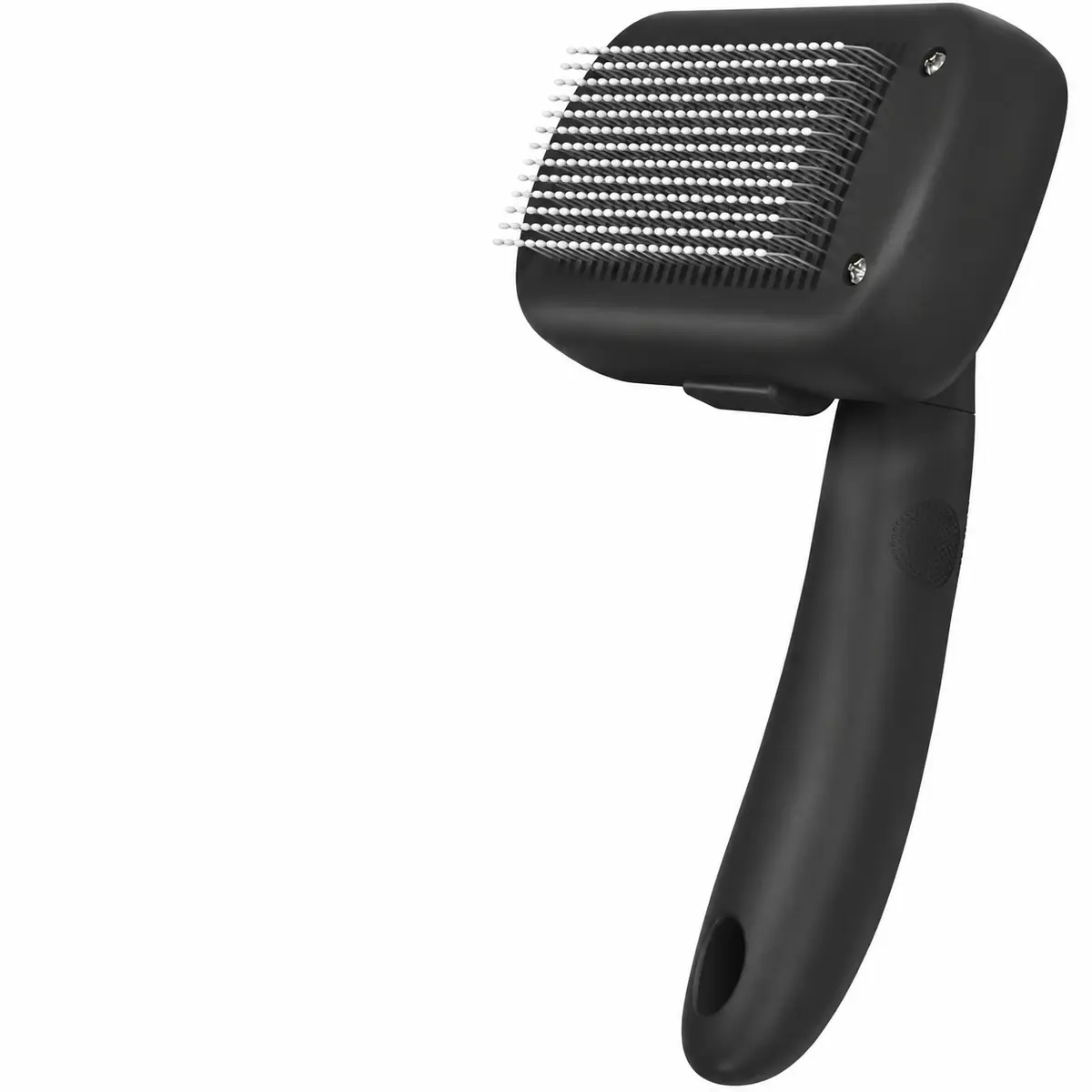
The AKC describes the Siberian as thickly coated, which means a lot of hair to manage through the year. Whatever the type, regular brushing keeps a thick coat clean and helps you notice skin problems early. Our deshedding tools collection covers loose-undercoat tools such as a self-cleaning deshedding comb and an ergonomic deshedding brush, and our husky brush guide explains how to choose between them.
Temperament, drive and energy
The AKC calls the Siberian Husky friendly, fastidious and dignified, with great endurance. Alaskan Huskies were assessed for speed, endurance and work ethic, measured in one study by the tension in each dog's tugline, so they were selected for how they perform in harness. That does not make every Alaskan Husky intense or every Siberian calm, but it is a reason to meet the parents and the dog before you commit.
Both kinds were developed to run long distances, and a husky left with nothing to do may dig, chew or escape. Plan for daily, purposeful exercise, a securely fenced yard and mental work such as scent games and training. If you want to compare the Siberian with the other classic northern breed, see our Siberian Husky vs Alaskan Malamute guide, or read the full Siberian Husky breed page.
Which one should you choose?
If you want a predictable size, a published standard and a breed with a known profile, the Siberian Husky is the safer choice, and its listed 12 to 14 years gives you a rough planning horizon. If you are drawn to an Alaskan Husky, usually from working or racing lines, expect more variation and ask detailed questions about the parents, their jobs and their health testing.
Either way, a husky needs gear that fits. Measure your dog's chest and neck before ordering, and look at harnesses for huskies designed around their build and pulling instinct, and the brushes in our deshedding collection for the coat. Our guide to choosing a husky harness covers fit in more detail.
Health, lifespan and when to see a vet
The AKC lists 12 to 14 years for the Siberian Husky. There is no breed figure for the Alaskan Husky, so ask your vet what to expect for the individual dog and schedule a check-up soon after you bring one home. Active working-line dogs can pick up foot, joint and muscle injuries, so see your vet if you notice limping, a cracked pad, stiffness or a change in appetite or energy.
This page is general information, not veterinary advice, and it cannot replace an examination by the vet who knows your pet.
Common questions
Is an Alaskan Husky bigger than a Siberian Husky?
There is no breed standard for the Alaskan Husky, so there is no official size. The AKC lists the Siberian at 20 to 23.5 inches and 35 to 60 pounds, while Alaskan Huskies vary dog to dog depending on their lines. Check the parents' sizes for an individual puppy.
Can an Alaskan Husky be registered with the AKC?
Researchers note that Alaskan sled dogs are not recognized by the American Kennel Club as a distinct breed. The Siberian Husky is the recognized breed. Ask the breeder which registry, if any, a particular dog belongs to.
Is the Alaskan Husky a purebred dog?
Not in the kennel club sense. Studies describe Alaskan sled dogs as a mix drawn from several breeds, selected for athletic performance rather than appearance, though they are informally called a breed because their working behavior is consistent.
Which lives longer, a Siberian or an Alaskan Husky?
The AKC lists 12 to 14 years for the Siberian Husky. No breed figure exists for the Alaskan Husky, so ask your vet about the individual dog and its lines. Good nutrition, exercise and regular vet visits all matter.
Sources we checked
This guide is general information, not veterinary advice. If your pet is unwell or injured, contact your veterinarian.