






Buying guides
Best Harness for a Husky: What Actually Matters
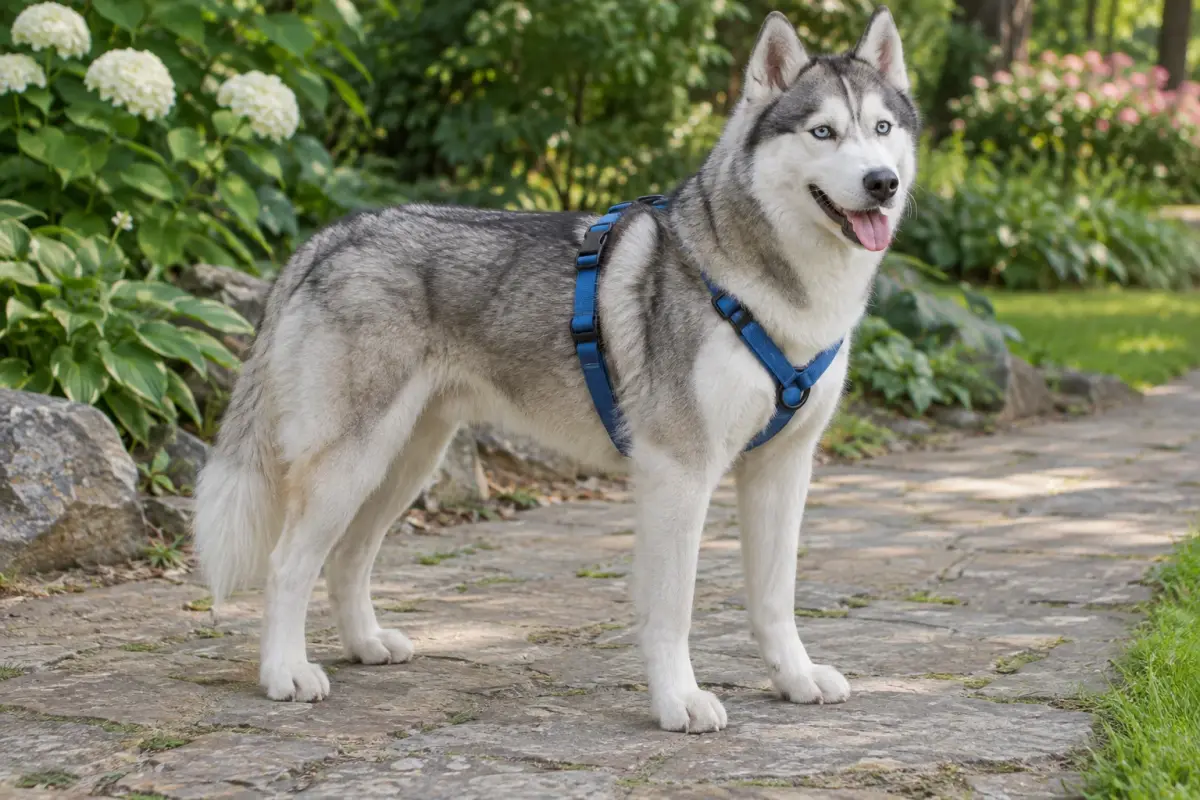
The best harness for a husky is a well-fitted one: sized to the dog's chest rather than the label, adjustable enough to sit snugly over a thick coat, and with a front or dual clip for walks where the dog leans into the leash. Most adult Siberian Huskies weigh 35 to 60 pounds. Browse our harnesses for huskies once you have measured the neck and chest.
By Matt GarnettUpdated November 14, 20264 min read3 sources
Size first: what a Siberian Husky actually weighs
The American Kennel Club describes the Siberian Husky as a thickly coated, compact sled dog of medium size and great endurance. Its breed profile lists males at 21 to 23.5 inches tall and 45 to 60 pounds, and females at 20 to 22 inches and 35 to 50 pounds. That puts most huskies in medium or medium-large harness sizes, so check the size chart instead of assuming the largest size.
Do not pick by weight alone. The AKC's harness guide says to take two measurements: the circumference at the base of the neck, where it meets the shoulders, and the widest part of the chest, usually just behind the front legs. A cloth tape works best, or wrap string around the dog and measure it against a ruler. Compare both numbers with the size chart of any harness you are considering, and size up only if the chest measurement falls between two sizes.
Front clip, back clip or dual clip
A husky is a breed developed to pull, and the AKC notes the breed's history as a sled dog, so many owners meet a dog that leans hard into the leash. According to the AKC, front-clip harnesses often work well for dogs that pull, because the front attachment redirects the dog's forward movement and may discourage pulling. A back-clip harness is recommended mainly for dogs that are already well trained on a leash.
A dual-clip harness is a sensible middle path. The AKC says you can start with the front clip for control and switch to the back clip once the dog is calm and reliable on walks. If you want a front attachment point, a no-pull harness with a front clip and handle is one example of the design. Whatever you choose, a harness helps with control, but teaching loose-leash walking with rewards is what changes the pulling. If your dog lunges or reacts to other dogs, ask your vet about a referral to a veterinary behaviorist.
Fitting a harness over a thick double coat
A husky's coat can make a harness look snug when it is actually loose. The AKC says dogs with thick or fluffy coats may need slightly tighter adjustments to prevent slipping, and recommends checking fit by feel: you should be able to squeeze two fingers underneath any strap, but not slide a whole hand in. Start slightly loose, then tighten gradually.
Recheck the fit often. The AKC suggests reassessing after grooming appointments and after any weight gain or loss. Watch for rubbing, pressure points or skin irritation under the straps, and make sure the harness does not interfere with shoulder or leg movement. VCA adds that a harness can fail if it is not correctly fitted, because the dog can back up and slip out of it.
Escape-resistant styles and adjustable straps
VCA notes that a dog can back out of a poorly fitted harness, so look for several adjustment points: at least the neck, the chest and the girth, so you can tune the fit around the dog's shoulders rather than accepting one fixed size. An adjustable nylon harness made for medium and large breeds is an example of a design with straps you can tune. Metal buckles and webbing should feel solid, with no frayed stitching.
For dogs that wriggle out, the AKC quotes veterinarian Amy Attas saying step-in harnesses work well for escape artists, because they are harder to get out of when fitted properly. After you put the harness on, tug it from different directions, then back the dog up to see whether it slides over the head. If it does, tighten the straps or try a different cut.
Visibility, materials and what to avoid
Many husky owners walk in the early morning or after dark, so visibility is worth planning for. The AKC says some harnesses carry reflective stitching or material, and that reflective harnesses with LED lights are another option. A reflective adjustable vest harness is one example of the reflective style, and a light-up add-on can help on dark mornings.
Avoid harnesses that restrict shoulder movement, thin straps that dig into a heavy coat, and any size you plan to grow into. The AKC also notes that a loose fit lets a dog wiggle out and a tight one can be painful, especially in hot weather. For wider reading, see our best dog harness guide, our walkthrough on how to put on a dog harness, our no-pull dog harnesses and our dog leashes, or return to our harnesses for huskies.
Common questions
What size harness does a Siberian Husky need?
Most adult huskies weigh 35 to 60 pounds, according to the AKC, but harness sizes follow chest and neck measurements, not weight. Measure the base of the neck and the widest part of the chest behind the front legs, then compare with the size chart.
Is a front-clip harness good for a husky that pulls?
The AKC says front-clip harnesses often work well for dogs that pull because the front attachment redirects the dog's forward movement. It helps with control, but loose-leash training is what reduces the pulling over time.
How tight should a husky harness be?
Snug enough that you can fit two fingers under each strap but not a whole hand. The AKC notes thick or fluffy coats may need slightly tighter adjustments, so check the fit by feel rather than by eye, and recheck after grooming.
How do I stop a husky slipping out of its harness?
Check the fit with the two-finger test, tug the harness from different directions and back the dog up to see if it slides off. The AKC says a properly fitted step-in harness can suit escape artists, since it is harder to get out of.
Sources we checked
This guide is general information, not veterinary advice. If your pet is unwell or injured, contact your veterinarian.


