







Dogs
Furniture-style dog crates & end tables
Cozy spots for long naps.
29 items picked for everyday life with your pet, with shipping estimates on every item.
 Their favorite place in the house.
All dogs beds & furniture →Dog blankets →Elevated dog beds →Dog couches & sofa beds →Dog cooling mats →Dog beds →Orthopedic dog beds →Dog houses →Dog mattresses →Donut dog beds →Dog couch covers →Dog crate beds →Dog steps for couch →
↗Tracked US shippingEstimates on every item↶Returns & refundsHow it works♡Here to helpTalk to Giddy Pets
Find their favorites
Shop dog crates by type
Choose a section to narrow the range.
All furniture-style dog crates & end tables
Little essentials. Lots of love.


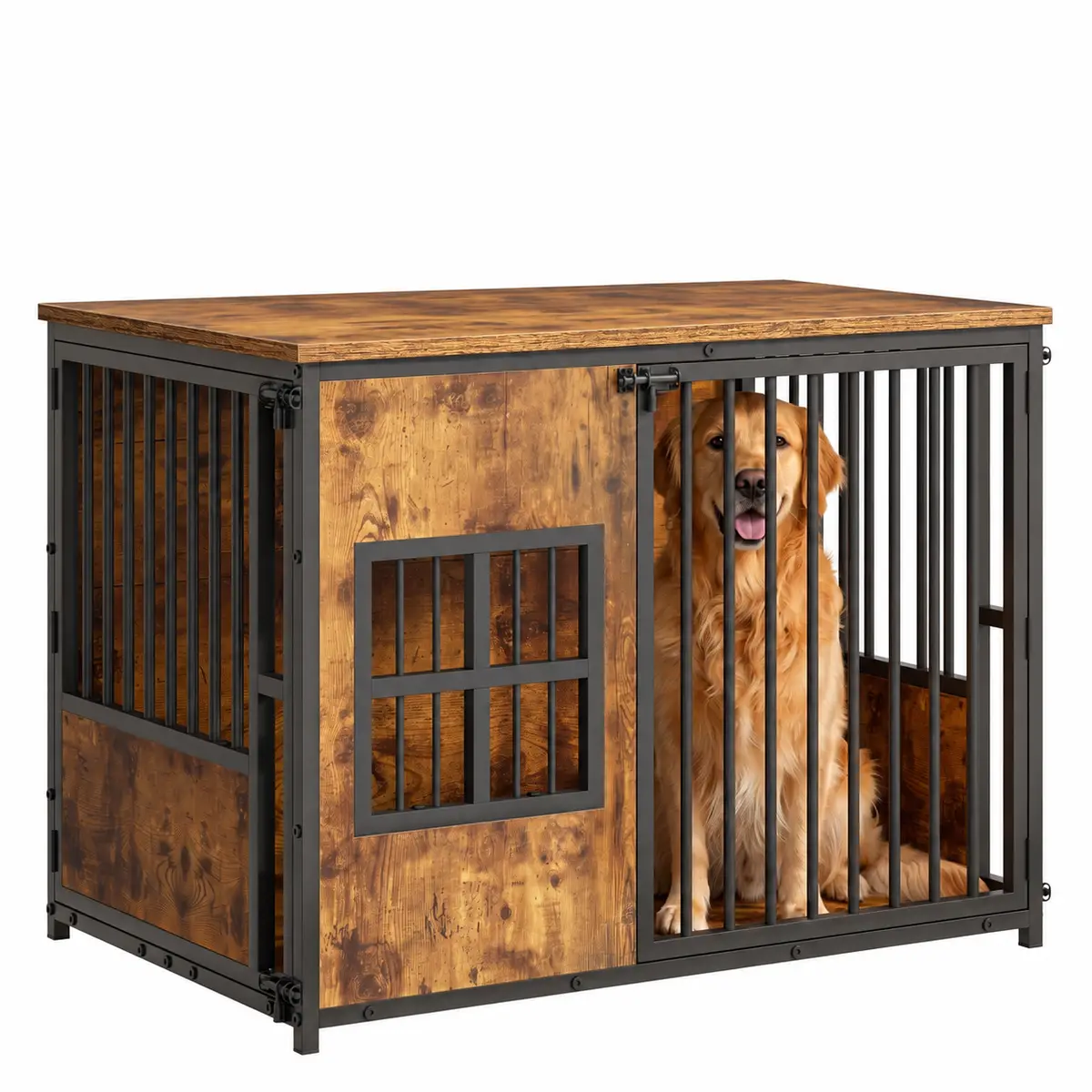
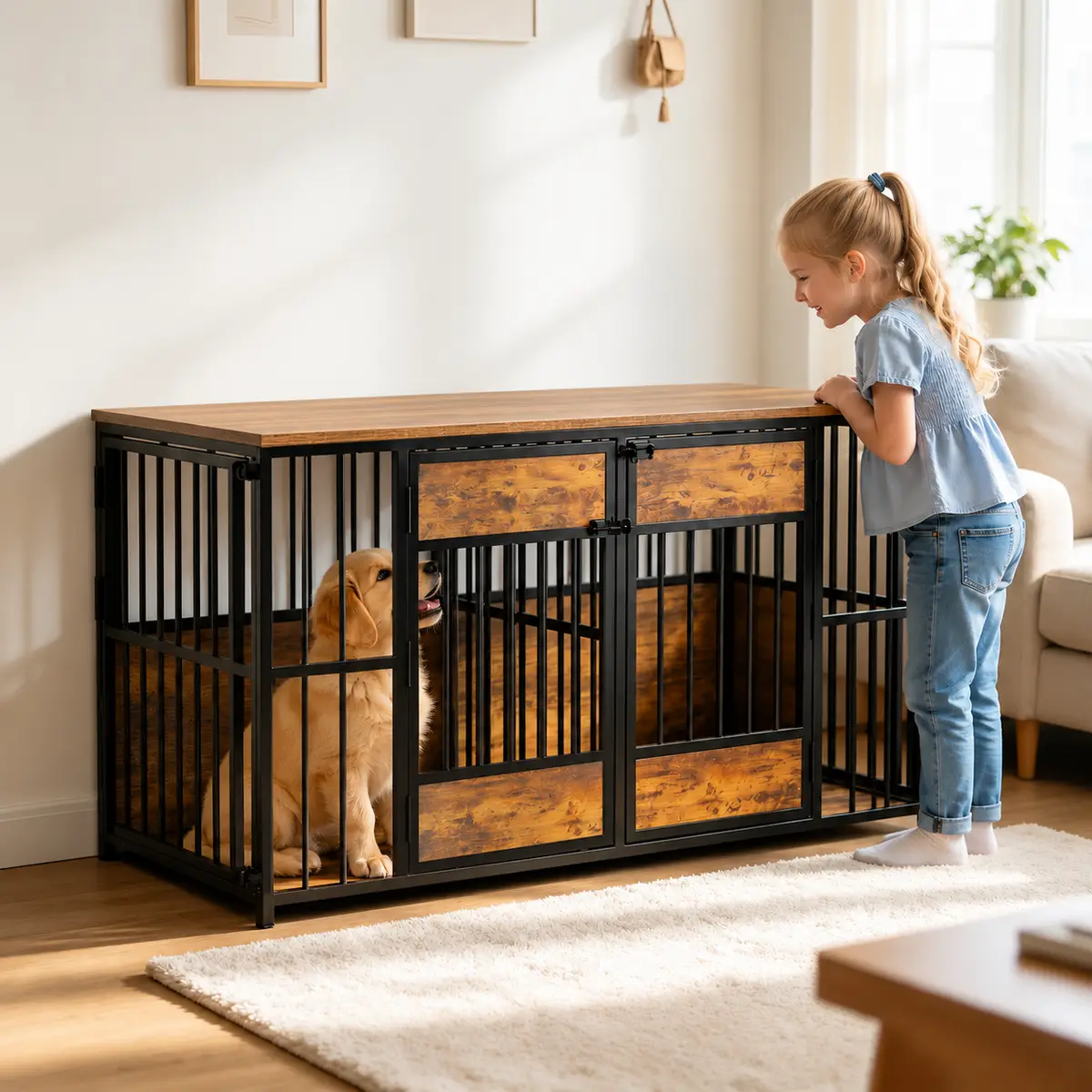


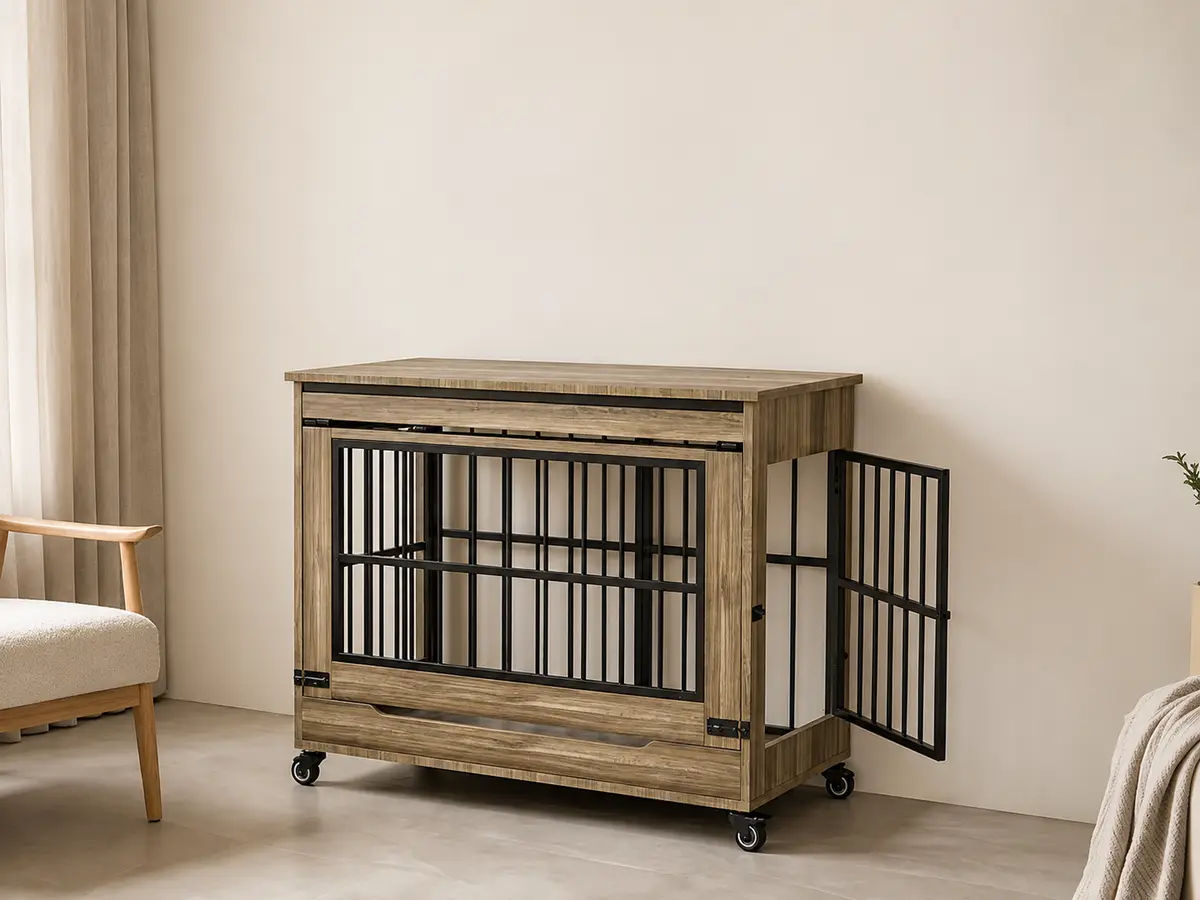


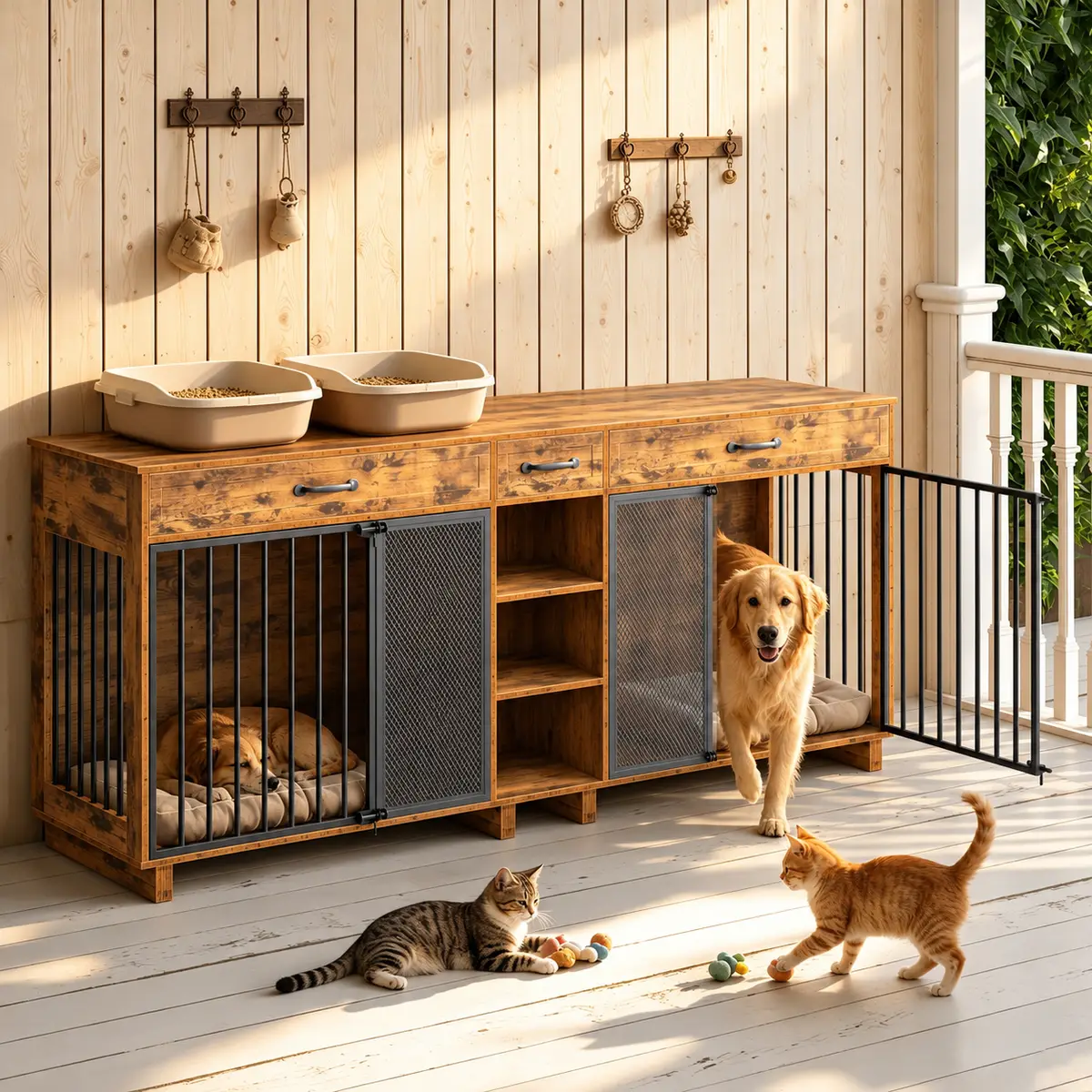

Dog crates
Furniture-Style Dog Crate with Double Doors and Leveling Feet
- Options
- 4 to choose from
From $172.99


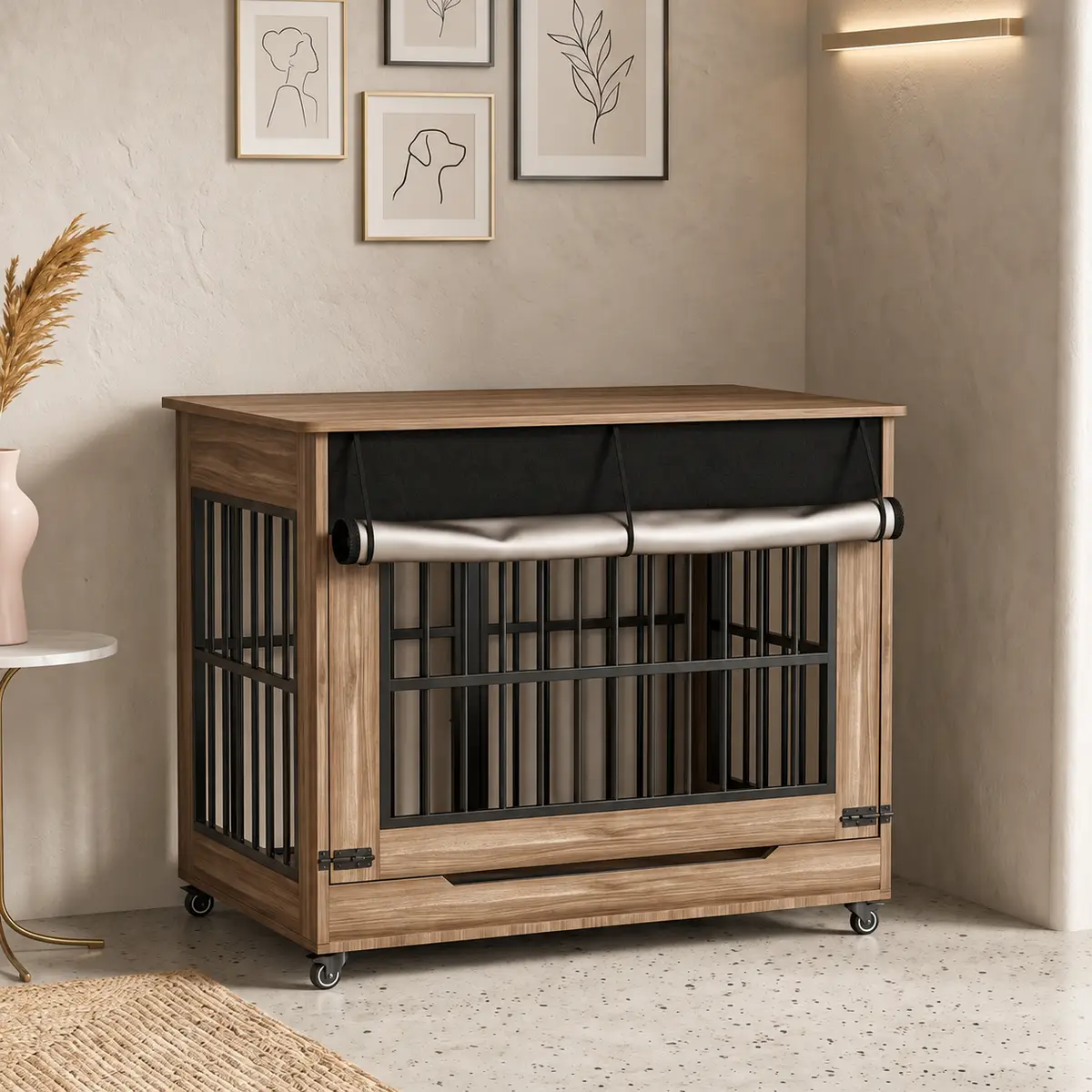
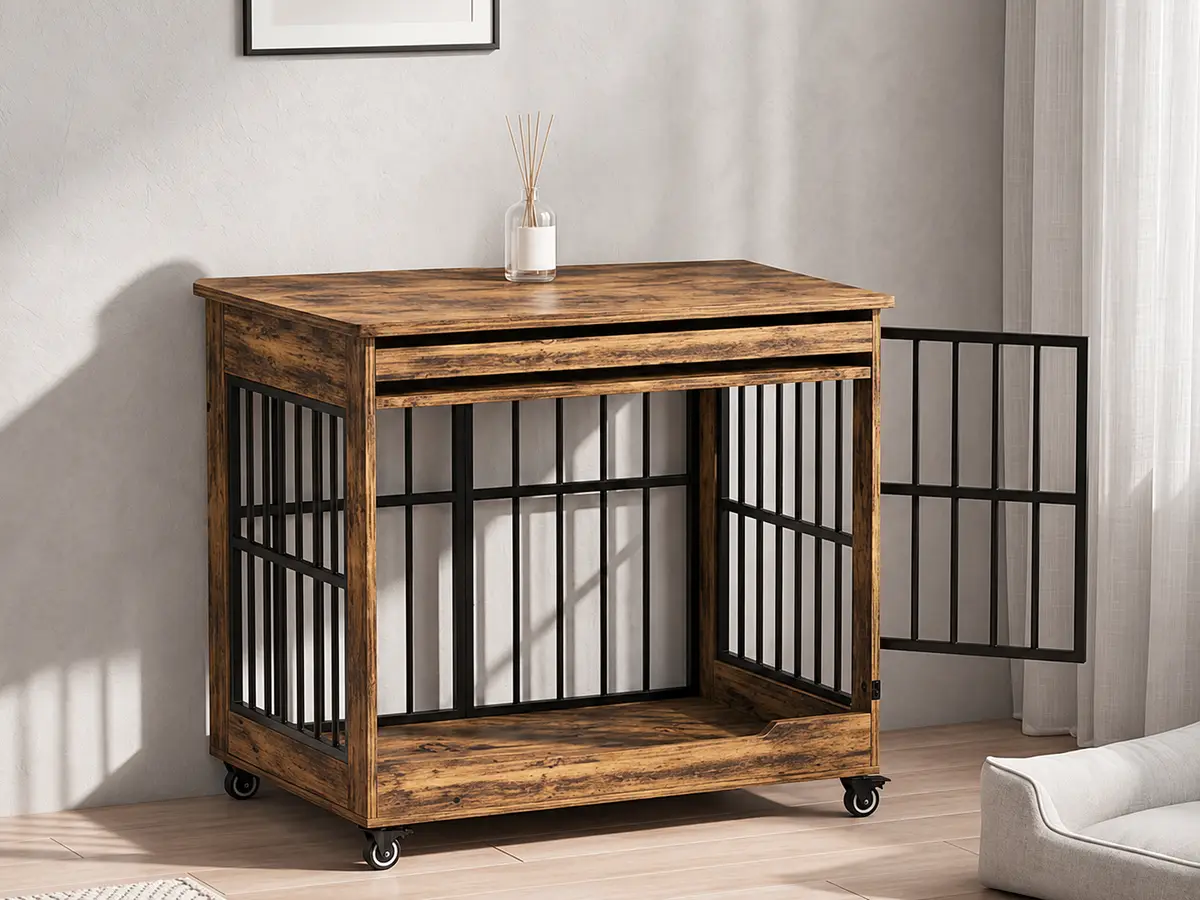


A little guidance
Help choosing furniture-style dog crates & end tables
Buying guides and care advice written for this range: what to measure, what matters and what to skip.
From our guides
- Best Dog Crate Furniture: How to Choose One That Works →
- Best Airline Approved Dog Crate: What the Rules Require →
- Best Crate for a Puppy: Size, Type and Divider Explained →
- Best Dog Crates: How to Choose the Right Type and Size →
- Best Plastic Dog Crates: What Matters Before You Buy →
- How Long Can a Dog Stay in a Crate? →
This page gathers dog crate furniture: wooden kennels that double as end tables, consoles and TV stands, corner crates, crates with storage tops and drawers, double kennels with removable dividers, crates with built-in bowl racks, and heavy-duty metal-reinforced designs on lockable wheels. They are for owners who want a crate that fits the living room rather than hiding in the garage, and the notes below cover sizing, doors and materials.
Why choose furniture-style crates
A wire crate does its job, but it rarely suits a living room. Furniture-style crates give a dog the same den in the form of an end table, console or cabinet, so the crate can stay in the room where your family spends time, which is where most dogs prefer to rest.
They also add a usable surface. A lamp, plants or books on top make the crate part of the room's furniture, and models with storage shelves or drawers keep leads, toys and treats in one place.
Sizing a crate for your dog
The AKC's guidance is that a crate should give your dog room to stand up, turn around and lie down comfortably, without being so large that a puppy can sleep at one end and toilet at the other. Measure your dog standing, from nose to tail base, and from floor to the top of the head.
Add a few inches to each measurement and compare them to the crate's interior, not exterior, dimensions. Furniture crates have thick frames, so the inside can be noticeably smaller than the listed outside size. Small end tables around 31 inches suit small dogs; consoles of 47 inches and over suit large breeds.
Doors, dividers and layouts
Doors matter more than they seem. Crates with two or three doors let you place the furniture against a wall or in a corner and still open it from the most convenient side. Removable door panels turn the crate into an open den once your dog is reliably trained.
Double-width kennels with a removable divider can house two dogs side by side or give one large dog a longer space. Dividers also let you start a puppy in a smaller section and expand it as they grow, which supports house training.
Wood, metal and durability
Most models here combine engineered wood panels with metal bars or mesh. They are sturdy for calm adult dogs, but determined chewers can damage wood edges, especially during adolescence. If your dog chews, choose a design with metal-reinforced corners or thickened metal tubes.
Check how the crate cleans. A water-resistant finish or a removable tray protects the base from spills and accidents. Lockable wheels make heavy crates easier to move for cleaning, while bowl racks with adjustable height keep water inside the crate without spills.
Making the crate a good place
Furniture style does not change crate training. Introduce the crate with treats and meals, leave the door open at first, and add a comfortable crate mattress or pad. Our dog crate beds page has pads cut to standard crate sizes.
Never use the crate as punishment, and avoid leaving a dog crated for very long periods. A crate works because a dog sees it as a safe den, and it should stay that way. Puppies need frequent toilet breaks, so plan crate time around their schedule.
Is dog crate furniture safe for dogs?
Yes, for dogs who are already comfortable in a crate and do not chew heavily. Check the interior size, ventilation and door latches, and choose metal-reinforced designs for dogs who chew or scratch.
What size crate furniture do I need?
Your dog should be able to stand, turn around and lie down inside. Measure length and height, add a few inches, and compare to the interior dimensions, which are smaller than the outside measurements.
Can a large dog use a furniture crate?
Yes. Choose a console-length crate of 47 inches or more, or a double kennel with the divider removed. Large dogs need strong door latches and reinforced frames, so check those details carefully.
Is crate furniture good for puppies?
It can be, with care. Use a divider to keep the space small during house training, and protect wood edges from teething. Some owners start with a wire crate and switch to furniture once chewing settles.