






Birds
Bird toys
Feathered friends, well looked after.
23 items picked for everyday life with your pet, with shipping estimates on every item.
 Everyday care for every bird.
↗Tracked US shippingEstimates on every item↶Returns & refundsHow it works♡Here to helpTalk to Giddy Pets
All bird toys
Little essentials. Lots of love.




Bird perches
Bird Chewing Accessories with Carambola and Vine Options
- Options
- 17 to choose from
From $11.99


A little guidance
Help choosing bird toys
Buying guides and care advice written for this range: what to measure, what matters and what to skip.
From our guides
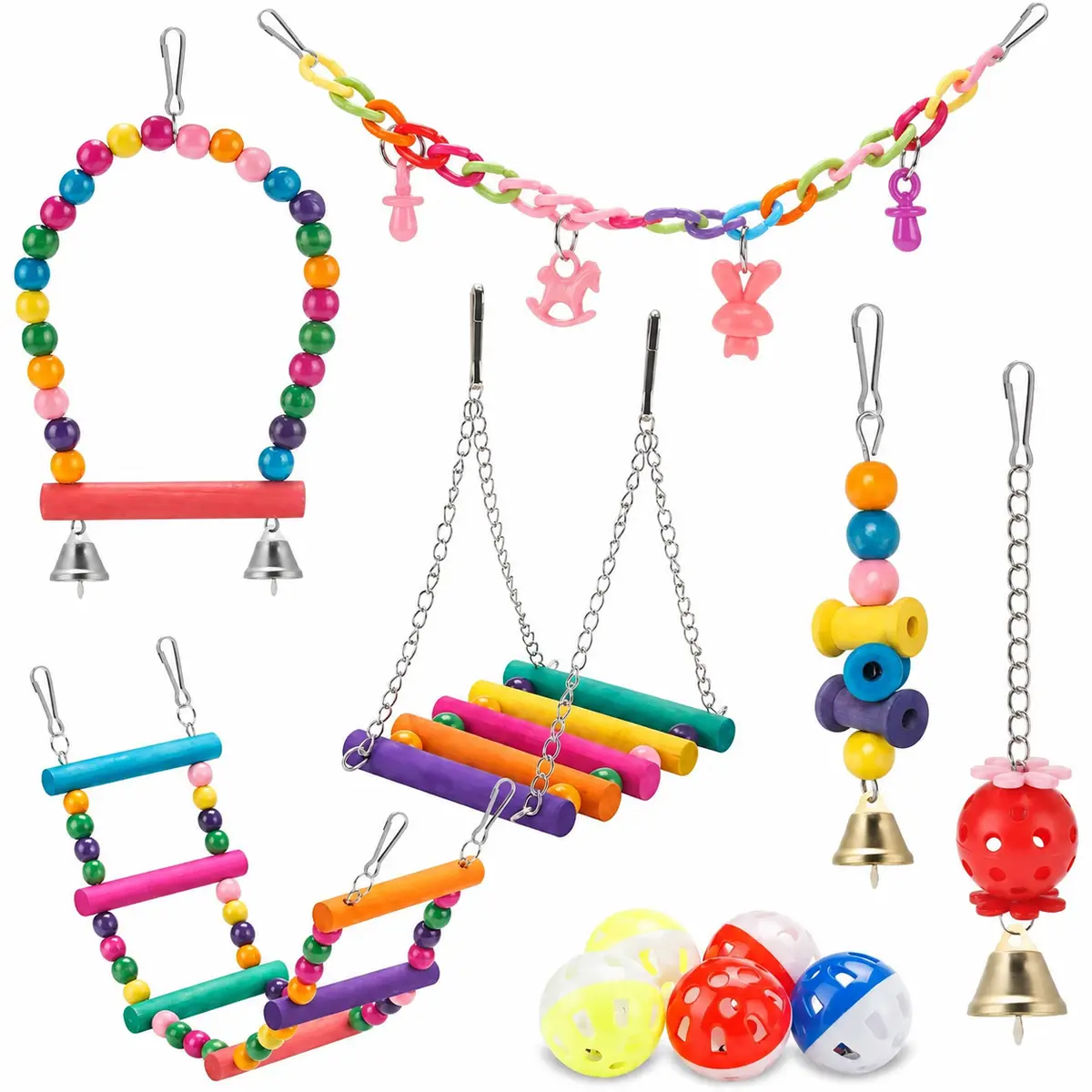
Shop bird toys and play stands for parrots, parakeets, budgies and cockatiels: rolling T-stand training perches, play stands with perches, feed bowls and trays, a portable tabletop play stand, colorful rope perch toys with bells for chewing and foraging, and hanging swing and hammock toys. This page is for owners who want their bird busy and out of the cage safely. Below is why toys matter for birds, how to choose safe ones and how to use a play stand.
Why birds need toys
Parrots and parakeets are intelligent, social and built to forage, chew and climb for most of the day. A bird with nothing to do can become bored and stressed, which may show as screaming, feather picking or aggression. VCA Animal Hospitals recommends daily enrichment such as ladders, ropes, swings, foraging toys and things to chew.
Toys also exercise the body. Climbing a rope, swinging and balancing on a moving perch build strength and coordination, which is especially important for birds that spend much of their time in a cage.
Play stands and T-stands
A play stand gives your bird a place to be outside the cage, near you, without free roaming the house. The rolling T-stands and play stands in this range have perches, stainless steel feed bowls and a round tray underneath to catch droppings and seed, so cleanup stays easy.
Rolling stands with wheels let you move the stand from room to room with you. Taller T-stands are often used for step-up and target training. The portable tabletop stand suits small birds and short sessions on a desk or counter, always with you nearby.
Rope perches, swings and chew toys
Colorful rope perch toys with bells give a bird something to chew, shred and ring, and many have spots to tuck treats for foraging. Swings and hammock-style toys hang from the cage roof and give a moving perch, which most budgies and cockatiels love.
VCA advises varied perch textures and diameters to keep feet healthy, so a rope perch beside the usual wooden dowels is a good addition. Check rope toys often and trim or replace them once they fray, since long loose strands can wrap around toes or be swallowed.
Choosing safe toys
Match the toy to your bird's size. Small birds need small toys they can hold and move, and large parrots need sturdy toys with thicker parts that their beaks cannot snap into sharp pieces. VCA warns against toys with small parts that can be swallowed, snap clips or open links that can trap a toe or beak, and loose fibers.
Choose natural or bird-safe materials and avoid anything painted with unknown finishes. Remove a toy if it breaks, and replace damaged toys rather than repairing them with tape or glue.
Rotating and introducing toys
Birds can be wary of new objects. Place a new toy near the cage for a day or two before putting it inside, and let your bird watch you handle it. Once it is accepted, hang it away from food and water bowls so droppings do not fall in.
Rotate toys regularly, about once a month as VCA suggests, so the cage stays interesting. Wash toys in warm soapy water and rinse well. If your bird stops playing, eating or vocalizing as usual, mention it to an avian vet, since changes in behavior can be an early sign of illness.
What toys are safe for parakeets?
Small rope perches, swings, ladders, bells designed for birds and shreddable chew toys sized for small beaks. Avoid small swallowable parts, snap clips and long loose fibers, and replace frayed rope toys.
How many toys should a bird have?
Several, in different types: something to chew, something to swing on, and something to forage in. Rotate them about monthly so the cage stays interesting without being so cluttered your bird cannot fly or climb.
What is a bird play stand for?
A play stand gives your bird a safe place to perch, play and eat outside the cage, near you. Rolling stands move from room to room and have a tray underneath to catch mess.
Why is my bird scared of a new toy?
Many birds are cautious of new objects. Place the toy near the cage for a day or two first, let your bird watch you play with it, and then hang it inside away from food and water.
Are rope toys safe for birds?
Yes, when checked regularly. Trim or replace rope toys once they fray, since loose strands can wrap around toes or be swallowed. Choose rope made for birds rather than household string.