Buying guides
Best Bird Toys: What Actually Matters
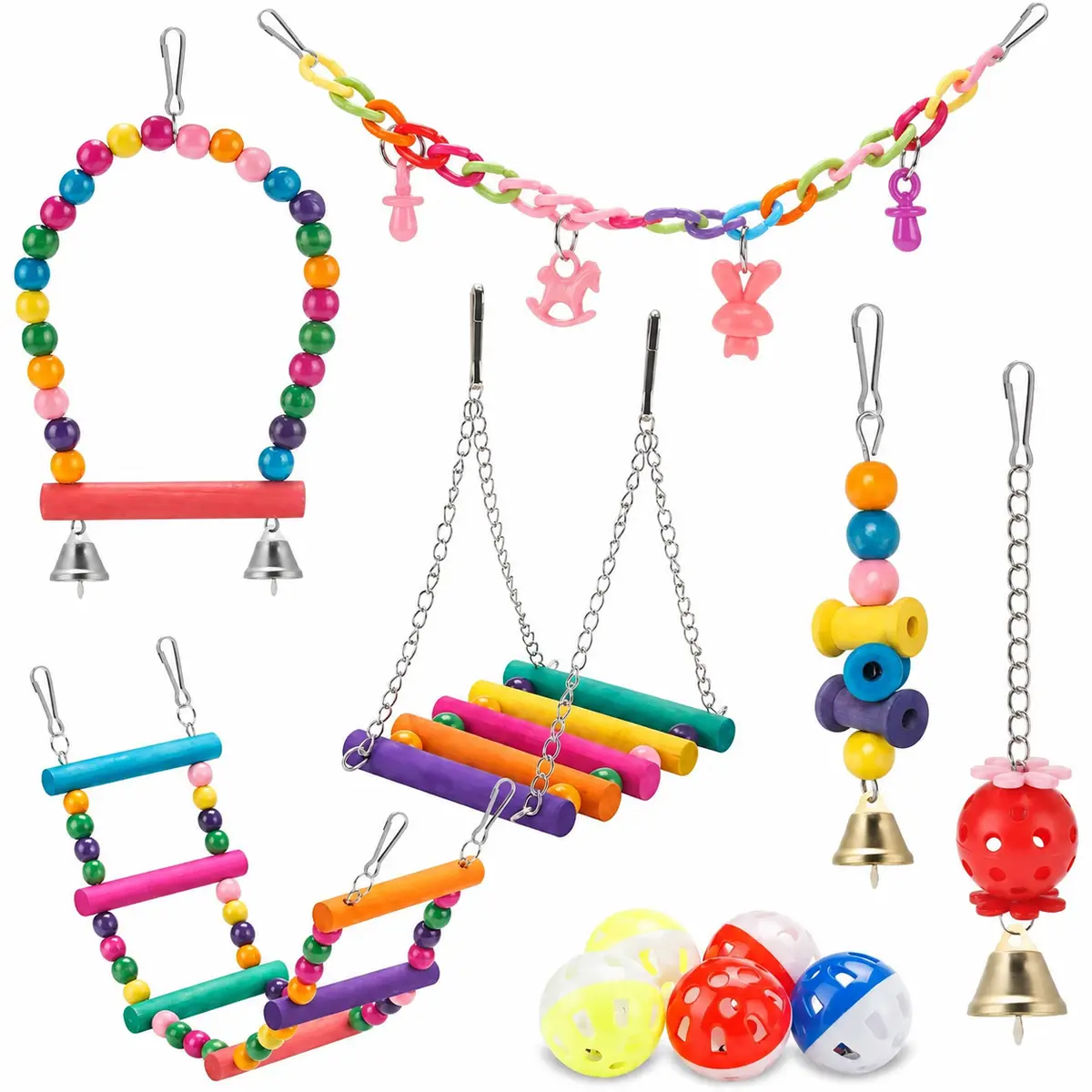
The best bird toys are the ones made from safe materials, sized for your bird, and varied enough to keep it busy. Look for chewable wood and natural fiber, foraging toys that make a bird work for food, and metal parts that are stainless steel, never zinc or lead. Rotate a few toys weekly rather than crowding the cage.
By Matt GarnettUpdated November 13, 20264 min read2 sources
Why toys are not optional
VCA Animal Hospitals says boredom can lead birds to feather destructive behavior, biting and constant squawking, and that toys give birds mental exercise while helping keep the beak and toenails worn down. A bird in a bare cage has nothing to do all day, so toys are part of basic care rather than decoration.
Choosing well matters because a toy is something your bird will chew, climb and swallow pieces of. Start from our bird toys range, then use the criteria below to decide which types suit your bird.
Materials that are safe, and metals that are not
VCA lists stainless steel, natural non-toxic wood, rope and acrylic as good choices, and chewable items such as untreated wood blocks, cardboard, branches, pinecones, natural fiber rope, cloth and soft pine. The Merck Veterinary Manual names galvanized toys, chains, mesh and bells as sources of zinc poisoning, and bird toys and hardware as sources of lead poisoning.
That makes hardware the first thing to inspect. Skip chains, hooks, connectors and clips that look galvanized or soldered, and avoid lead weights and bell clappers. If you cannot tell what a metal part is made from, leave it out. Signs of heavy metal poisoning include poor appetite, weight loss, regurgitation, weakness and increased thirst, and they call for an avian veterinarian promptly.
Main toy types and which bird each suits
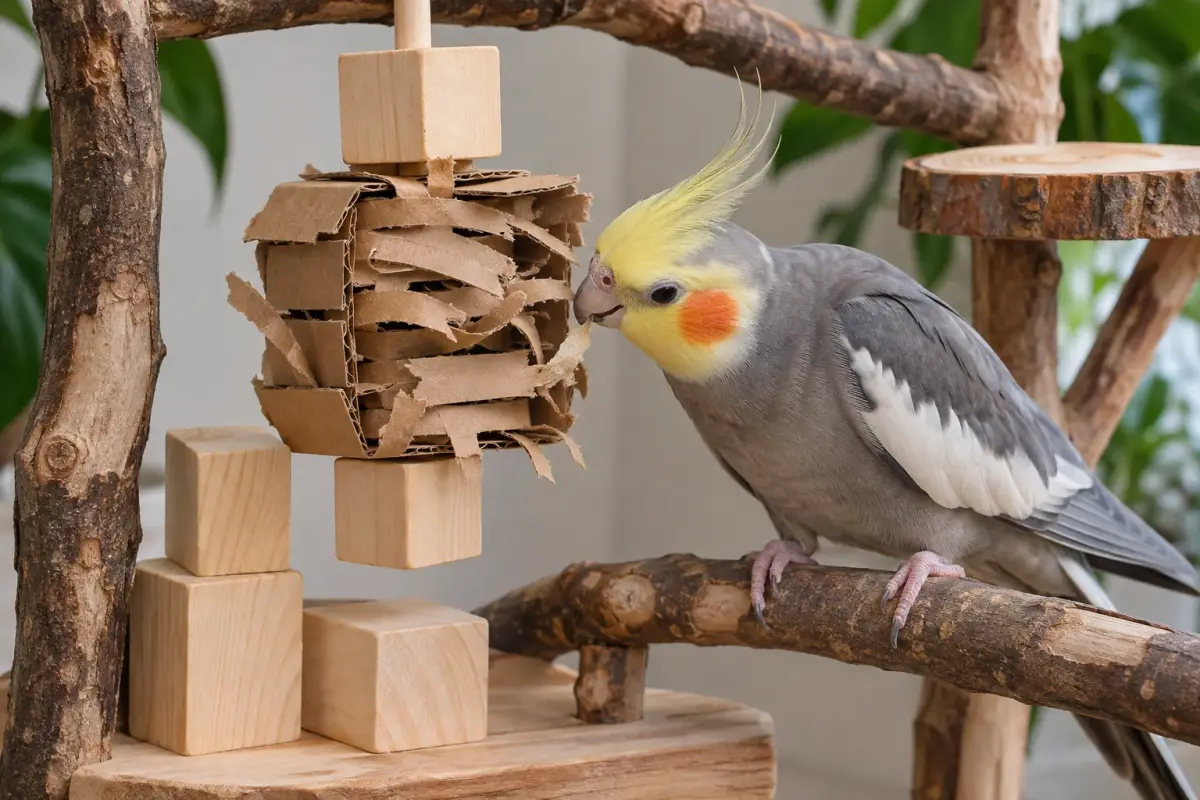
Chew toys, such as wood blocks and soft pine, suit nearly every bird because chewing is natural behavior. A parrot nibble toy is this type: something meant to be destroyed. VCA notes that indestructible toys are discouraged for that reason, since birds like to take things apart.
Foraging and puzzle toys make a bird work to reach food. VCA says you may need to demonstrate them first, and that cockatoos are especially quick at them. A holder such as a bird fruit fork turns eating into a small task. Movement toys, such as a parrot swing, suit climbers and perchers and give a bird a place to rest and play at once.
Sizing and the hazards that come with it
VCA does not give species sizes, but it explains the principle: spaces that are too big can trap a head, and spaces that are too small can trap toes. Check each toy against your own bird before it goes in the cage, and remove it if any gap looks wrong for your bird's head or feet.
Rope needs watching. VCA says to remove rope toys or perches your bird begins to unravel, because loose strings can wrap around toes or legs. Toes getting caught is the most common injury, even on safe toys. Avoid easily dismantled toys, small chain links, and C-clamps that a bird can unscrew. Tighten any clamp securely.
How many toys, and how to introduce them
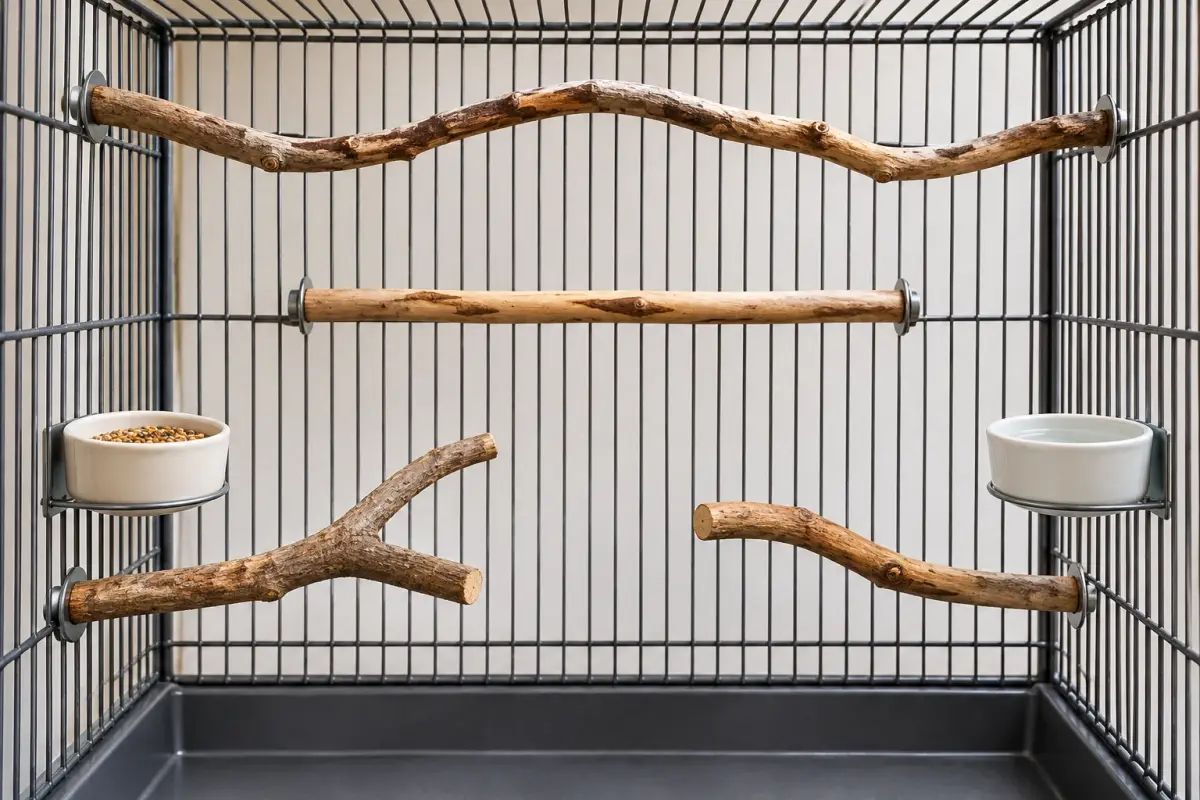
VCA suggests starting with three to five toys per bird and not crowding the cage, and rotating toys in and out about once a week. A smaller set that changes often keeps a bird more interested than a full cage that never changes.
Many birds fear new objects. Place a new toy beside the cage for several days, then hang it outside the cage for several more, and play with it yourself to show it is safe. If your bird still avoids it, wait several weeks and try again. Make sure there is still room for perches, such as our bird perches, and for food and water.
Care, replacement and when to call the vet
Inspect toys often and throw away any that are splintered, frayed, cracked or missing a part. A toy that has been chewed down to a small size can be swallowed, so replacing it early is cheaper than an emergency visit.
If your bird has chewed or swallowed metal, or shows lethargy, regurgitation, weakness or a sudden change in droppings, contact an avian veterinarian or the Pet Poison Helpline right away. See our full bird toys when you are ready to rebuild your rotation, or check the bird cages to make sure the space can hold the set.
This page is general information, not veterinary advice, and it cannot replace an examination by the vet who knows your pet.
Bird toy mechanisms and components
| Format | What the bird interacts with | What to inspect |
|---|---|---|
| Chew toy | Blocks or other chewable pieces | Exact material,treatment and connectors |
| Foraging puzzle | Food within an accessible mechanism | Openings,moving parts and cleaning |
| Food holder | A holder presents a food item | Material and attachment points |
| Swing or movement toy | A moving resting/play element | Suspension and frame connections |
Common questions
What are the safest materials for bird toys?
VCA lists stainless steel, untreated natural wood, soft pine, natural fiber rope, cloth, cardboard and acrylic. Avoid galvanized or soldered metal, which can contain zinc or lead and is toxic if a bird chews it.
How many toys should a bird have?
VCA suggests starting with three to five toys per bird and not crowding the cage. Swap them in and out about once a week so the cage keeps feeling new without becoming cluttered.
Why is my bird afraid of its new toy?
Many birds fear new objects at first. Put the toy beside the cage for several days, then hang it outside the cage for several more, and handle it yourself so your bird sees it is harmless.
Are rope toys safe for birds?
Rope can be used, but VCA says to remove any rope toy or perch the bird starts to unravel, because loose strings can wrap around toes or legs. Inspect rope toys often and discard frayed ones.
Do indoor birds really need toys?
Yes. VCA says boredom can lead to feather destructive behavior, biting and constant squawking, and toys give birds exercise and help wear the beak and toenails.
Sources we checked
This guide is general information, not veterinary advice. If your pet is unwell or injured, contact your veterinarian.