






Buying guides
Best Bird Cages: How to Choose the Right Size, Shape and Bars
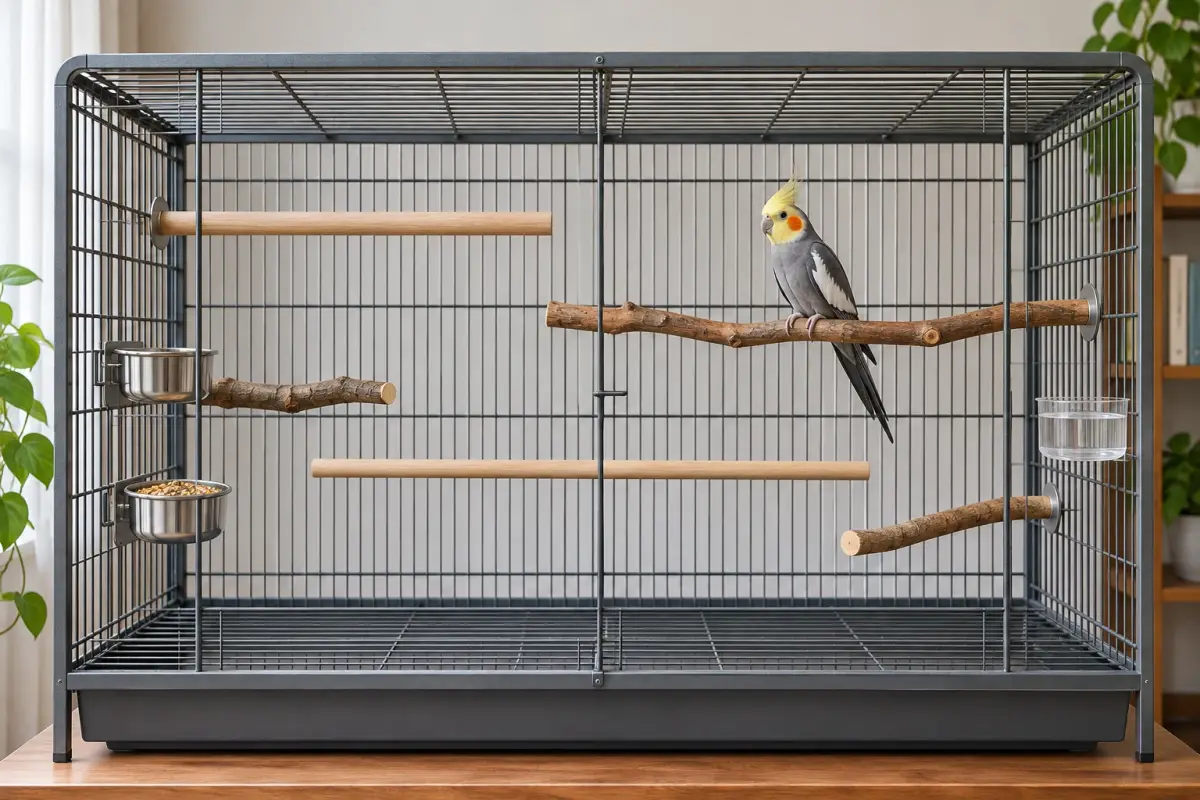
The best bird cage is a rectangular cage at least one and a half times your bird's wingspan in every direction, with bars close enough that the head and feet cannot get stuck, and a safe, easy-to-clean finish. Bigger is better. Browse our bird cages, then use this guide to match the size, shape and materials to your bird.
By Matt GarnettUpdated November 13, 20264 min read2 sources
Size: the wingspan rule
The Merck Veterinary Manual advises a cage at least one and a half times the size of the bird's wingspan in all directions, and larger if you keep more than one bird. To apply it, ask your vet or breeder for the typical wingspan of your species, then multiply it by one and a half for the width, depth and height. That figure is a minimum, not a target.
VCA Animal Hospitals puts it simply: as a rule, bigger is better. For large parrots, its suggested minimums run from about 3 x 3 x 4 feet for an African gray or Amazon, to 4 x 5 x 5 feet for a large macaw. Small birds need far less, but the same wingspan rule applies, and a bird that can fully open its wings and move between perches is a cage-size success.
Shape and bar spacing
Merck notes that most birds prefer rectangular cages over round ones because they like having corners to sit in. A rectangle also gives straight runs between perches. A large rectangular indoor bird cage with several doors makes it easier to reach in for cleaning and to bring a bird out safely.
Bar spacing is a safety measure, not a style choice. VCA says bars must be close enough together to prevent a bird from getting its head or legs stuck. The right gap depends on the species, so check it against your bird's size before you buy, and pick stronger, thicker bars for large parrots that can bend or chew thin wire. If a bird could push its head through, the cage is too wide-set.
Materials and coatings
VCA says rectangular, powder-coated or stainless-steel cages are preferred, and that unprotected stainless steel is the best choice. Wood, wicker and bamboo are easily chewed and hard to disinfect, and painted metal can chip so that birds swallow the flakes. Older cage coatings may also contain zinc, a toxic metal that can harm birds that eat it.
So inspect the finish closely. Look for a smooth, intact coating with no flaking, rough welds or exposed galvanized wire. A rolling metal cage such as a 30-inch metal bird cage on a stand can be handy for moving between rooms, but whatever the style, check the coating before your bird moves in, and recheck it as the cage ages.
Perches, dishes and cage setup

Natural wood perches are best, according to VCA, and a bird should be able to wrap its toes about three-quarters of the way around the perch. Perches that are too wide can cause slips, sandpaper covers are not recommended, and plastic perches should not be used with large birds. Wild branches should be disinfected by heating them in an oven at 200°F for 30 minutes first.
VCA also advises attaching food and water dishes to the sides of the cage rather than the bottom so droppings do not fall in them. Add a slide-out tray that makes daily cleaning quick, and provide toys, though Merck says to avoid mirror toys. Keep the layout simple enough that your bird can still move freely.
Where to put the cage and how much time out
Merck says to avoid putting the cage near windows or air conditioning, since it can get too hot or too cold, and not to keep it in the kitchen because smoke or cooking fumes can be harmful to birds. Merck also says not to cover the cage at night; if the room gets cold, warm the room or move the cage away from drafts.
A cage is a home base, not the whole world. Merck advises letting birds out to exercise under supervision. Before you let your bird out, close windows and doors, switch off ceiling fans and keep other pets out of the room. An avian vet can check your setup and tell you how much out-of-cage time suits your species.
Best cage for each situation and what to avoid
For finches and canaries, choose a wide, rectangular cage so they can fly between perches, and avoid tall narrow designs. For a parrot, prioritize strong bars and the largest footprint you can fit. For a bird that is out most of the day, a play-top is a bonus but not a substitute for size.
Avoid round or domed cages, thin or chipped coatings, cages that are too small, and anything near drafts or the kitchen. Do not buy for the bird's size today if it is still growing. Compare a few styles in our bird cages range, measure the space in your home first, and book a checkup with an avian vet once the new cage is set up.
Cage body and coating inspection points
| Body or finish | Physical distinction | What to verify |
|---|---|---|
| Stainless steel | The metal forms the cage body | Actual alloy declaration and hardware |
| Powder-coated metal | A coating covers the underlying metal | Exact coating and intact surface |
| Painted metal | A painted surface covers the body | Chipping and the underlying material |
| Wood,wicker or bamboo | Porous or chewable body material | Material treatment and cleaning access |
| Rolling stand | Wheels support the cage | Base connections and stability |
Common questions
What size cage does my bird need?
Merck advises at least one and a half times the bird's wingspan in all directions, and larger for more than one bird. VCA's rule is that bigger is better, with the larger parrots needing several feet in every direction.
Are round or rectangular bird cages better?
Rectangular is better for most birds. Merck notes they prefer corners to sit in, and a rectangle gives straight flight paths between perches. Round and domed cages offer less usable space.
What bar spacing is safe for a bird cage?
The gap depends on the species, but VCA says bars must be close enough that the bird cannot get its head or legs stuck. Check the spacing against your bird's size and ask an avian vet if unsure.
What material is safest for a bird cage?
VCA prefers powder-coated or stainless-steel rectangular cages, with unprotected stainless steel best. Avoid wood, wicker and bamboo, which are easily chewed, and any chipped paint or older coating that may contain zinc.
Sources we checked
This guide is general information, not veterinary advice. If your pet is unwell or injured, contact your veterinarian.


