






Buying guides
Best Budgie Cage: How to Choose a Safe, Roomy Home
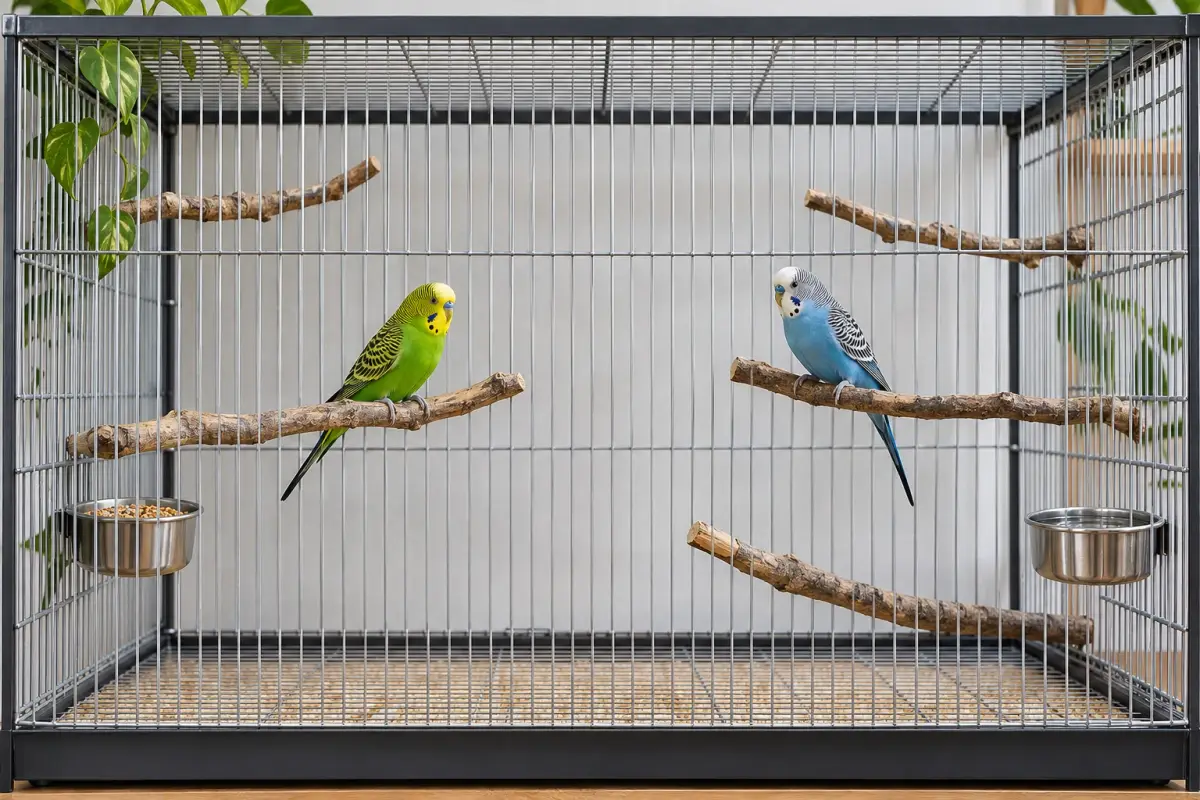
The best budgie cage is a rectangular metal cage with bars about half an inch apart, at least 20 by 20 by 30 inches, and bigger if your budgie spends most of the day inside. Browse our parakeet cages to compare sizes and stands. Bar spacing, shape and a safe finish matter more than extras like built-in toys.
By Matt GarnettUpdated November 13, 20264 min read3 sources
What matters most: size, bars and shape
Merck Veterinary Manual lists a minimum cage of 20 by 20 by 30 inches (length, width, height) with bar spacing of 0.5 inch for budgerigars. VCA gives a lower general minimum of 1 foot by 1 foot by 2 feet for finches, canaries and budgerigars, but it also says bigger is better, so treat the Merck figure as the safer target. Merck adds that a cage should be at least one and a half times the bird's wingspan in all directions.
Shape matters as much as size. VCA recommends a rectangular cage that is about as long as it is tall, and Merck says most birds prefer rectangular cages to round ones because they like having corners to sit in. Bars should be close enough that your budgie cannot get its head or legs stuck, so measure the gap before you buy rather than trusting a product title.
Types of budgie cage compared
A standard rectangular cage on a tabletop or rolling stand is the most practical choice for one or two budgies. A taller cage on wheels, such as a 52-inch cage on a rolling stand for budgies and canaries, gives climbing room and moves for cleaning, though a cage on a stand also needs a stable base.
A wider aviary-style cage, like a 55-inch two-in-one aviary cage for parakeets and finches, gives more horizontal flying space, which suits a pair or a small group. Round and dome-topped cages look attractive but give less usable space. If you are also weighing cages for larger small birds, our bird cages show the wider range.
Best type for each situation
For a single budgie, a cage at or above the minimum with several horizontal perches at different heights is plenty. For a pair, size up, because Merck says a cage housing more than one bird should be even larger, and two birds need room to move around without crowding each other.
For a budgie that spends most of the day inside, choose the biggest cage you can manage, since a bird that lives in its cage needs room to move beyond the bare minimum. For a small apartment, a tall cage on a stand makes the best use of floor space, as long as it still meets the width minimum.
Materials, finish and perches
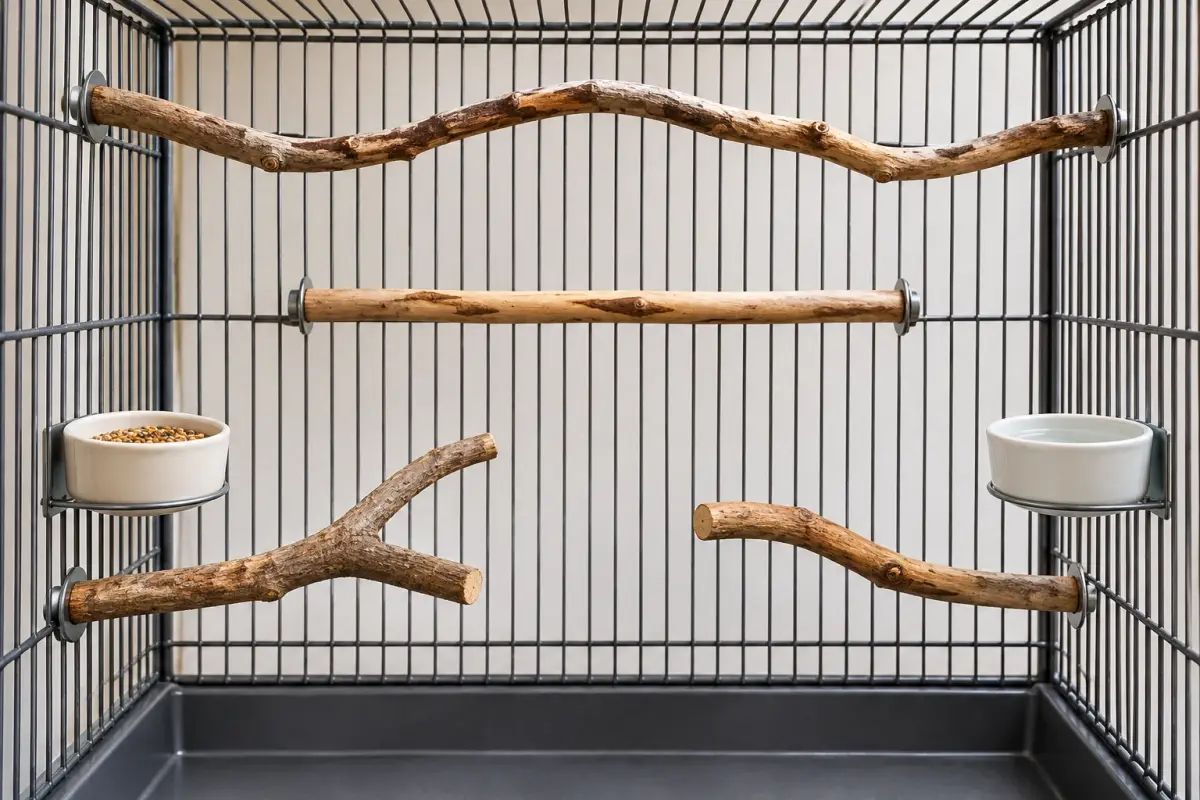
VCA says all-metal cages are the most practical to keep clean, and that wood, wicker and bamboo cages are hard to disinfect because they are porous. It also warns that some older cages contain zinc in the coating, which is toxic if a bird chews it, and that painted cages can chip. Stainless steel or an electroplated or well-finished coating is the safer pick.
Perches should vary in diameter so your budgie's feet get different pressure. VCA says a bird should be able to wrap its toes about three-quarters of the way around a perch, and that perches that are too wide can cause slipping. Natural wood perches are favored, and food and water dishes are best attached to the cage side so droppings do not fall into them.
What to avoid
Avoid cages with wide bar gaps, loose or chipped paint, and cages small enough that your budgie cannot fully spread its wings. Avoid mirror toys, which Merck says can confuse and stress birds, and avoid crowding the cage with so many toys that your budgie has no free perch.
Where you place the cage matters too. Merck says to keep it away from windows and air conditioning, where it can get too hot or too cold, and out of the kitchen, because smoke and cooking fumes can harm birds. Most birds should not have the cage covered at night, according to Merck, so fix drafts instead.
Cleaning, lifespan and when to call a vet
VCA says food and water dishes should be easy to clean and disinfect every day, and toys should be washed in warm soapy water and rinsed well. A cage with a removable tray and bottom grille, like this budgie cage with a removable tray and wooden perches, makes the daily tray change quicker.
Check the cage regularly for loose wires, rust or chipped coating, and replace parts that have worn. Call an avian or exotic vet if your budgie stops eating, sits fluffed up on the floor, or shows trouble breathing. When you are ready to compare, browse our parakeet cages.
This page is general information, not veterinary advice, and it cannot replace an examination by the vet who knows your pet.
Cage outlines and base arrangements
| Cage format | Physical layout | Space or access check |
|---|---|---|
| Rectangular tabletop | A rectangular body on a separate support | Usable interior and stable placement |
| Rolling stand | Cage body carried on a wheeled base | Base stability and cleaning access |
| Wider aviary-style | More horizontal body span | Usable width,doors and tray access |
| Round or dome-topped | Curved walls or roof | Usable interior rather than the outside silhouette |
Common questions
What size cage does a budgie need?
Merck lists 20 by 20 by 30 inches as a minimum for budgerigars, and VCA gives 1 foot by 1 foot by 2 feet. VCA says bigger is better, especially if your budgie spends most of the day inside the cage.
What bar spacing is right for a budgie cage?
Merck gives 0.5 inch for budgerigars. The principle from VCA is that bars must be close enough that the bird cannot get its head or legs stuck, so measure the gap before buying.
Is a round cage okay for a budgie?
Round cages are discouraged. VCA and Merck both say birds prefer rectangular cages because they like corners, and VCA notes that round cages make droppings from upper perches fall on lower ones.
Should I cover my budgie's cage at night?
Merck says most birds should not have their cages covered at night because it can stress them. If the room is cold, raise the temperature or move the cage away from drafts instead.
Sources we checked
This guide is general information, not veterinary advice. If your pet is unwell or injured, contact your veterinarian.


