






Buying guides
Best Parrot Cage: Size, Bar Spacing and Safe Materials
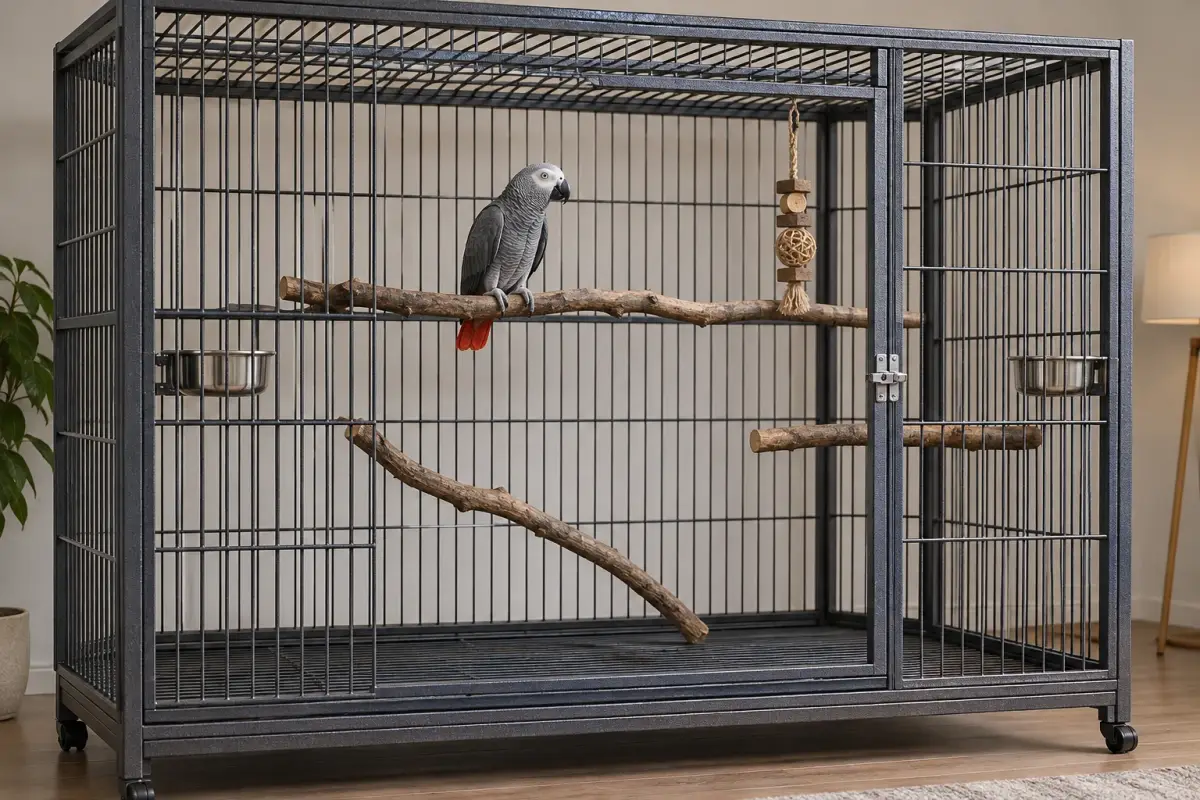
The best parrot cage is the biggest safe cage you can house, built from stainless steel or a well-finished powder-coated metal, with bar spacing matched to your bird's species. VCA says a parrot should be able to turn around without touching anything, and that a cage should be about as long as it is tall. Rectangular beats round.
By Matt GarnettUpdated November 13, 20264 min read2 sources
What matters most in a parrot cage
Size comes first, and the rule is bigger is better. VCA says a bird should be able to turn around without hitting anything, and that a cage should be about as long as it is tall, since tall, narrow cages are impractical. Merck lists minimum sizes by group: 20 by 20 by 30 inches for budgerigars, cockatiels, lovebirds and parrotlets, 36 by 24 by 48 for conures and caiques, 40 by 30 by 60 for African grays, Amazons and small cockatoos, and 48 by 36 by 66 for macaws and large cockatoos.
Safety is next. Bars must be close enough that the bird cannot get its head or legs stuck: Merck suggests about half an inch for budgies and cockatiels, three-quarters of an inch for conures, and 1.5 inches for macaws. Our parrot cages range is worth checking against those numbers, using the inside measurements and your species. Browse the wider bird cages category if you keep a smaller bird.
Safe materials and finishes
VCA says rectangular cages in stainless steel or powder-coated metal are preferred, and round cages are discouraged. Paint can chip and be swallowed, and older coatings may contain zinc, which is toxic. Uncoated stainless steel is preferred, and an electroplated cage is the safer painted option. Merck adds that galvanized wire and hardware are a major source of zinc poisoning in birds.
Wood, wicker and bamboo are not recommended on large parrots because they chew them and wood cannot be disinfected well. Toys, clips and other hardware should not contain lead or zinc. Check any cage's finish description before buying, and if you cannot tell what the coating is, ask the seller or choose stainless.
Cage types compared
A tall rectangular cage with an opening top gives a perching bird easy in-and-out access, such as a 60-inch cage with an openable top built for smaller parrots. Check the exact interior size and bar spacing against the figures above for your species. A rolling cage with a play top and shelf, like a 62-inch rolling bird cage, adds a perch area on top and is easier to move for cleaning.
Flight cages are wide rather than tall and suit small birds that fly between perches. Aviary-style cages are bigger still. Whatever the type, VCA says to attach food and water dishes to the sides of the cage, not the floor, so droppings do not fall in, and to use sturdy stainless steel dishes for large beaks.
Best cage for each bird
For a cockatiel or budgie, a cage near Merck's smaller minimum, ideally wider than tall, works, with narrow bar spacing. For a conure or caique, the middle size with three-quarter-inch bars applies. For an African gray or Amazon, plan for the larger minimum and strong bars. Macaws and large cockatoos need the largest cage you can fit, and many owners add a separate play stand.
Remember that a cage is a home base, not a full life. Birds need daily mental stimulation, so offer safe toys without snaps, clasps, glass or small loose parts. Time out of the cage with supervision is part of good care, though VCA gives no set number, so ask an avian vet what suits your bird.
Perches, setup and cleaning
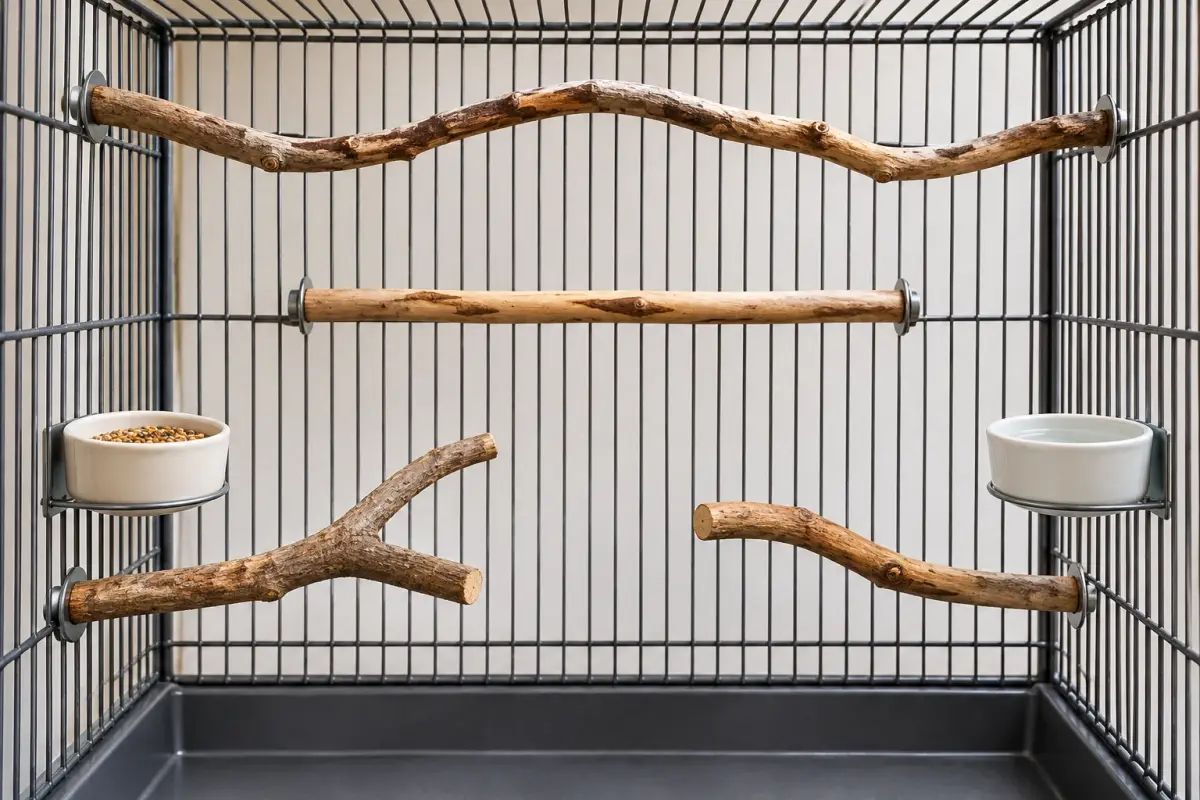
Natural wood perches are best, VCA says, because the varying diameter eases pressure on the feet. Use non-toxic woods such as apple, elm, ash, maple or willow, and avoid cherry, oak and yew. Match perch width to the bird so the toes can grip. Plastic perches can splinter on large birds and sandpaper covers can cause sores, so skip both.
Choose a cage you can clean easily: all-metal cages are the easiest to keep clean, and wood cannot be disinfected well. Wash dishes daily and remove droppings often. If your bird sits fluffed up, stops eating, has changed droppings or breathes with effort, see an avian vet the same day.
This page is general information, not veterinary advice, and it cannot replace advice from a veterinarian who treats birds.
Common questions
What size cage does a parrot need?
Bigger is better. Merck lists minimums from 20 by 20 by 30 inches for budgies and cockatiels to 48 by 36 by 66 for macaws, and VCA says the bird must be able to turn around without hitting anything.
What bar spacing is safe for a parrot cage?
Bars must be close enough that the bird cannot trap its head or legs. Merck suggests about half an inch for budgies, three-quarters of an inch for conures and 1.5 inches for macaws.
Is a powder-coated parrot cage safe?
VCA lists powder-coated metal and stainless steel as preferred. Uncoated stainless is best, while paint can chip, and older coatings may contain zinc, which is toxic if swallowed.
Are round parrot cages a good idea?
VCA discourages round cages and prefers rectangular ones, which give the bird corners to retreat to and are easier to arrange with perches and dishes.
Sources we checked
This guide is general information, not veterinary advice. If your pet is unwell or injured, contact your veterinarian.


