






Buying guides
Best Ferret Cage: How to Choose a Safe, Roomy Enclosure
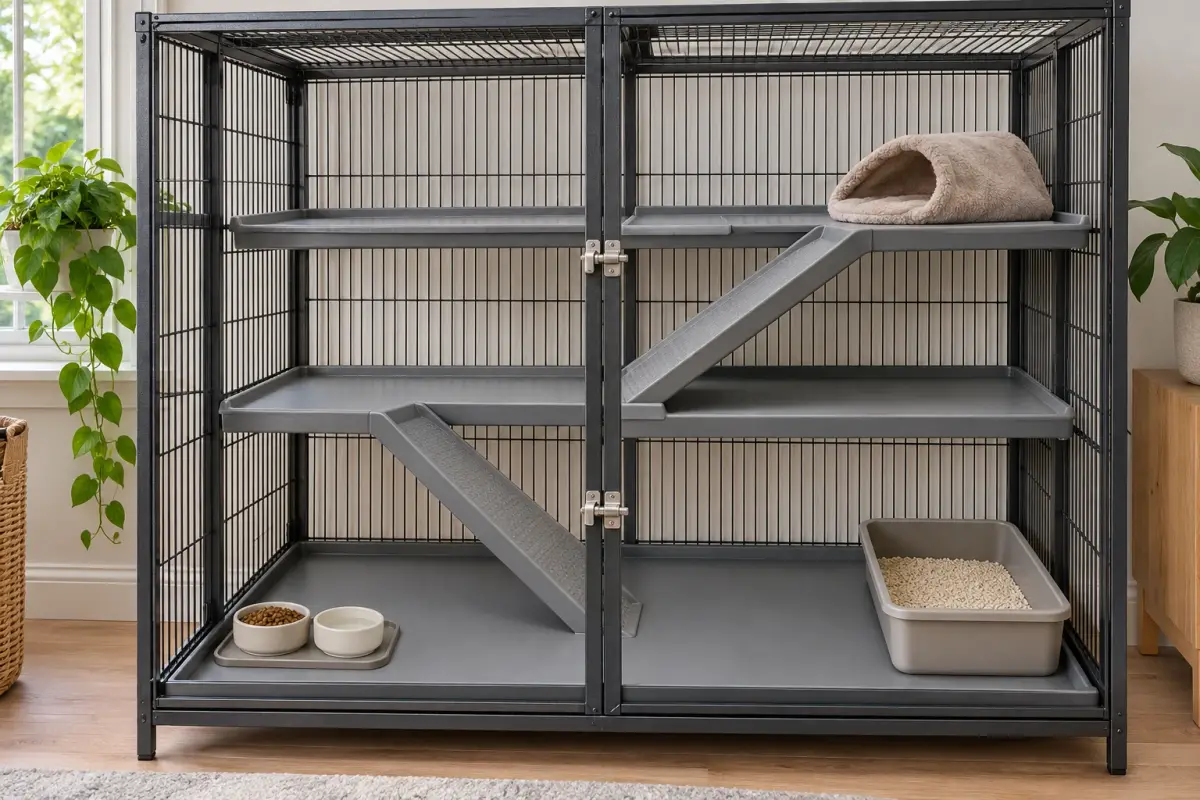
The best ferret cage is as large as you can fit, multi-level with solid floors and ramps, ventilated, and fitted with locks a ferret cannot open. VCA suggests a minimum of 24 by 24 by 18 inches and says to go as large as you can afford, with multilevel cages preferred for up to three or four ferrets. A dark, enclosed sleeping area and plenty of time out of the cage matter as much as the cage itself.
By Matt GarnettUpdated November 13, 20263 min read2 sources
What matters most: size and security
Ferrets are active, curious and famous escape artists. VCA's housing guidance gives a minimum of 24 by 24 by 18 inches, recommends going as large as you can afford, and stresses a cage that locks securely and is well ventilated. Most owners find a tall, multi-level cage far more practical than the minimum.
Security means latches that clip or lock, doors that close flush, and no gaps a ferret can squeeze through; check corners and where trays slide in. If a ferret's head fits through a gap, its body will follow.
Floors, levels and layout
Choose sturdy, solid floors. VCA prefers plastic, which is easy to clean and disinfect, and warns against wood, which absorbs urine and feces and holds odor. Wire floors and ramps can hurt feet; cover them with solid panels or fabric.
Multi-level cages, such as the Metal Critter Cage Rolling Large Ferret Cage, give room to climb, and the 50H Rolling Small Animal Cage With Hammock is another rolling design. VCA suggests putting hammocks on upper levels and food, water and the litter area on the ground floor. Ramps should be gentle and covered for grip, especially for older ferrets.
Bedding and sleeping areas
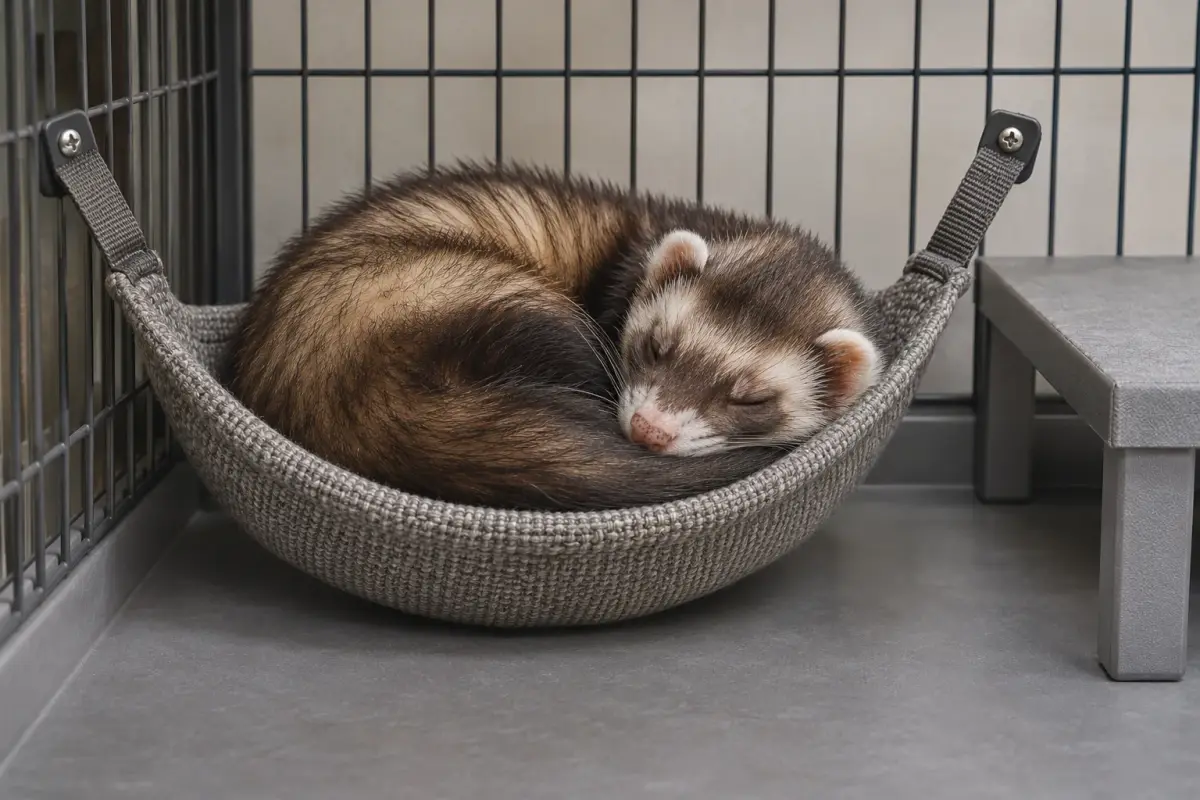
Ferrets sleep much of the day and like dark, enclosed spaces. Provide hammocks, sleep sacks or a covered bed. VCA notes towels, blankets or T-shirts work well as bedding, and that recycled paper bedding is generally safe but needs frequent changing.
Avoid woodchips, which VCA calls dusty and messy. Check fabric bedding for holes regularly, because some ferrets chew cloth, and swallowed fabric can cause a blockage.
Wash fabric bedding every few days, as ferret bedding absorbs odor quickly.
Litter and cleaning
Ferrets can be trained to use a litter box, which works best in a corner of the cage, where they naturally go. A high-sided corner box keeps mess contained. Use a non-clumping, dust-free litter.
Remove waste daily and clean the cage thoroughly every week with soap and water. Wash hands afterward. A clean cage keeps odor down and protects the ferret's airways and skin.
Place water and food at the opposite end from the litter area, which helps ferrets keep the toilet corner separate.
Time out of the cage
A cage is a base, not a whole life. VCA says ferrets need at least two to three hours out of the cage every day, and more is better, in a ferret-proofed area, or a small animal playpen, under supervision.
Ferret-proofing means blocking gaps behind appliances, removing rubber and foam items they might chew, and keeping recliners and sofas checked, as ferrets hide inside furniture.
Check playtime areas for small items such as rubber bands, erasers and earplugs, which ferrets love to steal and can swallow.
What to avoid, and lifespan
Avoid small single-level cages, wooden cages, wire floors and doors that do not lock. Avoid placing the cage in direct sun or a hot room, as ferrets overheat easily. Lethargy, weight loss, diarrhea, hair loss or straining in the litter box need a vet who sees ferrets promptly.
A good metal cage lasts for many years; browse our ferret cages when it is time to replace one. Replace trays that crack and fix any bent bars or latches immediately.
This page is general information, not veterinary advice, and it cannot replace an examination by the vet who knows your pet.
Common questions
What size cage does a ferret need?
VCA suggests a minimum of 24 by 24 by 18 inches, and says to go as large as you can afford. Multi-level cages are preferred, especially for more than one ferret.
Are multi-level cages good for ferrets?
Yes. VCA notes multilevel cages are preferred for up to three or four ferrets, with hammocks up high and food, water and litter on the ground level.
What bedding is best for ferrets?
Towels, blankets, T-shirts and sleep sacks work well, per VCA, and recycled paper bedding is generally safe. Avoid woodchips and remove fabric if your ferret chews it.
How long should ferrets be out of their cage?
VCA recommends at least two to three hours a day out of the cage, more if possible, in a ferret-proofed area, or a small animal playpen, under supervision. Daily play keeps them fit and social.
Sources we checked
This guide is general information, not veterinary advice. If your pet is unwell or injured, contact your veterinarian.


