






Care & how-to
Why Does My Dog Eat Cat Poop? Causes, Risks and How to Stop It
Most dogs eat cat poop because it smells like cat food and dogs are natural scavengers, so it is usually a habit rather than a sign of illness. It is still worth stopping: cat stool can carry parasites and bacteria, and swallowed litter can cause a blockage. The simplest fix is keeping the litter box out of reach, and a new or sudden habit is a reason to call your vet.
By Matt GarnettUpdated November 13, 20265 min read2 sources
Why dogs are drawn to the litter box
The AKC describes eating cat poop as natural canine behavior: dogs are scavengers, and cat stool likely smells like cat food, which many dogs find appealing. In most cases the page calls it a product of canine exploration that turns into a bad habit once it has been rewarded with a tasty find. Because the litter box sits at nose height and is available all day, it is an easy habit to start and a hard one to break.
A dog can also be drawn to stool that contains poorly digested food. VCA explains that a dog may eat another animal's stool when it is full of undigested material, and that attention from the owner, even scolding, can reinforce the habit. Puppies often investigate or play with stool while they learn about the world, and some copy their mother or littermates.
Is it ever a medical problem?
Sometimes. VCA lists anything that reduces nutrient absorption, upsets the gut or makes stool more appealing as a possible contributor, including intestinal parasites, digestive enzyme problems, a poorly digestible diet and underfeeding. Conditions that increase appetite, such as diabetes, Cushing's disease or thyroid disease, and some drugs such as steroids, can also play a part. The AKC adds that a dietary deficiency can cause stool eating but is not the usual reason.
This is why a vet visit matters when the habit is new, when an adult dog suddenly starts, or when it comes with other changes. VCA recommends having the dog examined before assuming a behavioral cause, with a stool test for parasites as the minimum. Tell your vet about any weight change, a bigger appetite, soft stool or large amounts of undigested food in your dog's stool.
Risks of eating cat stool and litter
The AKC points out that any poop can carry harmful bacteria and parasites, and that dogs can pick up several kinds of internal parasites from cat stool. A cat that looks healthy can still carry parasites, so you cannot judge the risk by how your cat seems. Some bacteria, such as Salmonella, can also spread to people, so wash your hands after cleaning up and do not let a dog lick your face right after it has been in the litter.
Litter is the other risk. The AKC says that eating a large amount of litter, including clumping litter, can cause a blockage, though most dogs would have to eat a lot. Watch for straining, no stool at all or abnormal stool, and call your vet if you see any of these. Most dogs that eat cat poop suffer no lasting harm, but the AKC is clear that the habit should still be stopped.
Block access first
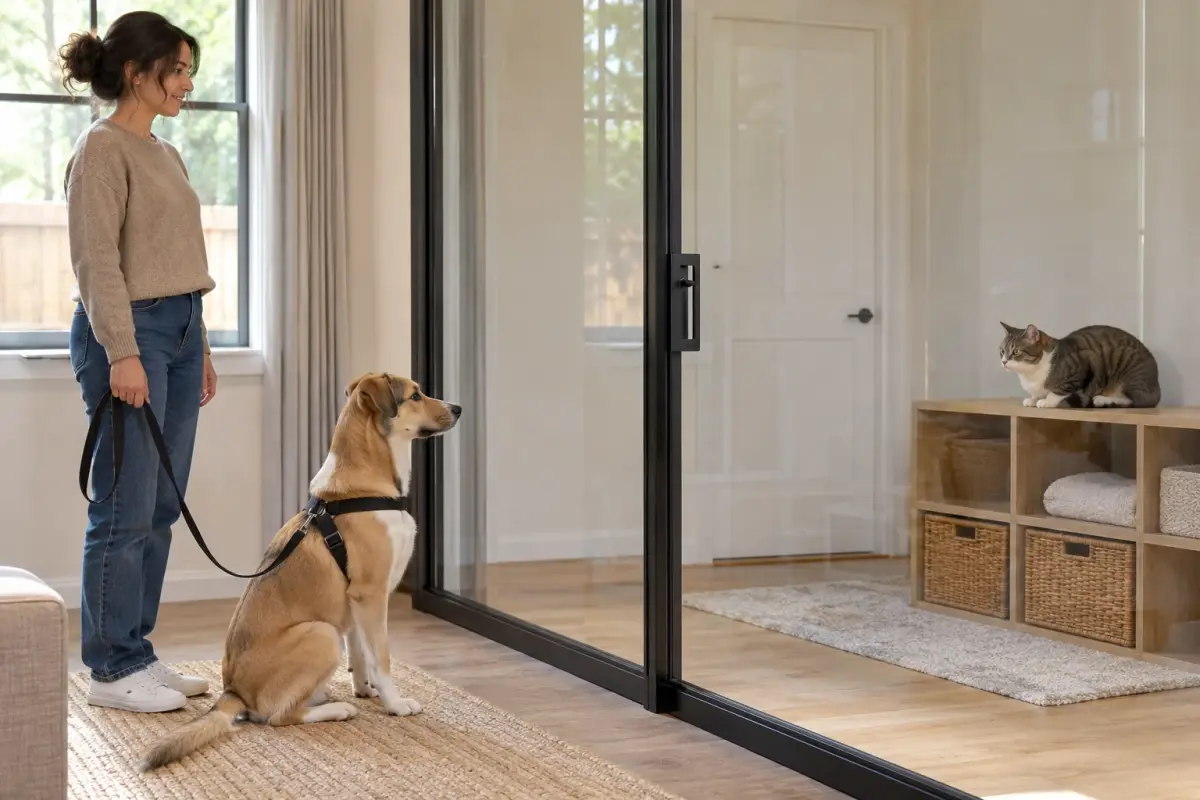
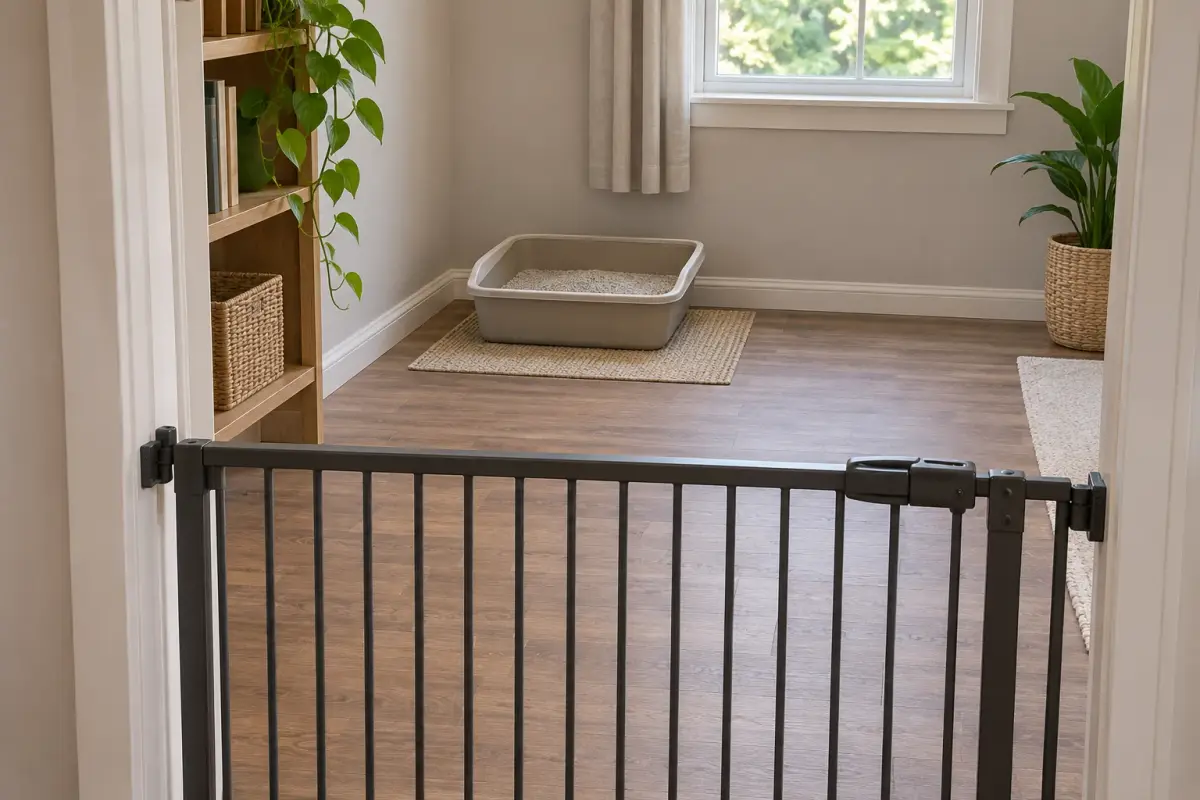
Managing access beats training for this problem. The AKC's main advice is to put the litter box where the dog cannot reach it, for example in a room closed off with a dog gate that cats can slip through or jump over. A high shelf, a closet with a cat door or a spare room all work, as long as your cat can still get to the box easily and without feeling cornered.
If the box has to stay in the open, a covered design limits what a dog can do, and the AKC suggests a covered or top-entry box for this reason. Browse our covered litter boxes, such as a litter box with a lid or a semi-enclosed litter box, and check that the opening is large enough for your cat to enter comfortably. Our guide to a dog-proof litter box explains which entry styles suit which homes, and where to put a litter box covers placement.
Habits that help
Scoop often. If the stool is gone before the dog finds it, the habit has nothing to feed on. VCA also advises supervising your dog, interrupting sniffing with a firm cue or a gentle leash pull when you are outside, and rewarding the dog for coming to you instead. Rubbing a dog's nose in stool or punishing it can make the behavior worse, so keep your reaction calm and boring.
If cats from the neighborhood use your yard, the AKC suggests keeping them out where possible and having your dog checked by a vet regularly for parasites. Plenty of exercise and mental work helps dogs that eat stool from boredom, and a dog puzzle toy can give a scavenger something better to do with its nose. Taste deterrents often fail, according to VCA, so rely on prevention instead.
When to call your vet
Call your vet if the habit starts suddenly in an adult dog, if your dog has diarrhea, vomiting, weight loss or a bigger appetite, or if you think it swallowed a lot of litter. Seek care the same day for a dog that is straining, not passing stool, or acting painful after eating litter.
A dog that eats cat poop once and seems fine usually needs nothing more than cleaner habits and a gate, but mention it at the next checkup and ask about a stool test. This page is general information, not veterinary advice, and it cannot replace an examination by the vet who knows your pet.
Common questions
Is it dangerous if my dog eats cat poop?
Most dogs are not harmed, but cat stool can carry parasites and bacteria, and a large amount of litter can cause a blockage. Call your vet if your dog has diarrhea, vomits or strains to pass stool.
Why does my dog only eat cat poop and not its own?
Cat stool smells like cat food, which is rich and appealing to dogs, and the litter box is easy to reach. The AKC calls it natural scavenging behavior that becomes a habit when it is rewarded.
Can eating cat poop make my dog sick?
It can. Dogs can pick up internal parasites from cat stool, and bacteria such as Salmonella can be passed on. Ask your vet about a stool test if your dog has done it more than once.
How do I keep my dog out of the litter box?
Move the box where the dog cannot go, use a gate that cats can pass, or switch to a covered or top-entry box. Scoop often so there is nothing left to find.
Sources we checked
This guide is general information, not veterinary advice. If your pet is unwell or injured, contact your veterinarian.


