






Care & how-to
When Can Chicks Go Outside?
Most backyard chicks can move outside for good at around six weeks old, once they are well feathered and no longer need supplemental heat. Feathering and the temperature in the brooder matter more than the calendar. Before the move, make sure the new home is ready, and browse our chicken coops if you are still choosing one.
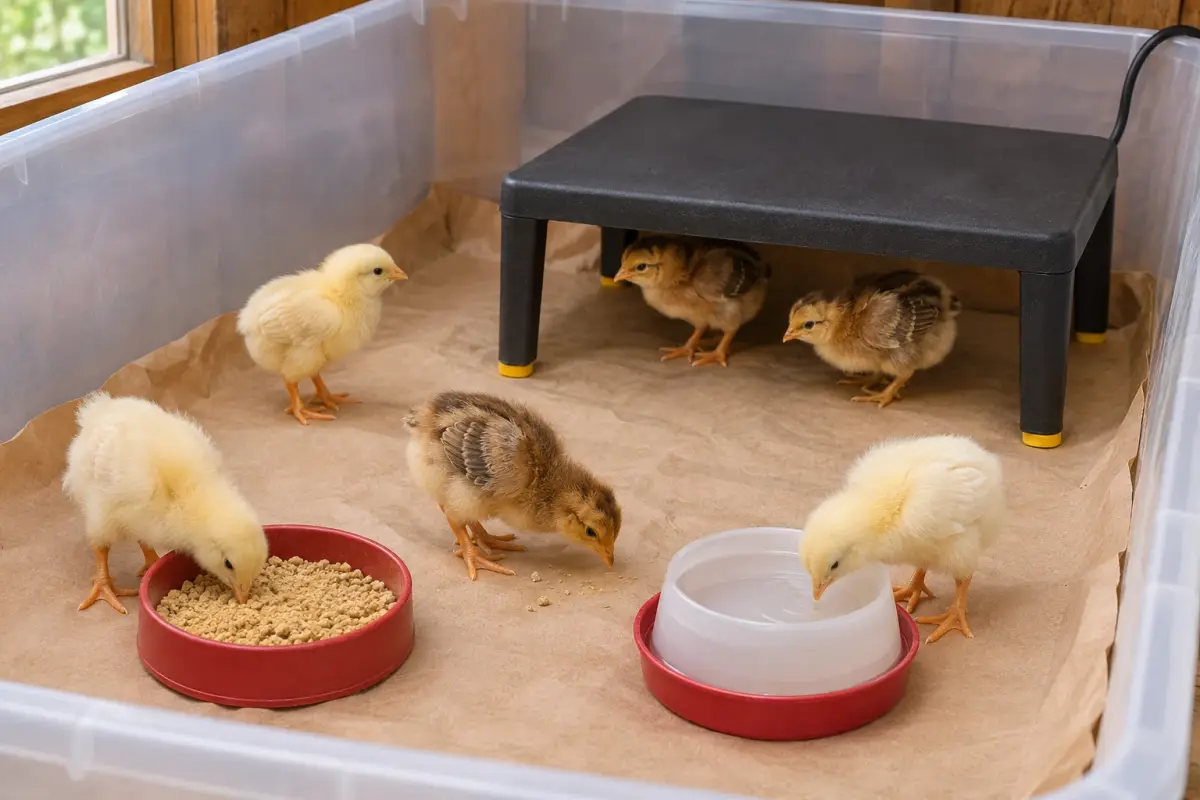
By Matt GarnettUpdated November 13, 20264 min read3 sources
The short answer: about six weeks, but feathers decide
University extension guidance describes the brooding period, when chicks need added heat, as running from hatch until about six weeks of age. That is why six weeks is the number most keepers quote for the move outdoors. It is a typical figure, not a deadline, and it assumes the weather outside is mild.
The more reliable rule is that heat continues until the chicks are well feathered. Missouri Extension warns that birds are more likely to develop respiratory trouble if heat is taken away too early. A chick that looks fluffy but still has bare patches or pin feathers coming in is not yet ready, whatever its age in days.
How warm the brooder should be, week by week
Extension sources agree on the pattern. Start at 90 to 95°F for the first week, measured at chick height under the heat source, then lower the temperature about 5°F each week. Missouri Extension suggests roughly 95°F in cold weather and 90°F the rest of the year, stepping down until the chicks are five weeks old and then holding near 70°F. In summer, keep the brooding area below 95°F.
You can read the chicks themselves as well as the thermometer. Chicks that crowd together under the heat are cold, so more warmth is needed. Chicks that move away from the heat source and spread to the edges are too warm, so it should come down. Chicks that are spread evenly and moving around are comfortable.
Signs your chicks are ready to go outside
Check three things together. First, the chicks are well feathered, with no bare patches left on the body. Second, the brooder has been stepped down to the point where the temperature under the heat is around 65 to 70°F, or matches the temperature outside, which is when UNH Extension says the heat source can come out. Third, the weather is moderate rather than cold, wet or windy.
If all three are true, the move is reasonable. If one is missing, wait a few more days and check again. A week of patience costs little, while a chilled flock can mean respiratory problems and losses.
Cold weather and winter hatches
Winter changes the answer. Extension guidance says that in cold weather heat may need to continue for the full six weeks after the chicks arrive, even if they are fully feathered, which also helps keep waterers from freezing. Chicks raised indoors have never had a cold night, so a sudden jump from a warm brooder to an unheated coop is a bigger shock than the number of feathers suggests.
For a cold-season move, wait for a run of milder days, and lean toward the older end of the range. If sneezing, wheezing, a runny nose or labored breathing appears after the move, contact a veterinarian who treats poultry the same day, because respiratory illness spreads quickly through a small flock.
Get the outdoor home ready first
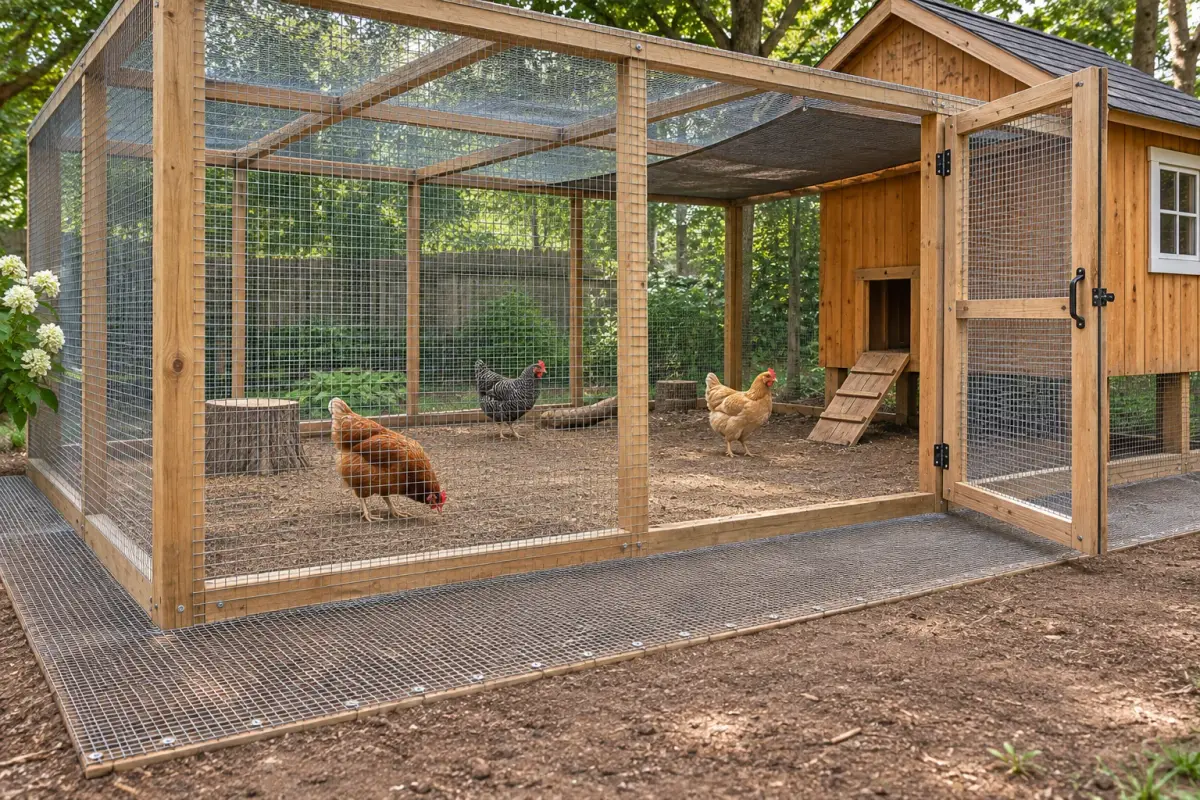
Young chickens are easy prey. Missouri Extension notes that cats, rodents and various wild animals will kill young chickens and can also spread disease and parasites, so the new home needs solid walls, a lockable door and a roof before the first night. A small enclosed house such as the solid wood chicken coop kit is the type that suits a handful of growing birds, while a larger flock needs a bigger structure.
Daytime space matters too. A covered enclosure such as a walk-in metal chicken run gives the birds room to stretch and scratch while keeping predators out. If you are weighing options, see our chicken runs, and read the guide to choosing a chicken coop for how size, ventilation and security compare.
Easing them into the move
Move the chicks on a mild day, early enough that they can explore before dark. Put their familiar feeder and waterer in the new home so the surroundings feel known, and keep any older birds separated by a fence they can see through until the young ones are close in size.
Watch the first few evenings. Chicks that huddle in a corner on the floor rather than finding the roost are normal at first, and a gentle hand can place them on the perch until they learn. Keep checking that they are bright, eating and drinking, and not shivering.
Common mistakes to avoid
The most common mistake is moving chicks by the calendar alone. A six-week-old chick that is still patchy, or one hatched in a cold spring, needs more time. The second is cutting heat in one step instead of lowering it weekly, which stresses birds that have only ever known a warm box.
Another is leaving the new house without checking for gaps. Predators use small openings, so walk the coop in daylight and again at dusk. When you are ready to shop for housing, browse our chicken coops.
This page is general information, not veterinary advice, and it cannot replace advice from a veterinarian who treats poultry.
Common questions
Can chicks go outside at 4 weeks old?
Only if they are fully feathered and the weather is mild. Extension guidance describes brooding as lasting until about six weeks and says heat should continue until chicks are well feathered, so four weeks is usually too early for backyard chicks.
What temperature can chicks go outside?
There is no single number, but UNH Extension says the heat source can come out once the temperature under it is 65 to 70°F or matches the outside temperature. Feathering matters as much as the thermometer reading.
Can baby chicks go outside in winter?
Extension guidance says heat may continue for six weeks in winter even if the birds are fully feathered. Wait for milder weather if you can, and make sure the coop is draft-free but ventilated before the move.
How do I know if my chicks are too cold?
Chicks that crowd together under the heat source are cold, so add warmth. If they also sneeze, wheeze or have labored breathing, contact a veterinarian who treats poultry promptly.
Sources we checked
This guide is general information, not veterinary advice. If your pet is unwell or injured, contact your veterinarian.


