Training & behavior
Puppy Training: Where to Start and What to Teach First
Start training your puppy the day they come home, usually at about 8 weeks old. Keep sessions to 5 to 10 minutes, reward the behavior you want with small training treats, praise or play, and end on a success. The first priorities are potty habits, their name, sit, come, a loose leash and calm handling, alongside steady socialization while your puppy is young enough to take new things in stride.
By Matt GarnettUpdated November 9, 20264 min read3 sources
When to start training a puppy
There is no need to wait for a certain age. Puppies are learning every waking minute from the day they arrive, so the real question is whether they are learning what you want. Simple cues such as sit and their name can start at 8 weeks, and house training, crate time and gentle handling start on day one. Our dog training supplies cover the basics.
Formal group classes usually begin once the vaccine series has started, since many classes ask for proof of the first shots. Between roughly 3 and 16 weeks puppies are in a sensitive period for socialization, which makes those early weeks the best investment of training time you will ever make.
How to run a short training session
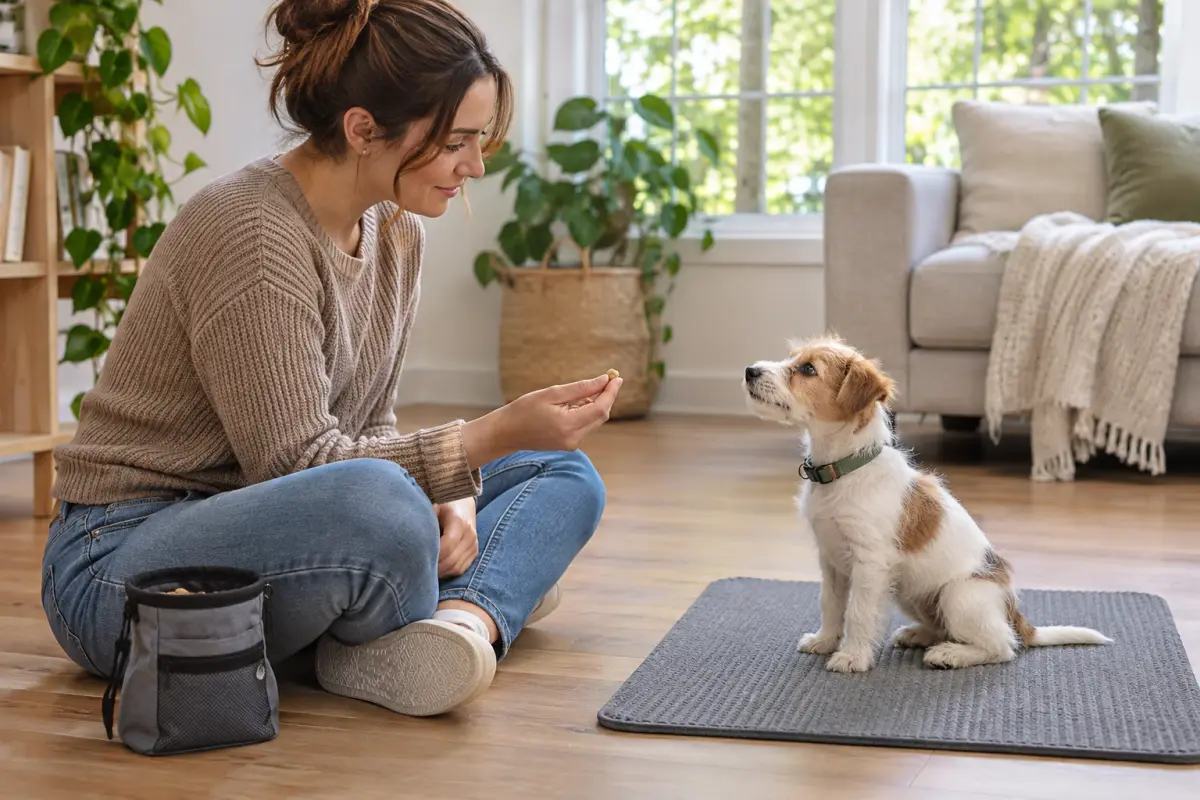
Pick a quiet room, a handful of pea-sized treats (a training snack bag keeps them handy) and one cue to work on. Train before meals rather than after, when your puppy is a little hungry and keen. Five to ten minutes is plenty; two or three short sessions a day beat one long one. Stop while your puppy is still enjoying it, ideally right after a success.
Use a marker word such as "yes" (or a clicker) at the exact moment your puppy does the right thing, then deliver the reward. That split-second timing tells your puppy precisely what earned the treat. Once a cue is reliable in the kitchen, practice it in the yard, then on walks, adding distractions one at a time.
The first five cues to teach
Step 1, sit: hold a treat at your puppy's nose and slowly lift it over their head so their rear lowers, then mark and reward. Add the word "sit" just before the movement once they are following the lure. Never push a puppy into position. Step 2, name and attention: say their name once, mark and reward when they look at you.
Step 3, come: crouch, use a happy voice, and reward generously when they reach you; never call your puppy to you for something unpleasant. Step 4, down: lure from a sit toward the floor between their paws. Step 5, loose-leash walking: reward every few steps while your puppy is at your side, and stop moving when the leash goes tight.
Habits to set from day one
Decide the house rules before your puppy arrives and stick to them as a household. Can they go on the sofa? Will they sleep in a crate? Are table scraps allowed? A rule that changes depending on who is home is impossible for a puppy to learn, and inconsistency is the main reason training stalls.
Reward calm behavior you want to see more of, like lying quietly on a mat or sitting for attention, rather than only reacting to mistakes. Prevent problems by managing the space: baby gates, a crate, chews within reach and valuables out of reach mean fewer chances to rehearse bad habits. Puppy pads are another way to manage the space while house training.
What to avoid, and when to get help
Skip yelling, leash jerks, alpha rolls and other physical corrections. They tend to confuse puppies, damage trust and can create fear-based problems later. If a session goes badly, end it with something easy, like a sit for a treat, and try again tomorrow.
Ask your vet for a referral to a qualified trainer or behavior professional if your puppy seems fearful of people, guards food or toys, panics when left alone, or bites hard during handling. Any sudden change in behavior, such as house training going backward, is also worth a vet check, since pain or illness can be the cause.
This page is general information, not veterinary advice, and it cannot replace an examination by the vet who knows your pet.
Common questions
Is 8 weeks too young to train a puppy?
No. Eight weeks is a good time to start simple, reward-based cues such as sit and name recognition, plus house training and crate time. Keep sessions short and playful, since young puppies have short attention spans.
How long should puppy training sessions be?
Around 5 to 10 minutes, two or three times a day. Short sessions keep your puppy keen and help them remember. End on a success, even if that means going back to an easy cue.
Are puppy classes worth it?
For most puppies, yes. A good class teaches basic cues and gives safe, supervised time with other puppies and people. Look for reward-based trainers who check vaccine records.
What treats work best for training?
Small, soft, strong-smelling pieces about the size of a pea work best, so your puppy can eat them quickly. Count them as part of the day's food so your puppy does not gain too much weight.
Sources we checked
This guide is general information, not veterinary advice. If your pet is unwell or injured, contact your veterinarian.