






Training & behavior
How to Pad Train a Puppy: Step-by-Step Routine
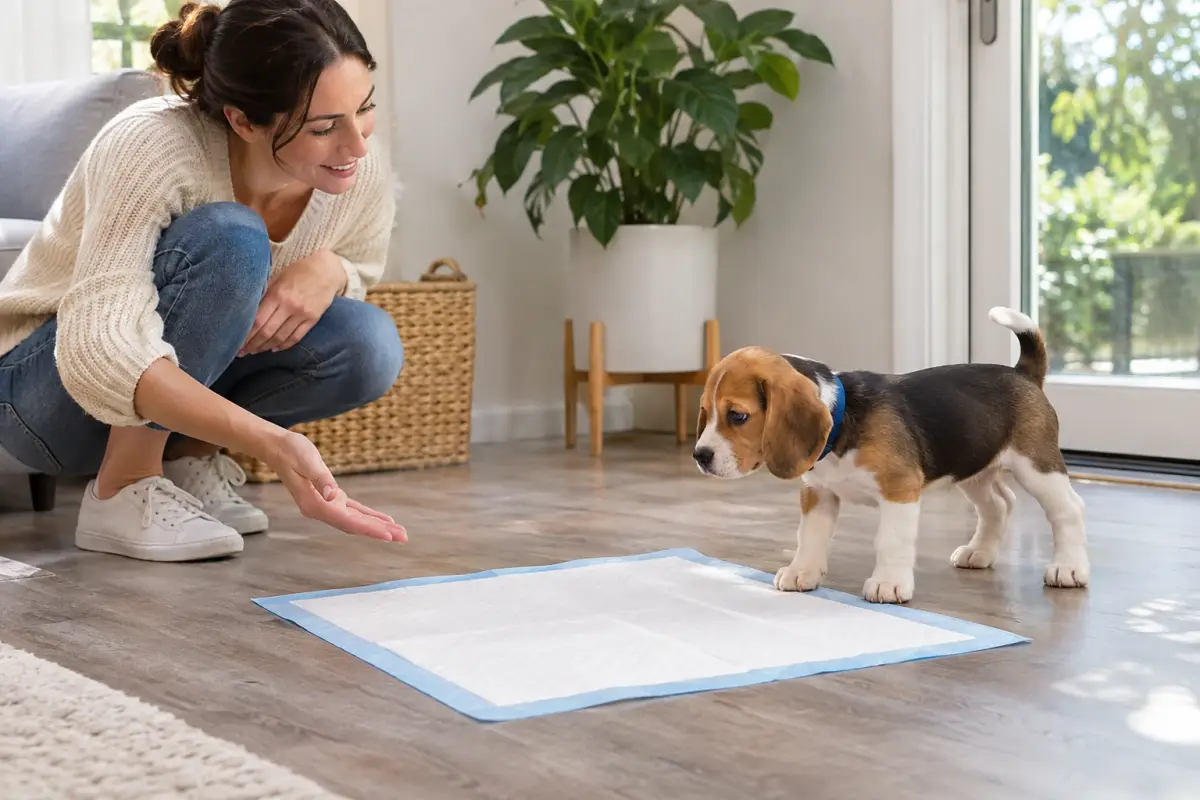
To pad train a puppy, choose one spot, put the pad there, and take your puppy to it on a fixed schedule: after waking, eating, drinking, playing and napping. Reward the moment it goes, keep the pad in the same place, and clean accidents without scolding. Most puppies show progress within a few weeks, but reliable habits can take months.
By Matt GarnettUpdated November 13, 20265 min read2 sources
Is pad training right for your puppy?
Pads make sense for apartment dwellers, owners who cannot get outside quickly, very young puppies and toy breeds with small bladders. They are less ideal if your goal is a dog that only goes outdoors, because the puppy has to learn one surface and later unlearn it. If outdoors is the end goal, our guide on how to potty train a puppy covers the outdoor-first route.
Whatever you choose, set expectations early. Many puppies cannot reliably control their bladder until about 16 weeks old, so accidents in the first weeks are normal and not a sign of a stubborn dog. A pad, whether disposable or one of our washable pee pads, is a tool that makes those accidents easier to manage; the training is the schedule, the supervision and the rewards.
Set up the pad spot
Pick one potty spot and leave the pad there while your puppy is learning. Moving it around is one of the most common causes of accidents, because the puppy has no fixed place to look for. Choose a quiet, low-traffic corner with an easy-to-clean floor such as tile or vinyl, since misses will happen at first.
Keep your puppy's world small. Use a baby gate, a playpen or a leash clipped to your waist so the puppy stays in sight, and use a crate when you cannot watch. A crate should be just big enough to stand, turn around and lie down; use a divider in a larger crate so the extra space does not become a toilet. Take the puppy straight to the pad every time it comes out of the crate.
Choosing a pad: washable, disposable or grass
Disposable pads are simple and have no laundry, but they add up and some puppies shred them. Washable pads cost more up front and go in the laundry, which suits owners who want less waste; a reusable washable dog pee pad or a washable puppy training pad are examples of that type. Wash and dry them promptly after each use, following the care label, so the pad is ready when the next accident or trip comes.
If your puppy likes the feel of grass underfoot, a grass-style pee pad is another surface to try. Puppies form preferences about what they stand on, so if yours avoids one surface, try a different one before deciding the puppy is the problem. Watch for chewing: some puppies eat the liner, and that is a reason to switch type or supervise closely. Browse all puppy pads or read how the types compare in our best puppy pads guide.
The daily routine, step by step
Step 1: Take your puppy to the pad first thing in the morning and after every meal, drink, nap and play session. Very young puppies may need a trip every 15 minutes or so while awake, with the gap lengthening as they grow. A rough guide for how long a puppy can hold it is its age in months plus one hour, so a 4-month-old may manage around five hours, though toy breeds usually need more frequent breaks.
Step 2: Feed at set times instead of leaving food out all day, because regular meals make bathroom times predictable. Step 3: Watch for sniffing, circling or whining and go straight to the pad. Step 4: If your puppy does not go, return it to the crate for 10 to 15 minutes, then try again, without letting it play in between. Step 5: Repeat all day. A timer on your phone helps if you keep forgetting.
Rewards, cues and accidents
Reward immediately. The instant your puppy finishes on the pad, give praise and a small treat, and keep treats near the spot so you are ready. For puppies that get distracted, walk them to the pad on a leash and unclip only after they have gone, using play as the extra reward. A word such as 'go potty', said just as the puppy starts, becomes a cue that is useful later.
Accidents will happen. If you catch one in progress, interrupt calmly with a quiet clap or 'oh-oh', then carry the puppy to the pad. Do not scold or startle it, and never rub its nose in the mess, because puppies that fear punishment learn to hide to go, such as behind the couch. Clean with an enzyme cleaner made for pet urine so the smell does not draw your puppy back to the same spot.
Moving from pad to outdoors later
If you want a dog that goes outside, plan the move once your puppy is older and holds it for longer. Shift the pad toward the door a few inches a day, then place it just outside, then at the final outdoor spot. Moving some of the used liner outdoors helps your puppy recognize the place, and the potty cue carries over.
Teach one location well before the other, rather than both at once. Keep in mind that indoor pads do not replace walks: puppies still need outdoor exercise, mental stimulation and, once your vet says it is safe, socialization.
When to call your vet
See your vet if your puppy pees very often, strains, has blood in its urine, drinks far more than usual, or keeps having accidents despite a steady routine. Urinary infections and other health problems can make house training nearly impossible until they are treated.
Progress varies by puppy, so avoid comparing yours with another dog. If you are stuck, a certified trainer can look at your routine in person, and a second set of washable pee pads on hand makes the rotation easier while you sort it out.
This page is general information, not veterinary advice, and it cannot replace an examination by the vet who knows your pet.
Common questions
How long does it take to pad train a puppy?
Most puppies show progress within a few weeks, but full reliability often takes months, and many cannot control their bladder until about 16 weeks old. Consistency matters more than speed.
Should the pad stay in the same place?
Yes. Keep it in one quiet spot while your puppy is learning, because moving it causes confusion and accidents. If you must shift it, do so a few inches a day.
What if my puppy walks on the pad but pees next to it?
Treat it as a schedule or supervision gap. Take the puppy to the pad more often, reward every success, and clean misses with an enzyme cleaner so the wrong spot stops smelling like a toilet.
Can I pad train and teach my puppy to go outside?
Yes, but teach one location fully first, then move the pad gradually toward the door and outside. Many owners keep a pad for bad weather once outdoor habits are solid.
Sources we checked
This guide is general information, not veterinary advice. If your pet is unwell or injured, contact your veterinarian.


