






Buying guides
Best Puppy Pads and Pee Pads: How to Choose the Right Type
The best puppy pad is absorbent enough to lock urine away from paws, has a leak-proof backing, and is big enough for your puppy to circle and squat on without missing the edge. Disposable pads are convenient; washable pads suit long-term use and puppies that shred. A pad holder stops sliding and chewing. Use pads in one fixed spot.
By Matt GarnettUpdated November 13, 20263 min read2 sources
When pads make sense
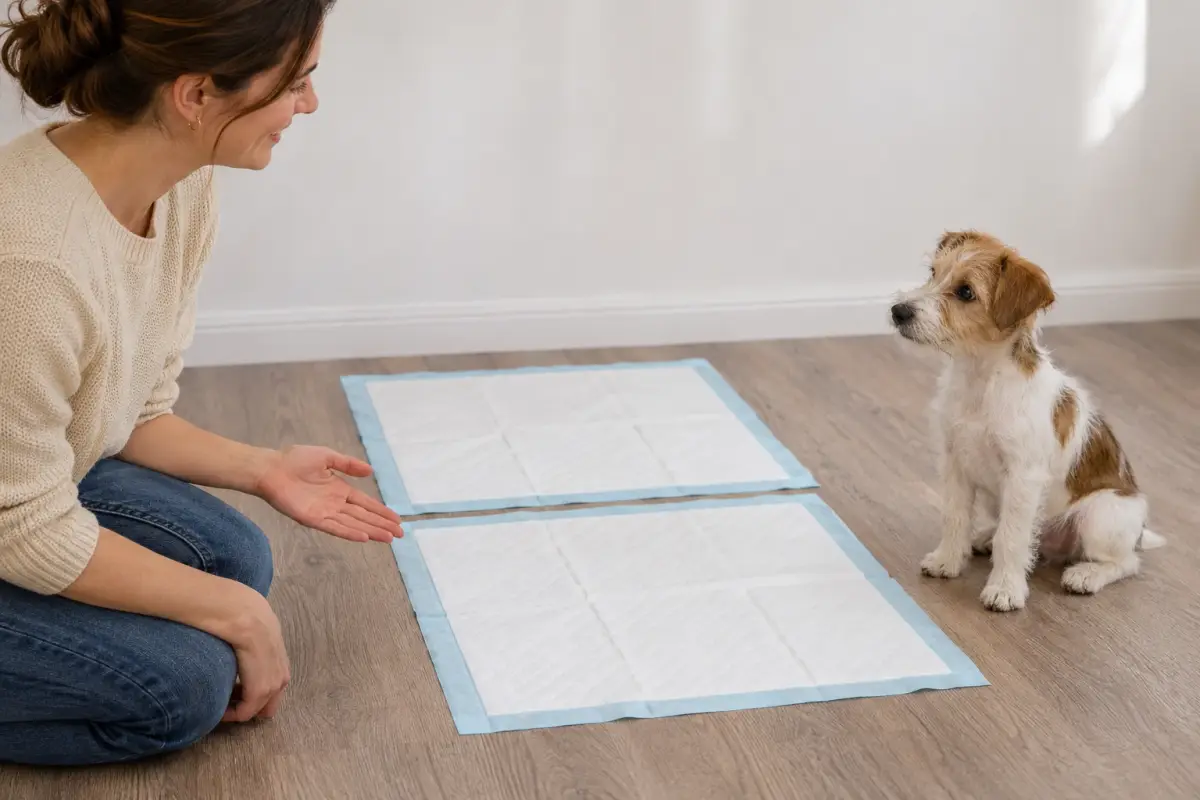
The AKC notes that very young puppies need frequent bathroom breaks and cannot always hold their bladder long enough to get outside, and that some owners use pads until vaccinations are complete. Puppy pads also help in high-rise apartments, in harsh weather, and for senior or small dogs that cannot always wait.
The AKC also cautions that pads can slow the move to going outdoors, because the puppy learns that indoors is acceptable. If outdoor training is your goal, plan to move the pad toward the door and then outside gradually, and reward successful trips with praise or a treat straight away.
What matters most in a pad
Absorbency and dryness come first. Look for several layers: a quick-drying top sheet, an absorbent core that turns liquid to gel, and a plastic or waterproof backing so nothing reaches the floor. A good pad leaves the surface dry to the touch, which keeps paws clean and stops tracking.
Size matters next. Standard pads around 22 by 23 inches suit small puppies; larger or extra-large pads suit bigger puppies and males that lift a leg. Adhesive strips or a pad holder keep it flat. Attractant scents can help a puppy find the pad, but consistency of location matters far more.
Disposable, washable and grass pads compared
Disposable pads are easy and hygienic, but the AKC notes puppies often enjoy shredding them, which wastes pads and risks swallowed fibers. Washable cloth pads are durable, less tempting to tear and cheaper over time, but need laundering and a backup while one dries.
Artificial or real grass patches mimic outdoors, which can ease the later move outside and suits apartment balconies. They need rinsing and replacing to control smell. Pad holders, trays with a frame that clamps the pad, stop sliding and make shredding harder, which is often the single best upgrade.
The best type for each situation
For a young puppy before vaccinations, disposable pads in a holder inside a pen are practical. For a puppy that shreds, washable pads or a holder are better. For a large-breed puppy, extra-large pads or a grass patch, since standard pads fill fast. For apartments long-term, a grass patch on a balcony or a washable system.
For senior dogs with incontinence, absorbent pads under bedding help, but sudden accidents in a previously house-trained dog deserve a vet visit, because they can be a sign of a urinary or other health problem.
Training tips, cleaning and what to avoid
Keep the pad in one spot, take the puppy there after waking, eating, drinking and play, and reward use straight away, as the AKC recommends. When you cannot supervise, confine the puppy to a crate or small pen. Change pads as soon as they are soiled; many puppies avoid a wet pad.
Clean accidents with an enzyme cleaner, which breaks down urine odor that otherwise invites repeat accidents. Avoid ammonia cleaners, which smell like urine. Avoid moving the pad around the house, and avoid scolding accidents, which teaches a puppy to hide rather than to use the pad. For the full routine see how to potty train a puppy, and browse our puppy pads when you are ready to stock up.
Toileting surfaces and holders
| Format | Physical arrangement | Maintenance difference |
|---|---|---|
| Disposable pad | A replaceable layered sheet | Replacement and damage checks |
| Washable cloth pad | A reusable fabric body | Laundering and drying space |
| Grass patch | Artificial or real grass over a base | Rinsing and replacement instructions |
| Pad holder | A frame holds a separate pad | Pad compatibility and frame closure |
Common questions
Are puppy pads a good idea?
They are useful for very young puppies, apartments and bad weather, but can slow outdoor training. If you want your puppy to go outside eventually, move the pad gradually toward the door.
What size puppy pad do I need?
Standard pads around 22 by 23 inches suit small puppies. Larger puppies and males that lift a leg need extra-large pads so they do not miss the edge.
How do I stop my puppy shredding pee pads?
Use a pad holder that clamps the edges, or switch to washable pads, and offer chew toys. Supervise and redirect, because swallowing pad material can be harmful.
Do scented puppy pads work?
Attractants can help some puppies find the pad, but keeping the pad in the same place and rewarding use straight away has a much bigger effect on training.
Sources we checked
This guide is general information, not veterinary advice. If your pet is unwell or injured, contact your veterinarian.


