






Training & behavior
How to Potty Train a Puppy
To potty train a puppy, take it out often and on a schedule, especially after waking, eating, drinking and playing; reward it the moment it goes in the right spot, outdoors or on a puppy pad; supervise closely or confine it when you cannot watch; and clean accidents without scolding. A rough guide is that a puppy can hold its bladder about one hour per month of age, up to around six to eight hours. Most puppies are reliable within a few months.
By Matt GarnettUpdated November 13, 20264 min read3 sources
Set up for success on day one
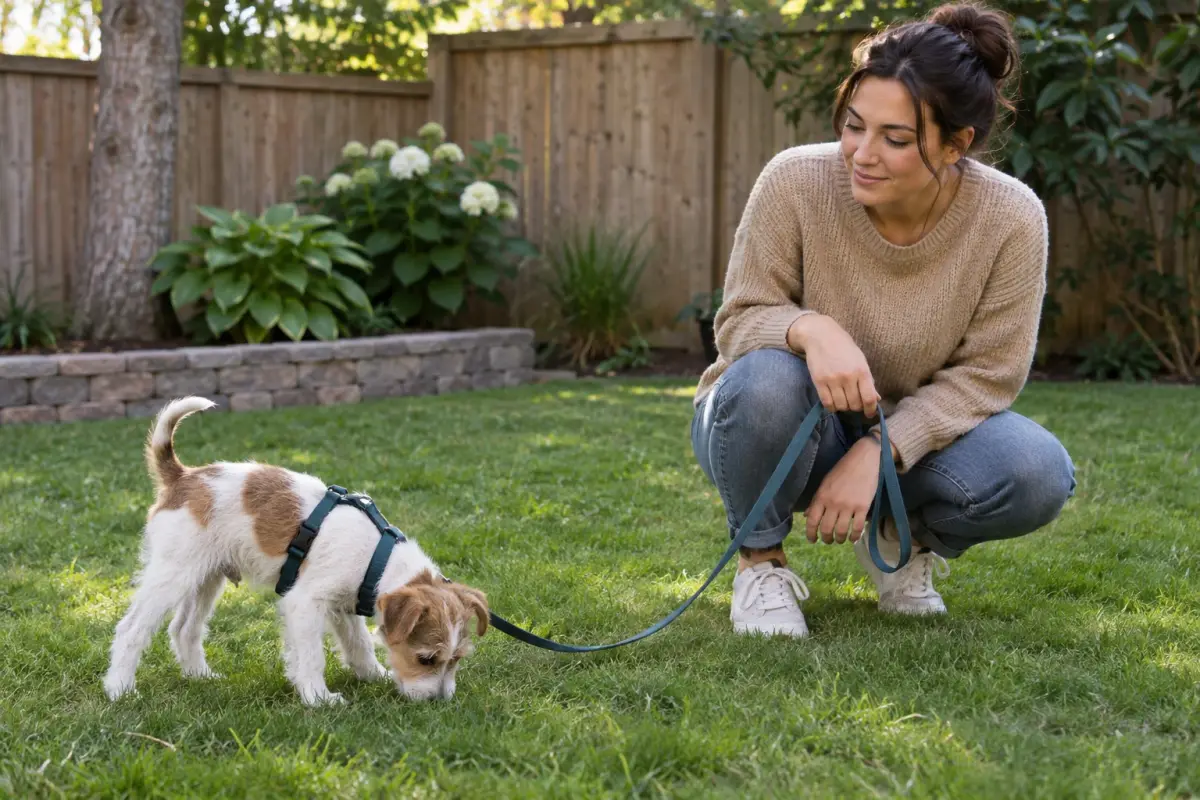
Start the day your puppy comes home. Choose one potty spot outside, close to the door, and take your puppy there on a leash every time so it learns that this place is for peeing and pooping. Pick a short cue word such as 'go potty' and say it just as your puppy starts to go.
Limit your puppy's freedom indoors. Keep it in the same room as you, behind a baby gate or on a light leash, or in a crate or puppy playpen when you cannot watch. A crate should be just big enough to stand, turn around and lie down, because most puppies avoid soiling where they sleep.
A sample potty training schedule
Take your puppy out first thing in the morning, last thing at night, and after every meal, drink, nap, play session and crate time. Young puppies may need a dozen or more trips a day. Between those, go out every one to two hours for very young puppies, stretching the gap as your puppy grows.
Feed meals at the same times each day so bathroom times become predictable, and pick up the water bowl a couple of hours before bedtime unless your vet advises otherwise. Expect one or two overnight trips with a young puppy; keep them quiet and boring, then straight back to bed.
Rewards and reading the signals
Reward your puppy within a second or two of it finishing, with praise and a small, tasty treat from a training treat pouch, right there at the potty spot. Waiting until you are back indoors is too late for your puppy to connect the reward with the act. A short play session or sniff time afterward is a bonus reward.
Watch for the signs a puppy needs to go: sniffing the floor, circling, whining, heading for the door, or suddenly wandering off. When you see them, calmly take your puppy straight outside. Over time many puppies learn to go to the door or ring one of the potty bells hung on it.
Handling accidents the right way
Accidents are part of the process. If you catch your puppy in the act, calmly interrupt it with a quick clap or word, pick it up or lead it outside, and reward it if it finishes there. If you find an accident afterward, just clean it up; scolding later teaches nothing and can make a puppy afraid to go in front of you.
Never rub a puppy's nose in it. Clean the spot with an enzyme cleaner made for pet urine, because leftover smell draws puppies back. An accident usually means the gap between trips was too long or supervision slipped, so adjust the schedule.
Pee pads, apartments and adult dogs
In an apartment or for small breeds, pee pads can be useful. Put the pad, whether disposable training pads or activated charcoal pads, in one consistent spot, take your puppy to it on the same schedule and reward it there. If you later want your puppy to go outside, move the pad gradually toward the door and then outside, because switching surfaces takes extra practice.
Adult dogs, including rescues, can be house trained with exactly the same method: a schedule, supervision, confinement when needed and rewards outdoors. Many adults learn quickly. A previously house-trained dog that starts having accidents should see a vet first.
When to call your vet
See your vet if your puppy pees very often, strains, has blood in its urine, drinks much more than usual, has diarrhea, or keeps having accidents despite a steady routine. Urinary infections and other problems can make house training nearly impossible until they are treated.
With consistency, most puppies are reliable within a few weeks to a few months, though occasional slips are normal until about six months of age or later in small breeds.
This page is general information, not veterinary advice, and it cannot replace an examination by the vet who knows your pet.
Common questions
How long does it take to potty train a puppy?
Most puppies are mostly reliable within a few weeks to a few months, but it varies with age, breed and consistency. Claims of potty training in three or seven days are rarely realistic for a young puppy.
What is the best way to potty train a puppy fast?
Frequent trips outside on a fixed schedule, instant rewards at the potty spot, and close supervision or confinement to prevent accidents. Consistency from everyone in the house speeds things up.
How do I potty train an older dog?
Treat it like a puppy at first: a regular schedule, supervision, confinement when you cannot watch, and rewards for going outside. Ask your vet to rule out medical causes if accidents are new.
Should I use pee pads or train my puppy outside?
Outdoor training is usually simpler if you can manage it, because the puppy learns one surface. Pads suit apartments and tiny breeds; our guide to the best puppy pads compares the types. If you plan to move outside later, transition gradually.
Sources we checked
This guide is general information, not veterinary advice. If your pet is unwell or injured, contact your veterinarian.


