Care & how-to
How to Entertain a Bored Cat
A bored cat often makes its own entertainment: knocking things over, attacking ankles, yowling at night, overeating or sleeping far more than usual. Entertain it by adding daily interactive play, rotating toys, giving it windows and high perches, turning meals into food puzzles and creating safe new things to explore, such as boxes and paper bags. Rule out illness first if behavior changes suddenly.
By Matt GarnettUpdated November 9, 20264 min read3 sources
Signs your cat may be bored
Common signs include play aggression such as stalking and pouncing on feet, knocking objects off shelves, scratching furniture, getting into cupboards, crying or racing around at night, overeating and gaining weight, and sleeping or lying around much more than usual. Cornell Feline Health Center lists insufficient playtime and boredom among the triggers for house soiling, too.
VCA notes that under-stimulation and excess unused energy can drive play aggression, especially in young cats under about two with no feline companions. Many of these signs also have medical causes, so a sudden change in behavior deserves a vet check before you assume boredom.
Step 1: Daily interactive play
Nothing replaces you on the end of a wand toy. VCA recommends several 10-minute play sessions a day, and its enrichment guidance suggests at least three short sessions, timed just before your cat's usual active or attention-seeking times.
Make play like a hunt: let the toy hide and dart, let your cat catch it, then finish with a treat or meal. Avoid using hands or feet as toys, and put wand toys away afterward, since VCA warns that swallowed string is dangerous.
Step 2: Rotate toys and add novelty
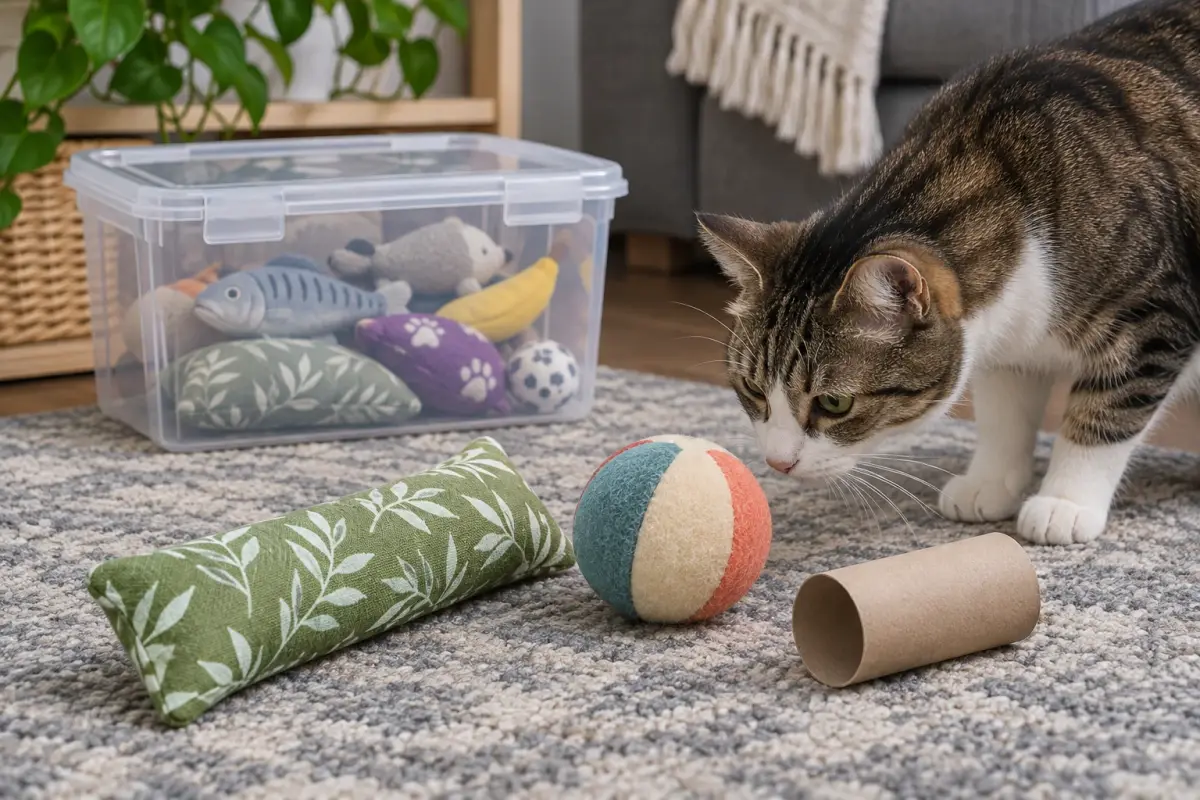
Cats get bored of the same cat toys. VCA suggests keeping about 20 toys and putting out only four or five at a time, rotating them weekly. Cornell also recommends toy rotation to keep interest high. Store the off-duty toys in a sealed bag with a pinch of catnip so they seem new when they return. A rolling ball cat toy is an easy one to add to the rotation.
Novelty does not have to cost money. Cornell notes that paper bags, cardboard boxes and ping-pong balls can entertain cats very well. Remove handles from bags and never offer plastic bags.
Step 3: Give your cat a view and some height
A window perch overlooking birds, a yard or the street is a TV channel for cats. VCA suggests window perches and some cats even enjoy cat-specific videos or tablet games. A bird feeder outside a window adds a lot of interest for very little effort.
Cat trees and shelves give a cat routes to explore and places to watch from. VCA recommends cat trees in the rooms where the family spends time and elevated resting spots that let cats feel secure.
Step 4: Make food a challenge
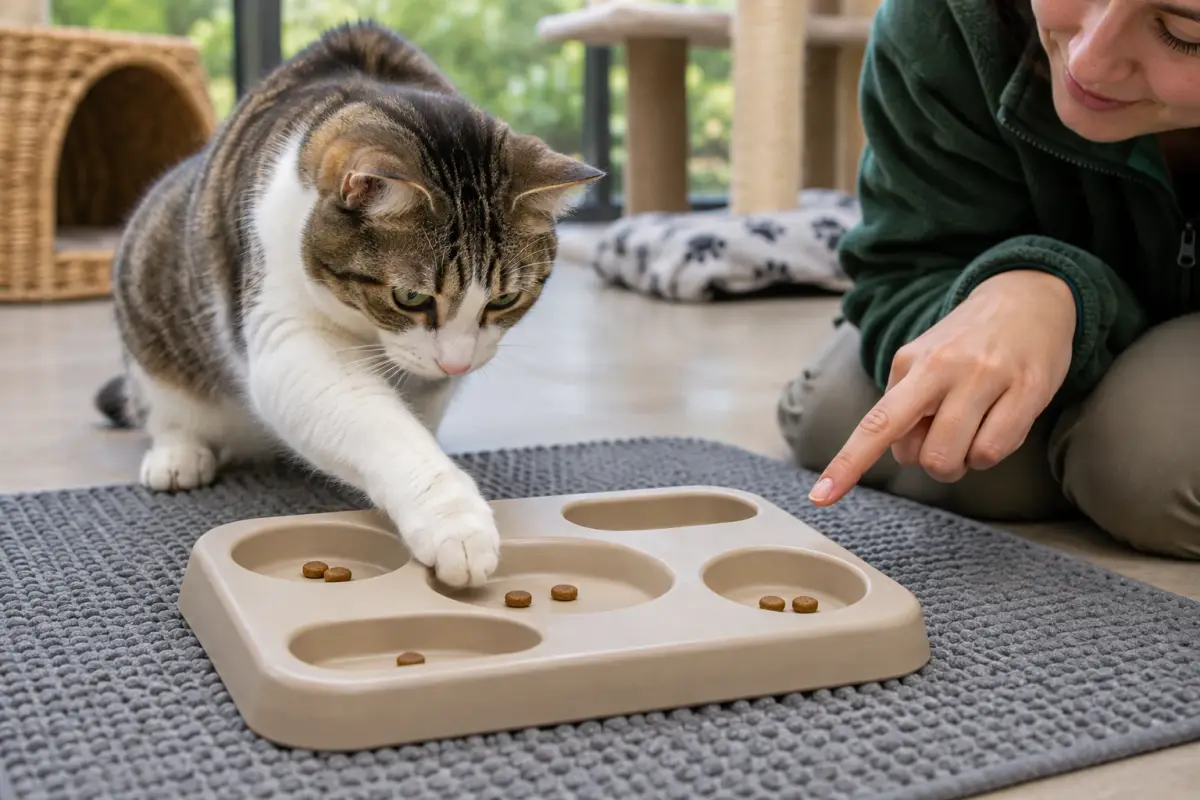
Food puzzles and treat balls let a cat hunt for part of its meal, and a cat puzzle toy with a ball and spring-loaded wand offers a solo play option. VCA recommends hiding toys or part of the daily food around the home and splitting meals into several dishes in different places. A DIY version is a small cardboard box with holes cut in it and a few pieces of kibble inside.
Count all puzzle food toward the day's total and make sure your cat finishes its ration; VCA warns cats can become seriously ill if they do not eat enough. Start with easy puzzles so your cat succeeds.
More ideas, and when to call your vet
Browse our cat toys for bored cats or read our guide to toys for bored cats for more ideas. Teach a trick or two with treats, scatter a few treats for a sniffing game, grow a pot of cat grass, or try harness training if your cat is confident. A catio, which VCA describes as an outdoor enclosure that can extend from a window, gives safe outdoor time. Some lone young cats do better with a carefully introduced feline companion; talk to your vet about whether that suits yours.
Call your vet if your cat's behavior changes suddenly, if it is sleeping much more, eating less or more, hiding, or crying at night, particularly in an older cat. These can be signs of pain, thyroid disease or other illness rather than boredom.
This page is general information, not veterinary advice, and it cannot replace an examination by the vet who knows your pet.
Common questions
How do I entertain my cat while I am at work?
Leave food puzzles, a window perch, a few rotated toys and cardboard boxes to explore. Play an energetic session before you leave and another when you get home, and avoid leaving string or wand toys out.
Do indoor cats get bored?
Yes. Indoor cats lack the stimulation of hunting and exploring outside, so they rely on play, climbing, views and food puzzles. Daily interactive play is the single most effective fix.
Does a bored cat sleep a lot?
Cats normally sleep many hours a day, but a cat that seems to do nothing else may be under-stimulated. A sudden increase in sleeping can also mean illness, so check with your vet.
Sources we checked
This guide is general information, not veterinary advice. If your pet is unwell or injured, contact your veterinarian.