






Care & how-to
How Long Do Ducks Live? Lifespan, Breeds and Care
A well-kept domestic duck can live a decade or more: University of Hawaii Extension notes that hens may still lay at 10 or more years old. Predators, wet bedding and poor water access, not age, usually decide the real number. Here is what shapes a duck's lifespan and how to set up a safe home with our duck houses.
By Matt GarnettUpdated November 13, 20265 min read5 sources
What is a realistic lifespan for a pet duck?
No single figure fits every duck. The extension and veterinary pages we opened do not give one lifespan for all breeds, so treat any exact number you see online with caution. What they do show is that a protected domestic duck can live well into double digits. University of Hawaii Extension says females will lay until they are 10 or more years of age and that ganders may be kept for more than 5 years, so a decade is a sensible planning horizon rather than a rare exception.
Meat ducks and backyard ducks are very different cases. Poultry Extension says Pekins raised for the table should not be kept past 10 weeks of age, which is why short lifespans are quoted for farm birds. A duck kept as a pet or egg layer has no such cutoff, so the care you provide does most of the work in deciding how many years you get.
Does breed change how long a duck lives?
Breed changes how a duck looks and lays more than it changes a timetable we can quote. Poultry Extension describes a Pekin as reaching 6 to 7 pounds in seven or eight weeks under small farm conditions, and says the male Muscovy can become very large at 10 to 12 pounds while the female is smaller at 5 to 6 pounds. With heavy birds like these it is worth watching how they walk and stand as they age, and keeping their ground flat and dry. You can read more in our Pekin duck profile.
Lightweight egg breeds work differently. Poultry Extension says a Runner typically lays four eggs per week for about eight months, and some utility strains have produced more than 300 eggs in a year. A hen that lays that heavily needs a feed matched to the laying stage, and our guide to what ducks eat covers the rations by age. Good nutrition is one of the few lifespan factors fully in your hands.
Predators are the biggest everyday threat
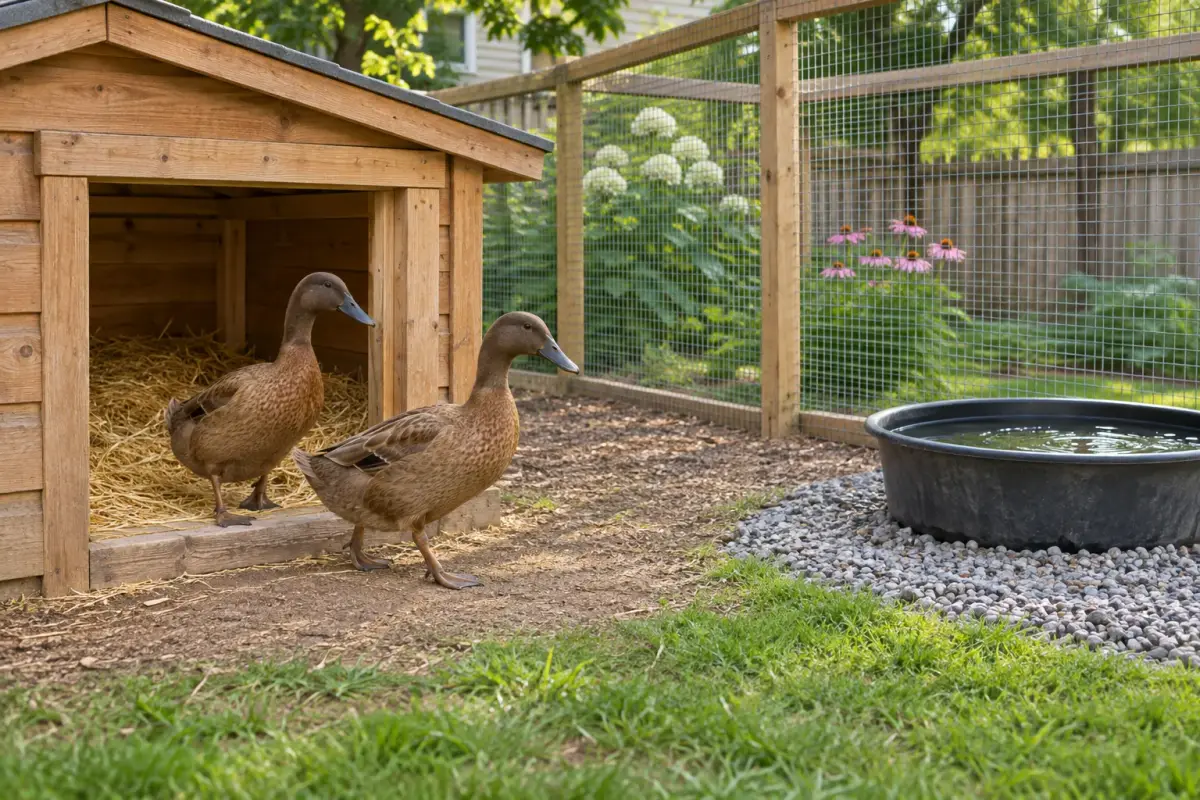
For most backyard ducks the danger is not old age but a night without a secure shelter. Merck Veterinary Manual names cats, dogs, skunks, hawks and foxes among the predators of backyard poultry, and advises fencing that extends at least 12 inches into the ground with the top of the enclosure covered against flying or climbing predators. A lockable, roofed shelter with two doors, such as this wooden duck house with an openable roof and double doors, gives the flock somewhere to be shut in from dusk to dawn.
Cornell University's duck research laboratory notes that low fencing, about 24 inches, is adequate for Pekins because they do not fly, but Muscovies can become airborne, so a low fence is not enough for them. If predators are a nighttime problem, it suggests covering the open areas of the shed and pen with inexpensive netting or wire mesh. If you are building a covered pen, our chicken runs show how a roofed enclosure goes together.
Housing, wet bedding and water

Ducks are messy, and damp conditions shorten the good years of a bird's life before anything dramatic happens. Cornell notes that duck droppings are over 90 percent moisture, so fresh bedding should be added often on top of wet litter and replaced entirely when needed. Merck lists wet litter as a cause of footpad dermatitis in backyard poultry, a painful foot problem. A shelter you can open and clean from above, like this duck coop with an openable roof, makes frequent bedding changes a quick job rather than a chore you put off.
Merck says ducks and geese need approximately 3 to 6 square feet inside the coop and 15 to 18 square feet in outside runs per bird, about twice the space chickens need. It also says waterfowl need more water than other poultry. Cornell advises keeping outdoor waterers as far from the house as possible so the ground beside the bedding stays dry, and providing water indoors when temperatures drop below freezing.
Signs of trouble and when to call the vet
Ducks hide illness well, so small changes matter. A duck that stops eating, seems weak, sits apart from the flock, limps, or has trouble breathing needs to be seen by a veterinarian who treats poultry or waterfowl, and sooner is better. Merck lists footpad dermatitis from wet litter, fatty liver from feeding fat scraps and vitamin D3 deficiency among the common problems in backyard poultry, and several of them start with husbandry rather than infection.
Do not treat a sick duck with medicine from the cupboard or from another animal's course, because the wrong drug or dose can do harm and only a vet can choose one. What you can do is keep the bird warm, dry and apart from the flock, give clean water, and write down what you have seen and for how long. That note helps the vet far more than a guess at the cause.
Getting more good years from your ducks
Most of what extends a duck's life is routine. Shut the flock in a secure shelter every night, keep bedding dry, feed a ration that matches the age and stage, and check each bird by eye daily. University of Hawaii Extension advises drinking water in troughs deep enough for birds to dip their bills and heads, which helps them keep their eyes and nostrils clean. Our guide to choosing a duck house explains what to look for in a shelter.
Plan for the long haul before you buy. A duck that may live ten years or more needs a home you can maintain through winter and a plan for when hens stop laying. When you are ready to compare shelters, browse our duck houses, and read when ducks start laying eggs so you know what the first year looks like.
This page is general information, not veterinary advice, and it cannot replace an examination by the vet who knows your pet.
Common questions
How long do pet ducks live?
With secure housing, dry bedding and steady care, domestic ducks can live a decade or more. University of Hawaii Extension notes that hens may still lay at 10 or more years old, though no source gives one figure for every breed.
How long do Pekin ducks live?
Pekins raised for meat are processed young, so farm timelines are short. A Pekin kept as a pet or layer can live many years if it is protected from predators and kept on dry ground, and a vet can advise on an individual bird.
Do ducks live longer than chickens?
Often, with equal care. Kansas State University puts the average chicken lifespan at 5 to 6 years, while Hawaii Extension says duck hens may lay until they are 10 or more, which suggests ducks can outlast chickens in a good home.
What is the most common reason backyard ducks die young?
Predators are the main everyday threat, along with damp conditions that cause foot problems. A lockable shelter, covered pen and dry bedding address both, and a vet should see any duck that stops eating or has trouble breathing.
Sources we checked
- University of Hawaii Extension — Raising Ducks and Geese in Small Numbers
- Merck Veterinary Manual — Management of Backyard Poultry
- Cornell University — Duck Housing and Management
- Poultry Extension — Selecting a Duck Breed for Small or Backyard Poultry Flocks
- Kansas State University — Poultry Frequently Asked Questions: General Information
This guide is general information, not veterinary advice. If your pet is unwell or injured, contact your veterinarian.


