






Care & how-to
When Do Ducks Start Laying Eggs?
Many domestic ducks begin laying at roughly four to six months, but breed, strain, season, and individual development affect the timing. University extension examples put some Runners near four to five months and Campbells near six months; these are guides rather than deadlines. Short days may delay the first eggs. A duck that is unwell or straining needs veterinary attention rather than another wait for maturity.
By Matt GarnettUpdated November 11, 20264 min read4 sources
Use an age range rather than a promised date
Ask Extension gives different examples for Runners and a Pekin-type cross, while the poultry extension breed guide describes Campbells reaching sexual maturity around six months. Those examples explain why a single birthday is an unreliable promise for every backyard duck. Record the hatch date when it is known and keep uncertainty clear when it is not.
Check that the bird has been identified accurately as female, and ask an experienced poultry professional if you are uncertain about breed or sex. Do not try an invasive examination to settle it yourself. A mature male will not start laying, however closely its age matches a laying chart.
Consider the season alongside development
The Maryland extension response explains that shortening days can delay egg production even when a duck is otherwise old enough. A bird reaching maturity in fall may have a different first-laying pattern from one reaching the same age during lengthening spring days. Day length is one contributor, not a diagnosis of every delay.
Do not install continuous lighting or abruptly alter a flock’s schedule simply to meet an internet egg target. Discuss any planned lighting program with a poultry professional, taking normal rest, electrical safety, housing, and the particular birds into account. Waiting for the season to change may be appropriate for a healthy flock.
Match expectations to the actual breed and strain
The extension breed guide distinguishes ducks selected for egg production from breeds kept for other purposes. Published high annual totals describe particular birds and management, rather than a guarantee for every pet duck. A mixed flock can therefore have noticeably different laying patterns even with similar care.
Keep a simple record of eggs, ages, and seasonal changes without assuming the least productive bird is sick. The record becomes more useful when paired with observations of appetite, activity, and body condition. Ask about a significant unexplained change, especially if it occurs with signs that a duck is uncomfortable or unwell.
Keep the diet and water suitable for ducks
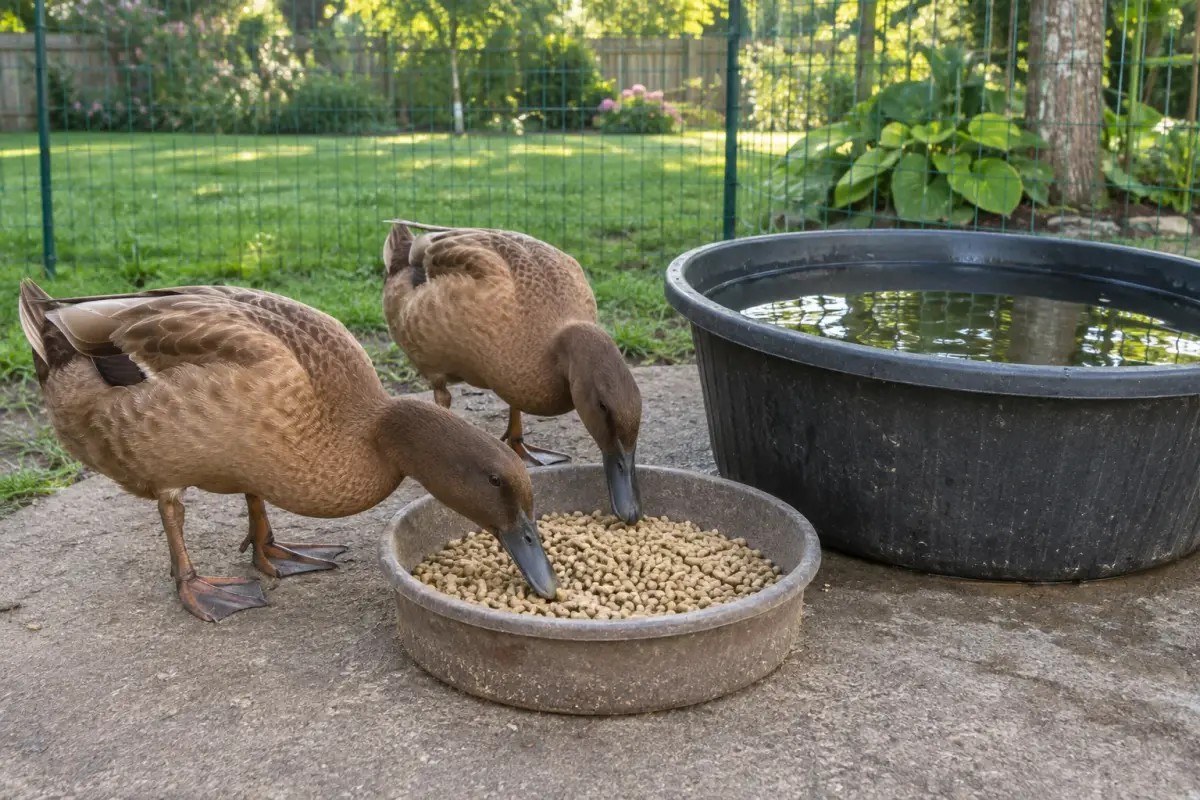
The poultry extension feeding guide emphasizes an appropriate ration and reliable drinking water for laying ducks. Do not use vegetables, scratch, or seasonal treats as a replacement for balanced feed. Ask a poultry nutrition professional which life-stage feed fits the actual group, especially when immature birds and laying adults share an area.
Ducks need ready access to drinking water when eating; the extension guide warns against feeding without it. Check water availability repeatedly rather than assuming a container filled earlier is still usable. Keep feed dry and protected from spoilage, while arranging the watering area so avoidable spills do not keep the bedding wet.
Look for eggs without overlooking health
The extension feeding guide notes that ducks commonly lay in the morning. A regular quiet check of their normal laying area can be more informative than repeatedly disturbing birds throughout the day. Maintain a clean, accessible nest area and make collection part of the routine rather than chasing a duck to see whether she is ready.
Call a poultry veterinarian promptly about straining, marked discomfort, weakness, poor appetite, or an abrupt change accompanied by illness. Collapse or breathing difficulty requires urgent care. Do not press on the abdomen, attempt to remove an egg, or give a calcium or medicine dose based on a guessed explanation.
Plan housing around care rather than an egg quota
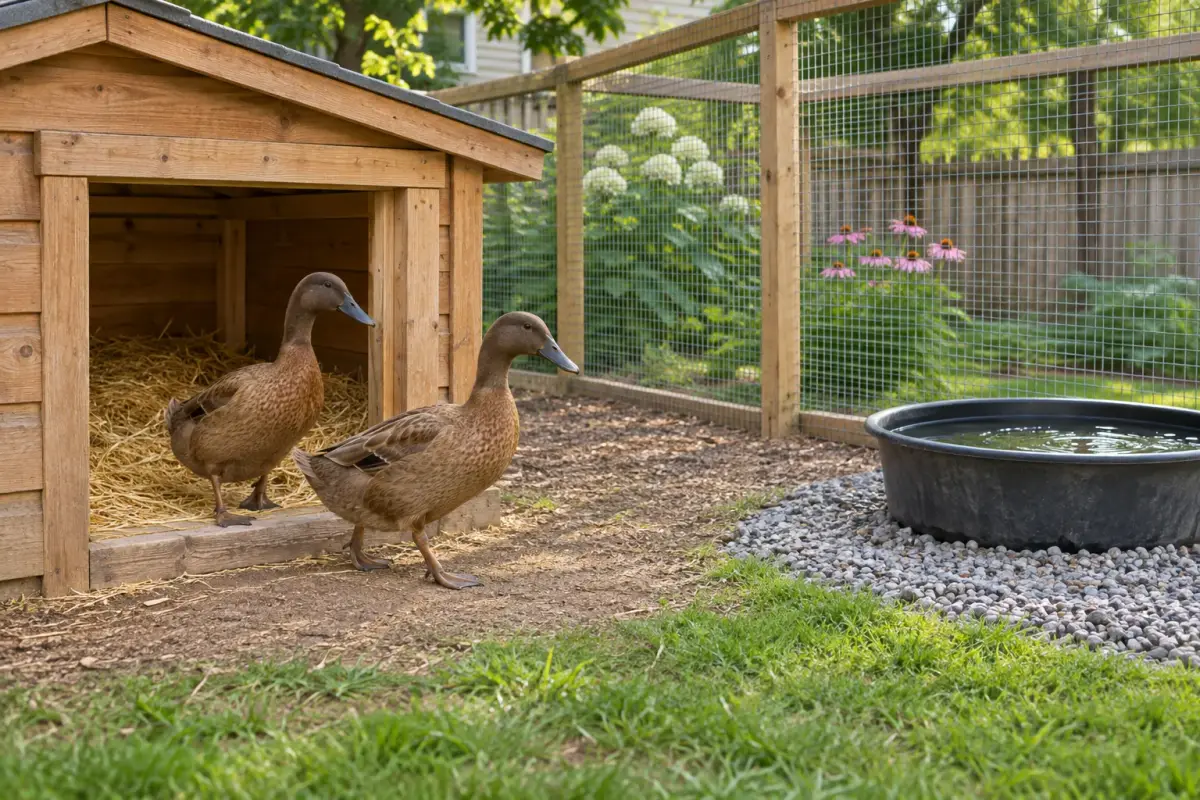
Review shelter, predator protection, drainage, and the amount of wet material accumulating around water stations. Merck explains that different poultry species have different management needs and that persistent wet litter can contribute to health problems. A duck setup should let you keep essential areas clean while observing each bird without unnecessary handling.
If you are adapting a shared property, compare the Chicken Coops and Chicken Runs collections against the actual duck requirements rather than assuming chicken housing automatically fits. Discuss mixed-species plans and unexplained laying changes with a professional who understands waterfowl.
This page is general information, not veterinary advice, and it cannot replace an examination by the vet who knows your pet.
Common questions
At what age do ducks start laying eggs?
Some domestic ducks start around four to six months, but breed, strain, season, and development change that timing. Extension examples are useful expectations, not a deadline every individual must meet.
Can short days delay a duck’s first egg?
Yes. The Maryland extension response explains that shorter days can delay production in birds otherwise approaching laying age. Consider the season alongside health and development rather than interpreting age alone.
Does a duck need a male to lay eggs?
A female can lay unfertilized eggs without a male. The presence of a male does not make an immature or unwell female ready to lay, and it does not replace appropriate care.
When should I call a vet about a duck not laying?
Seek advice when a delay or change comes with poor appetite, weakness, straining, or discomfort. Collapse or breathing difficulty warrants urgent attention. Do not try to manipulate a suspected egg yourself.
Sources we checked
This guide is general information, not veterinary advice. If your pet is unwell or injured, contact your veterinarian.


