






Care & how-to
Khaki Campbell Ducks: Housing and Care Basics
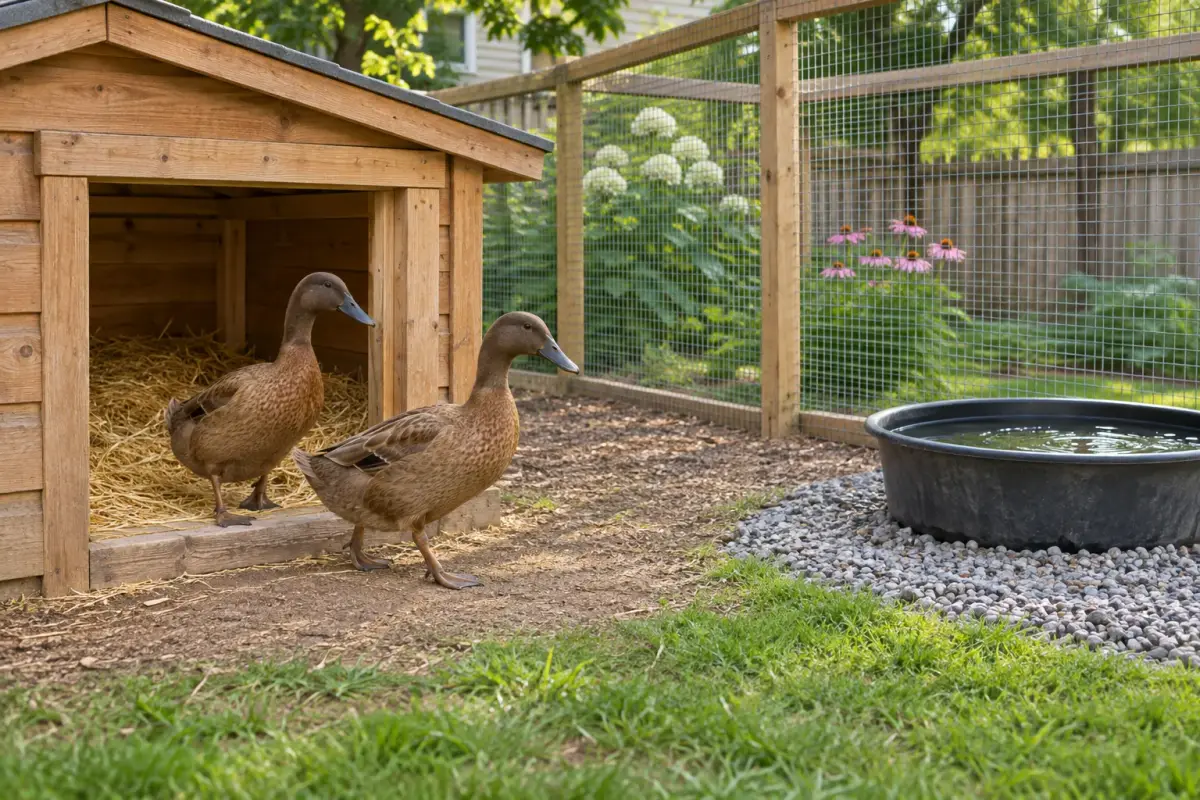
The Khaki Campbell is an active duck bred mainly for eggs, and it does best with more room, a secure house and water around the clock than many first-time keepers expect. Penn State Extension suggests 3 square feet per duck inside and 15 square feet in the outdoor run. Here is how to set that up, from floor space to predator-proofing.
By Matt GarnettUpdated November 13, 20265 min read2 sources
What to expect from a Khaki Campbell
The Khaki Campbell was developed as an egg-laying duck, and that shapes how you keep it. Laying birds are active foragers that spend the day on their feet, so a cramped pen is a poor fit. How many eggs you actually get depends on the strain, the feed, the season and the care, so ask any hatchery for the figures behind its birds instead of trusting a single headline number.
Ducks are social, so plan for a small flock rather than one lonely bird, and size the house for the number you will have in a year, not the number you start with. Everything below scales with head count. If you are still choosing housing, our duck houses cover the main styles, and the duck house buying guide explains what to look for.
How much house and run space ducks need
Penn State Extension's small-flock housing table gives ducks 3 square feet per bird inside and 15 square feet per bird in the outdoor run. Hobby Farms, a waterfowl keeping guide, puts the house figure higher at about 5 square feet per duck and also uses 15 square feet per duck for the run, and it notes that young birds may need a bit more. Treat 3 square feet as a bare minimum and 5 as the comfortable figure, especially for an energetic laying breed.
For six ducks that works out to somewhere between 18 and 30 square feet of floor inside and 90 square feet of run. Measure the floor of any house before you buy it, because the stated number of birds in a product listing is not a safe guide. A duck coop with an openable roof is one example of a compact house type, and it only suits a small flock once you have done the floor-space sum.
Floors, bedding and nesting
Ducks cannot use nest boxes the way hens do, so they typically lay on the floor of the house. Hobby Farms suggests adding small wooden shelters on the floor if you want to give laying ducks some privacy. Expect eggs on the floor in the morning and check for them early, since a floor that is clean and dry keeps them in better shape.
Straw and wood shavings are the most absorbent bedding choices. Never use cedar, which Hobby Farms flags as toxic to ducks and geese. Ducks are wet, messy birds, so plan to change soaked bedding several times a week. A house with a roof that opens, such as this wooden duck house with an openable roof, makes that cleaning job easier to reach.
Predator-proofing the house and run
Hobby Farms recommends keeping every opening to half an inch or smaller, and covering larger openings with half-inch, 16-gauge hardware cloth. Use a snug-fitting door and a solid roof. Concrete is the most predator-resistant floor, while a dirt floor lets digging predators tunnel in and a wood floor needs watching for rot and mold.
Penn State Extension adds that keeping poultry fully confined with fencing and a covered run is the best protection. Bury run fencing at least 12 inches deep and bend the bottom outward about 6 inches so a digging animal meets more wire. Cover the run with mesh or netting against hawks and owls, and if the run is not fully predator-proof, lock the ducks in the house before dark.
Water, all day and all night

Ducks need drinking water available around the clock, including overnight, and Hobby Farms notes that waterfowl can become dehydrated quickly. Keep at least one water bucket inside the house, because ducks use water not only to drink but to clear their eyes and nostrils. A container deep enough to dip the bill in is what matters.
Water also makes the house damp. Penn State Extension suggests placing waterers in the outside run for waterfowl, which keeps humidity in the house lower and the bedding drier. Ventilation without drafts matters just as much, so openings should not blow straight across where the ducks sleep. If you are choosing equipment, browse our chicken feeders and waterers for the style of container, and make sure the opening suits a duck's bill.
A quick setup checklist
Before the ducks arrive, confirm the floor space against the 3 to 5 square feet inside and 15 square feet outside figures. Check that every gap is half an inch or less, that the fence is buried and the run is covered, and that there is bedding that is not cedar. Decide where the water will sit so that the house stays dry.
Then match the house to the flock. Browse duck houses once you know your numbers, and use the duck house guide to compare types. Keep a routine of locking up at dusk, collecting eggs early and changing wet bedding, and the Khaki Campbell's active, productive nature becomes a pleasure rather than a mess.
If a duck stops eating or drinking, seems unusually lethargic or struggles to breathe, call a vet who treats poultry or waterfowl promptly, because small birds can decline quickly.
This page is general information, not veterinary advice, and it cannot replace an examination by the vet who knows your pet.
Common questions
How much space does a Khaki Campbell duck need?
Penn State Extension gives ducks 3 square feet inside and 15 square feet in the run. Hobby Farms suggests about 5 square feet inside for comfort. An active laying breed does better at the higher figure.
Do Khaki Campbell ducks need nest boxes?
No. Ducks typically lay on the floor of the house rather than in boxes. You can add small wooden shelters on the floor for privacy, and keep the bedding dry and clean so eggs stay in good shape.
What bedding is safe for ducks?
Straw and wood shavings are the most absorbent options. Never use cedar, which Hobby Farms describes as toxic to ducks and geese. Change wet bedding several times a week to keep the house dry.
How do I keep predators out of a duck house?
Keep openings at half an inch or smaller, cover bigger gaps with half-inch hardware cloth, bury run fencing at least 12 inches, cover the run, and lock the ducks in at night.
Sources we checked
This guide is general information, not veterinary advice. If your pet is unwell or injured, contact your veterinarian.


