






Care & how-to
What Do Ducks Eat? Feed by Age, Foraging and Foods to Avoid
Ducks eat a balanced complete feed that matches their age, plus whatever they forage, such as worms, slugs, snails and algae. Poultry Extension lists starter, grower and layer rations with different protein and calcium levels, and ducks must always have water beside their food. Here is what to feed at each stage, and which feeds to avoid. If you are setting up for ducks, you can also browse our duck houses.
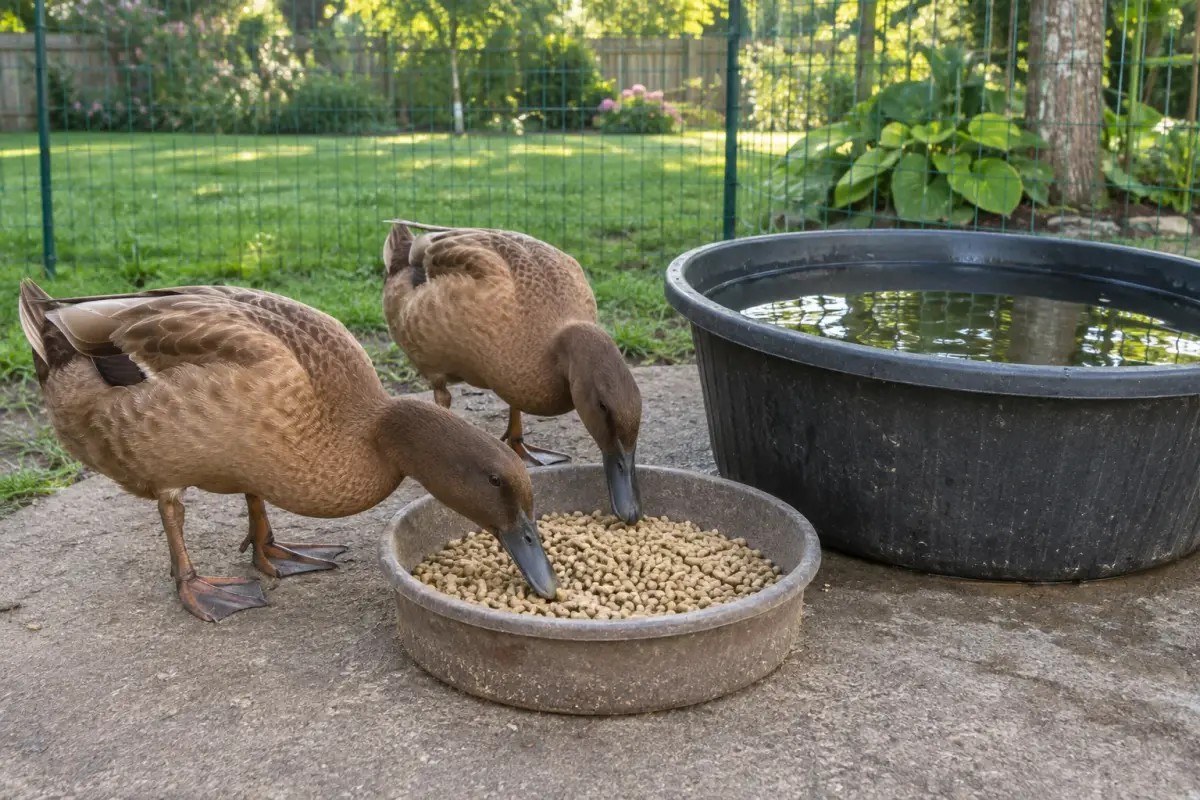
By Matt GarnettUpdated November 13, 20264 min read3 sources
A complete feed is the base
The foundation of a duck's diet is a complete poultry ration, offered as dry mash, wet and dry mash, or pellets. Poultry Extension describes feeding ducks by stage, with different protein and calcium levels for ducklings, growing ducks and laying ducks. Foraging adds variety, but it does not replace the balanced feed.
Match the ration to the age of the bird. The Merck Veterinary Manual says it is critical not to feed layer diets to nonlaying, growing birds, because laying birds need far more calcium than growing ones. Check the feed label for the age and purpose it is made for before you buy.
What ducklings eat
Poultry Extension lists starter feeds for the first weeks at roughly 20 to 22.5 percent crude protein. Ducklings are fed freely for the first eight weeks, and then twice a day, in the morning and early afternoon. Ducklings forage too, but they still depend on the starter ration for balanced nutrition.
Keep water right beside the feed. Poultry Extension warns that without water, ducks can choke on their feed, so a duckling should never have food in a pen without a drinker it can reach and dunk its bill in.
Growers and laying ducks
From about three weeks until the first egg, Poultry Extension lists grower rations at roughly 16 to 19 percent protein with about 0.9 to 1 percent calcium. Once ducks start laying, the layer ration shifts to roughly 17.5 to 18 percent protein and about 3 percent calcium to support shell formation.
Laying ducks typically eat about a quarter of a pound of feed each per day, depending on how much they lay and how much they forage. Ducks that free-range may eat somewhat less, so adjust by watching body condition and egg quality rather than by measuring one fixed amount.
What ducks forage for
Ducks are enthusiastic foragers. Poultry Extension notes that runner ducks eat worms and slugs and sometimes catch flies, and that ducks also forage for snails, garden insect pests, algae and duckweed. That is why many gardeners like them.
Foraging is a supplement, not a full diet. Ducks that live in a pen or have little ground to roam will rely entirely on feed, so offer a balanced ration whatever the garden contains.
Water, grit and treats
The Merck Veterinary Manual says waterfowl need far more water relative to feed than other poultry, and that water should be free from contaminants. Keep it clean and refilled so it is always available. Our poultry feeders and waterers collection covers some options for keeping feed and water together.
Treats should stay a small part of the day. Merck advises that scratch should not be overfed and that fat scraps can contribute to fatty liver. Keep any extras minor so the balanced feed does most of the work.
Foods and feeds to avoid
Do not feed medicated chicken feed to ducks. Poultry Extension says medicated chicken feed can be toxic to waterfowl, because ducks eat more and receive too high a dose, and ducks do not normally need medicated feed. Check the label before you buy a mixed flock feed.
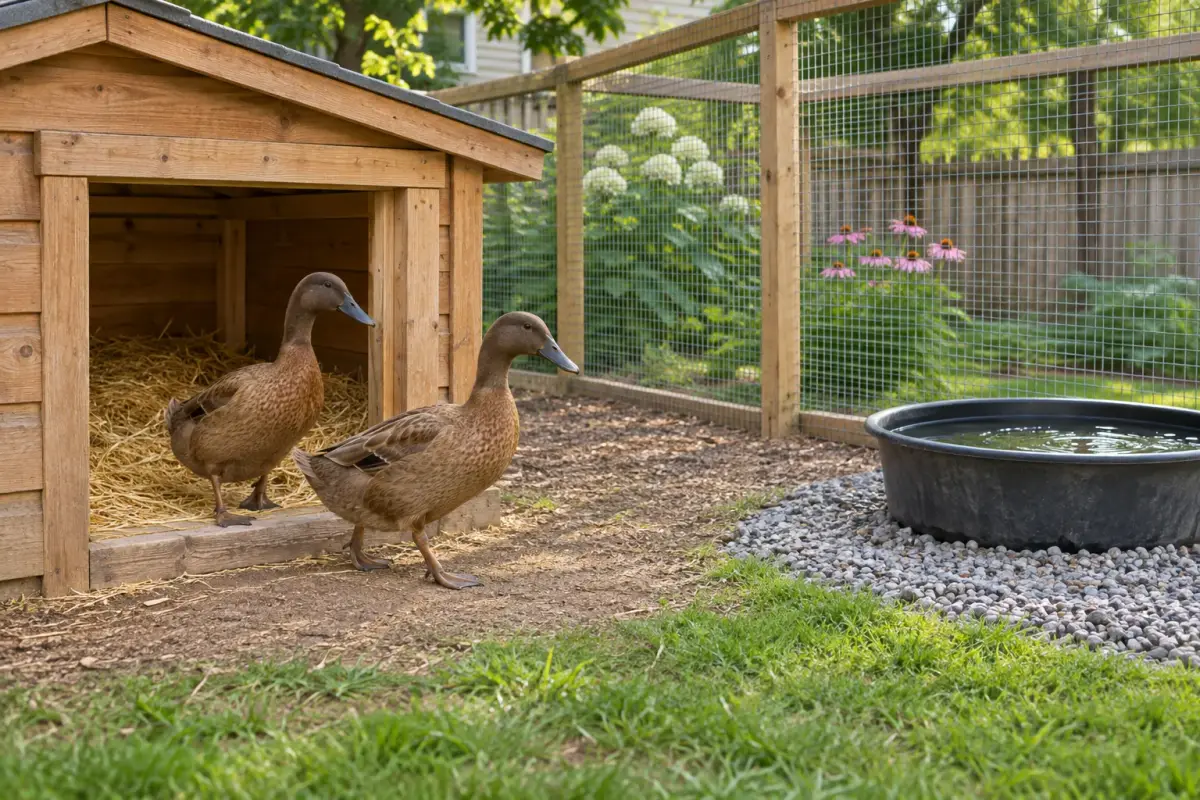
Store feed dry and in a closed container. Merck notes most feed expires in 3 to 6 months, and sooner in summer. A shelter you can open and clean easily, such as a duck coop with an openable roof, makes it simpler to remove spilled or soggy feed, and our guide to duck houses explains what to look for.
If a duck stops eating, seems weak or has trouble breathing, call a veterinarian who treats poultry. This page is general information, not veterinary advice, and it cannot replace advice from a veterinarian who treats poultry.
Common questions
What is the best food for ducks?
A complete poultry ration matched to the duck's age is the foundation: starter for ducklings, grower for young ducks and layer for hens in lay. Foraged worms, slugs and greens can add variety on top.
Can ducks eat chicken feed?
Plain, unmedicated feed matched to the right age can work, but Poultry Extension warns that medicated chicken feed can be toxic to waterfowl. Always check the label for medication before feeding it to ducks.
How much do ducks eat a day?
Poultry Extension says laying ducks typically eat about a quarter of a pound of feed each per day, varying with production and how much they forage. Ducklings are fed freely for the first eight weeks.
Do ducks need water to eat?
Yes. Poultry Extension says water should sit directly next to the feeder and be available at all times, because without water ducks can choke on their feed. Ducks also need enough water to rinse their bills.
Sources we checked
This guide is general information, not veterinary advice. If your pet is unwell or injured, contact your veterinarian.


