






Training & behavior
Puppy Crate Training Schedule: A Sample Day by Age
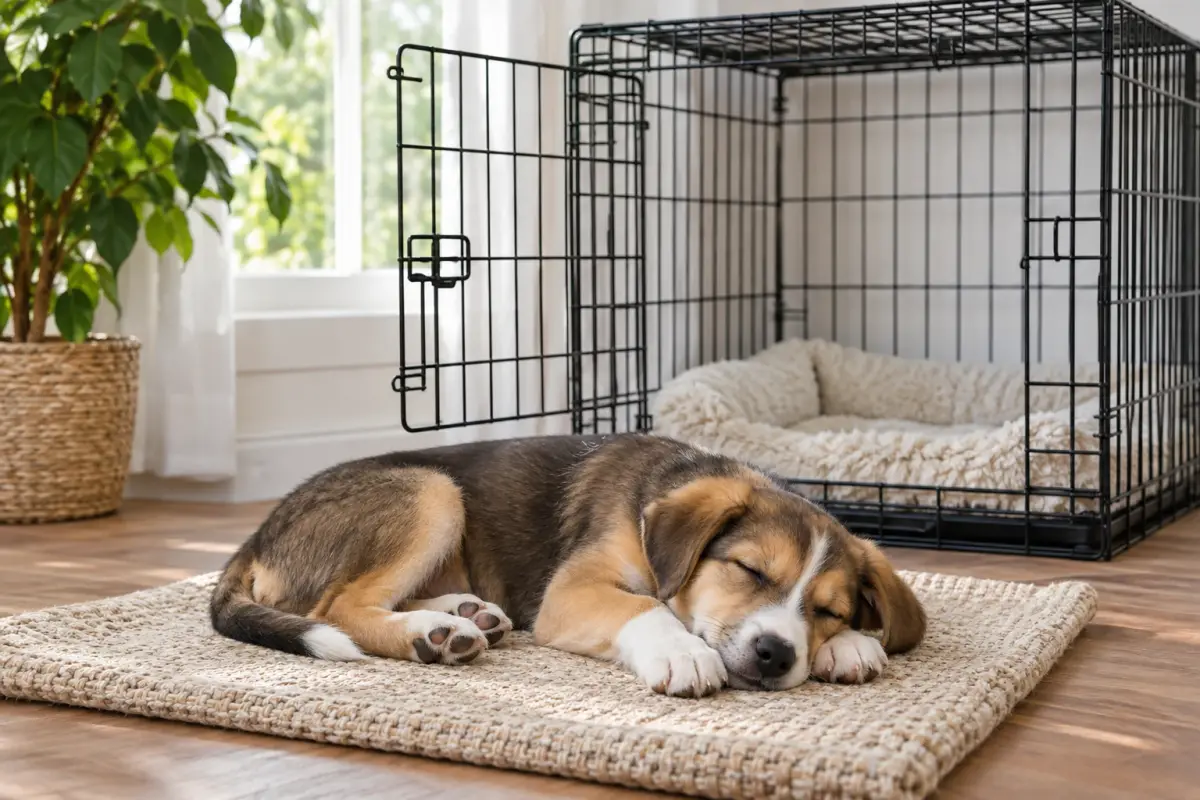
A good puppy crate training schedule is built around potty breaks, not the clock. Take your puppy out on waking, after every meal, nap and play session, and before bed, and keep each crate stretch within what its bladder can manage, roughly its age in months plus one hour by day. Use the sample day below and stretch it as your puppy grows.
By Matt GarnettUpdated November 14, 20264 min read4 sources
The rules the schedule is built on
Three facts shape every puppy schedule. Puppies usually need to potty within about 10 to 15 minutes of eating, soon after waking and after excited play. Young puppies sleep a lot, often 18 hours or more a day, so naps in the crate are natural. And bladder control grows with age: VCA Animal Hospitals gives a rough daytime guide of 3 hours at 2 months, 4 hours at 3 months and 5 hours at 4 months.
Treat those numbers as upper limits on a calm day, not goals to hit. Toy breeds and very young puppies may need a break every hour or two. A puppy that is crated longer than it can hold learns to soil the crate, which sets potty training back. When in doubt, take your puppy out more often, not less. If you are still choosing a crate, browse puppy crates and read our puppy crate buying guide and crate size guide.
Sample day for an 8 to 10 week old puppy
6:30 a.m. out to potty, then breakfast in the crate with the door open, then out again. 7:15 play and a two-minute training game. 8:00 nap in the crate with a chew. 10:00 out to potty, short play. 11:00 nap. 12:00 lunch, potty, play. 1:00 p.m. nap in the crate. 3:00 potty, play, short handling practice. 4:00 nap.
5:30 dinner, potty, family time. 7:00 short crate session while you are in the room. 8:30 last water, play. 9:30 final potty trip, then bed in the crate beside your bed. Expect one or two nighttime potty trips at this age. Keep them quiet and brief, straight out and straight back, so your puppy learns night is for sleep. A washable padded crate mat or plush crate bed from our dog crate beds collection makes naps and night stretches more comfortable.
Adjusting the schedule at 3 to 6 months
From about three months, most puppies manage longer naps and fewer night trips. Drop to three meals a day, stretch the gap between potty breaks by about 30 minutes every few days, and start practicing short absences where you leave the house for 10 to 30 minutes while your puppy is crated with a stuffed chew. By around four to five months, many puppies sleep through the night.
Keep the anchors the same as the gaps get longer: out on waking, after meals, after play and before bed. Add more training and exploration time out of the crate as your puppy's attention span grows. If accidents in the crate start appearing, the stretches have grown faster than the bladder, so shorten them again for a week.
Making it work with a full-time job
A young puppy cannot manage an eight or nine hour workday in a crate. Plan for a midday visit from a family member, neighbor, pet sitter or dog walker who can let your puppy out, play and refresh water. For longer gaps, many owners use an exercise pen with the open dog crate inside, a bed area and a potty area, so the puppy is safe without being confined past its limit.
Use the days before you return to work to practice the routine: crate naps while you are home, short departures, and calm returns. The ASPCA advises against confining a dog in a crate for more than six hours at a stretch. As your dog matures and is reliably house trained, it can usually be given more space in the home, one room at a time.
Signs your schedule needs to change
Accidents in the crate, crying that starts at the same point every day, or a puppy that bursts out frantic all suggest the stretches are too long. A puppy that will not settle and paces may need more exercise or play before crate time. A puppy that sleeps happily may be ready for longer gaps. Adjust one thing at a time and give it a few days.
Call your vet if your puppy suddenly needs to pee far more often, strains, has blood in its urine, has diarrhea or is drinking much more than usual. A urinary tract infection or tummy upset can look exactly like a schedule problem, and no amount of training will fix it until the cause is treated.
This page is general information, not veterinary advice, and it cannot replace an examination by the vet who knows your pet.
Common questions
How long can an 8 week old puppy stay in a crate?
Usually only an hour or two at a time during the day, and less right after meals or play. At night they often manage longer while asleep, but expect one or two potty trips.
Should a puppy nap in the crate during the day?
Yes, crate naps are one of the easiest ways to build a positive habit. Put your puppy in when it is already sleepy, with a chew, and let it out promptly when it wakes up.
When should I stop crate training at night?
There is no fixed age. Many dogs keep sleeping in an open crate by choice. Once your dog is reliably house trained and not destructive, you can leave the door open and see how it does.
Sources we checked
This guide is general information, not veterinary advice. If your pet is unwell or injured, contact your veterinarian.


