






Breeds
Blue Heeler vs Red Heeler: Is There Any Difference?
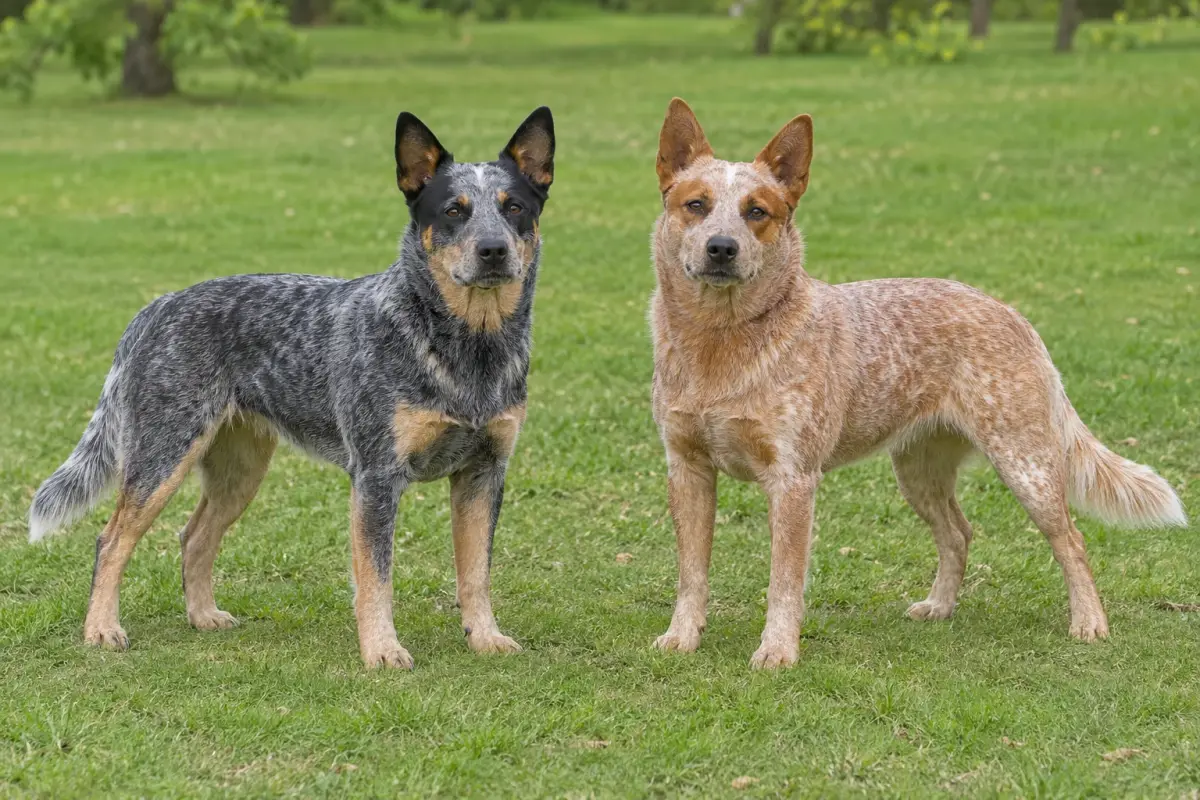
A Blue Heeler and a Red Heeler are the same breed, the Australian Cattle Dog, in two coat colors. The AKC notes the breed is also called the Blue Heeler or Queensland Heeler, and VCA lists its colors as blue or red speckled. Size, energy and temperament do not change with color: both are 35 to 50 pound, very high-energy herding dogs that need experienced owners, daily hard exercise and a job to do.
By Matt GarnettUpdated November 14, 20264 min read3 sources
Side by side
Breed: both are Australian Cattle Dogs. Size: the AKC lists males at 18 to 20 inches and females at 17 to 19, both at 35 to 50 pounds. Lifespan: 12 to 16 years per the AKC. Coat: a short double coat. Color: the UKC standard describes the blue as blue, blue mottled or blue speckled, often with black, blue or tan markings, and the red as an even red speckle all over, with or without darker red head markings.
Energy: VCA rates the breed very high with daily vigorous exercise, whatever the color. Training: intelligent but independent, and best for experienced handlers. Strangers: often reserved or protective. Children: best with older kids, because of herding nips. Grooming: weekly brushing, more in seasonal sheds. Best for: very active owners with space, regardless of which color they prefer.
Why one breed has two names
The AKC describes the Australian Cattle Dog as compact but muscular, related to Australia's wild dog, the Dingo, and intelligent enough to routinely outsmart its owners. VCA notes herding instinct can show up as nipping, a trait that suits a dog bred to move cattle. Blue Heeler and Red Heeler are informal names based purely on coat color, and Queensland Heeler is another nickname the AKC mentions.
Breed standards treat both colors as correct. The UKC standard sets out exactly what each should look like: a blue dog with tan on the legs, chest and jaws, and tan undercoat allowed if it does not show through; a red dog with even speckling through the coat and undercoat. Body markings are permitted but not preferred in either.
Does color change temperament?
There is no evidence in breed standards or veterinary breed guides that a red Cattle Dog behaves differently from a blue one. VCA describes the breed as extremely driven, strongly bonded to family, reserved or protective with strangers, and prone to nipping when herding instinct is not channeled. Those traits come from the breed's working history, not its color.
Individual personality and upbringing matter far more. A well-socialized, well-exercised heeler of either color is usually loyal and focused; an under-stimulated one of either color can become destructive or hard to manage. When choosing a puppy, look at the parents' temperament and the breeder's socialization rather than the coat.
Exercise and training
VCA says Australian Cattle Dogs require intense daily exercise and mental stimulation, such as running, herding, training and problem-solving, and warns that without it they are likely to develop significant behavior problems. VCA recommends access to large outdoor areas and rates their tolerance for time alone as limited. A short walk will never be enough.
Training should start early and use positive, consistent methods with plenty of variety, since these dogs bore of repetition. Redirect nipping into tug or a trained cue, and give them sports such as herding, agility, flyball or canicross. Socialize puppies widely with people and dogs, because the breed's natural reserve can harden into suspicion without it.
Grooming and health
The short double coat is low maintenance: VCA advises weekly brushing, more during seasonal sheds, occasional baths and routine nail and ear care. Expect a lot of hair once or twice a year when the undercoat comes out.
VCA lists congenital deafness, hip and elbow dysplasia, progressive retinal atrophy and primary lens luxation among the breed's inherited risks, along with dermatomyositis, portosystemic shunt, patellar luxation and glaucoma. Ask breeders for hearing tests on puppies and hip and eye screening on both parents, and ask your vet about keeping a working dog lean and sound as it ages.
Both colors shed their undercoat heavily once or twice a year, when an undercoat rake saves a lot of vacuuming.
Choosing a blue or red heeler
Pick the color you like, then choose the dog on everything else. Ask yourself whether you can give an hour or more of hard exercise every day, whether you have fenced space, and whether your household has small children who might be herded. If the answer to those is yes, a heeler of either color can be a loyal, tireless partner.
If you are adopting, Cattle Dogs and Cattle Dog mixes also turn up in shelters and breed rescues. Ask about each dog's history with people, kids and other dogs, and plan for training classes in the first months.
For toys that suit working breeds, see our guides to best toys for herding dogs and what a herding ball is, or browse herding balls.
This page is general information, not veterinary advice, and it cannot replace an examination by the vet who knows your pet.
Common questions
Are Blue Heelers and Red Heelers the same breed?
Yes. Both are Australian Cattle Dogs. The AKC notes the breed is also called the Blue Heeler or Queensland Heeler, and VCA lists its coat colors as blue or red speckled.
Is a Red Heeler calmer than a Blue Heeler?
Not reliably. Breed standards and VCA's breed guide describe one temperament for the Australian Cattle Dog, regardless of color. Personality depends on the individual dog, its parents and its training.
How big do Blue and Red Heelers get?
The same size. The AKC lists Australian Cattle Dogs at 17 to 20 inches tall and 35 to 50 pounds, with males slightly taller than females.
Are heelers good family dogs?
For active families with older children, they can be. VCA says they are best with older kids because of herding behavior, and they need very high daily exercise and experienced handling.
Sources we checked
This guide is general information, not veterinary advice. If your pet is unwell or injured, contact your veterinarian.


