






Buying guides
What Is a Herding Ball, and Is It Right for Your Dog?
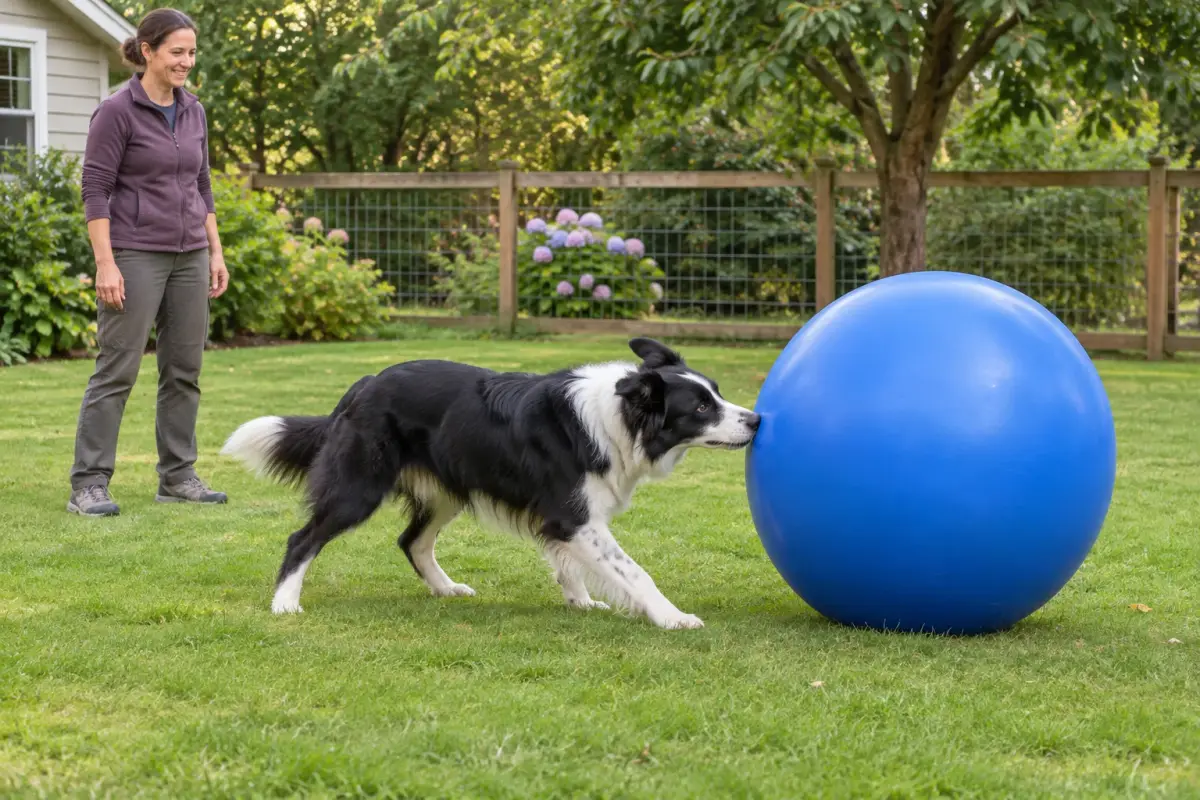
A herding ball is a large, hard-wearing ball, too big for a dog to pick up, that the dog pushes and steers with their nose, chest and shoulders. It gives herding breeds and other energetic dogs an outlet for the urge to gather and drive things, without livestock. It is the same idea as treibball, a dog sport in which dogs push big inflatable balls into a goal. Sizing it larger than your dog's mouth is the key to safe play.
By Matt GarnettUpdated November 9, 20264 min read3 sources
How a herding ball works
Because the herding ball is too big to grab, your dog has to work out how to move it: nudging with the nose, bumping with the chest, circling and pushing from different angles. That mix of running, thinking and steering is what makes these balls so tiring for the right dog. Many have a firm or hard shell so they do not puncture easily on rough ground.
The idea comes from treibball, which the AKC describes as a sport that began in Germany as a way to entertain herding dogs without access to livestock. In competition, a dog drives eight oversized inflatable balls into a goal within seven minutes, directed by the handler, and nothing is allowed on the sidelines, so nervous dogs can compete on equal terms.
Which dogs enjoy herding balls
Herding breeds such as Border Collies, Australian Shepherds, Shetland Sheepdogs and Corgis often take to them, and the AKC notes herding breeds have a slight edge in treibball. But the AKC is clear the sport is not just for them: it has seen Labradors, Papillons, Cairn Terriers, Rottweilers and even a Pug take part. Energetic, ball-focused dogs that like having a job are good candidates.
The AKC adds that pushing a ball does not come naturally to most dogs, so it has to be trained. Some dogs ignore the ball at first, or try to bite it. With short, positive sessions, most dogs learn to push within a few days, and many become obsessed with it.
How to choose the right size
The ball should be bigger than your dog's open mouth, so they cannot get their teeth around it, and large enough that they push rather than carry. As a rough guide, many owners pick a ball somewhere between the height of the dog's chest and shoulder, but always follow the maker's sizing chart, which is usually based on your dog's height or weight.
Too small and a strong dog may try to bite and puncture it, or wedge it in the mouth. Too large and a small dog may struggle to move it and lose interest. A slightly smaller, lighter ball can be easier for beginners, and you can size up later as your dog gets the hang of it.
How to teach your dog to push the ball
Step 1: Roll the ball gently and reward your dog for looking at it or sniffing it. Step 2: Reward any touch with the nose. A clicker or a marker word such as yes helps, and the AKC describes treibball trainers using targeting and a clicker to mark the right behavior. Step 3: Reward only nose bumps that make the ball move. Step 4: Gradually ask for longer pushes before the reward.
Step 5: Add direction by standing on the far side of the ball and rewarding pushes toward you. Step 6: Start on grass, which slows the ball down. The AKC says treibball is strictly positive and force-free, and suggests an instructor and a long line if your dog's recall is not yet reliable.
Is a herding ball worth it?
For a dog that chases bikes and joggers, nips at heels or tries to herd children, a herding ball can be a useful outlet, alongside training. Inflatable versions, such as this herding ball with a pump or a herding ball with handles, are one type to look at. The AKC's treibball article lists benefits including better focus, impulse control, body awareness and mental and physical stimulation that can reduce boredom behaviors.
For a laid-back dog that prefers sniffing or chewing, a scent game or food puzzle toy may be a better fit. Try one and see how your dog responds.
Safety tips
Play on grass or another forgiving surface, away from roads and pools. Keep sessions short, especially in hot weather, because herding dogs will often play past the point of exhaustion. Give water and rest breaks, and avoid playing on hard pavement that is tough on joints and pads.
Supervise play and put the ball away afterward. If your dog bites and tears at the shell rather than pushing, swap to a tougher or larger herding ball. Puppies and dogs with joint problems should have gentler sessions, so ask your vet if you are unsure how much running is safe.
This page is general information, not veterinary advice, and it cannot replace an examination by the vet who knows your pet.
Common questions
Are herding balls good for dogs?
For energetic and herding-type dogs, yes. They provide physical exercise and problem solving, and can channel herding instincts into play. Size the ball larger than your dog's mouth and supervise play.
What size herding ball should I get?
Choose one bigger than your dog's open mouth so it cannot be carried or bitten, and follow the maker's chart based on height or weight. Smaller dogs may find a lighter ball easier to start with.
Can any dog play treibball?
Yes. The AKC says the sport suits all breeds, not just herding dogs, though herding breeds have a slight edge. Pushing a ball has to be trained with patient, positive steps.
Sources we checked
This guide is general information, not veterinary advice. If your pet is unwell or injured, contact your veterinarian.


