






Buying guides
Best Toys for Herding Dogs and Border Collies
The best toys for herding dogs give an outlet for the instinct to chase, gather and control movement, plus a job for a busy brain. A large herding ball the dog pushes with its nose, puzzle toys and structured fetch or tug cover most needs. For Border Collies, toys work best as part of daily training and activity, not instead of it.
By Matt GarnettUpdated November 14, 20263 min read2 sources
What herding dogs need from toys
Herding breeds, Border Collies, Australian Shepherds, Corgis, shepherds and others, were bred to work closely with people, watch movement and control it. The AKC notes it is unrealistic to expect a herding dog never to express its instincts, and suggests finding an acceptable outlet. Without one, many herd children, cars or other pets.
That is why toys for herders should involve movement and thinking. The AKC suggests puzzle toys, lift-the-flap toys that hide treats and balls a dog must roll to get treats, and, for high-energy herders, tug toys, puzzle toys or an automatic ball launcher.
Toy types compared
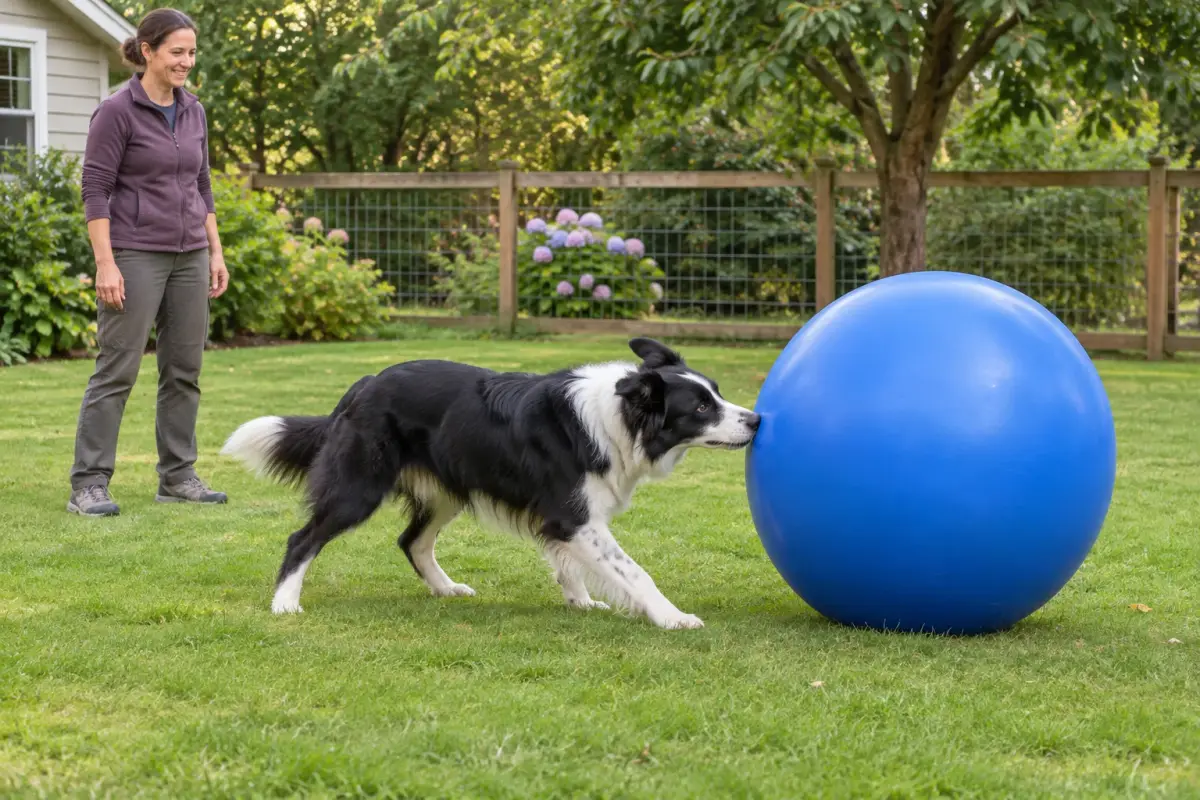
Herding balls are large, hard balls too big to pick up, which the dog pushes and steers with its nose and shoulder. They channel the gathering urge and are the basis of treibball, a sport the AKC describes as herding-inspired and suitable without livestock. Puzzle and treat-dispensing toys give mental work, which herders need as much as running.
Fetch toys, balls and discs, burn energy, though repetitive high-speed fetch can become obsessive for some herders; mix it with training. Tug toys build focus and impulse control when played with rules. Flirt poles, a lure on a line, satisfy chasing in a controlled space.
The best type for each dog
For a Border Collie, rotate a herding ball, puzzle toys and short training games; mental work tires them more than miles. For a Corgi or shorter-legged herder, a smaller inflatable herding ball and food puzzles. For a dog that herds children, structured play with a herding ball or tug in a separate space gives a better outlet. For puppies, soft puzzle toys and gentle tug.
Size herding balls for your dog so it cannot grip or bite into them; many guides suggest a ball at least as tall as the dog's shoulder for nudging. Hard-shell balls suit dogs that might nip.
Using toys to channel instinct
Short, structured sessions work best. Teach your dog to push the inflatable herding ball toward you or into a goal, as treibball does, using rewards. The AKC notes regular sessions keep a dog mentally and physically stimulated, helping prevent boredom problems.
Pair toys with obedience, trick training and scent games. A tired, satisfied herding dog is calmer at home. If herding behavior includes nipping people or fixating, ask a positive-reinforcement trainer for help.
Safety, care and lifespan
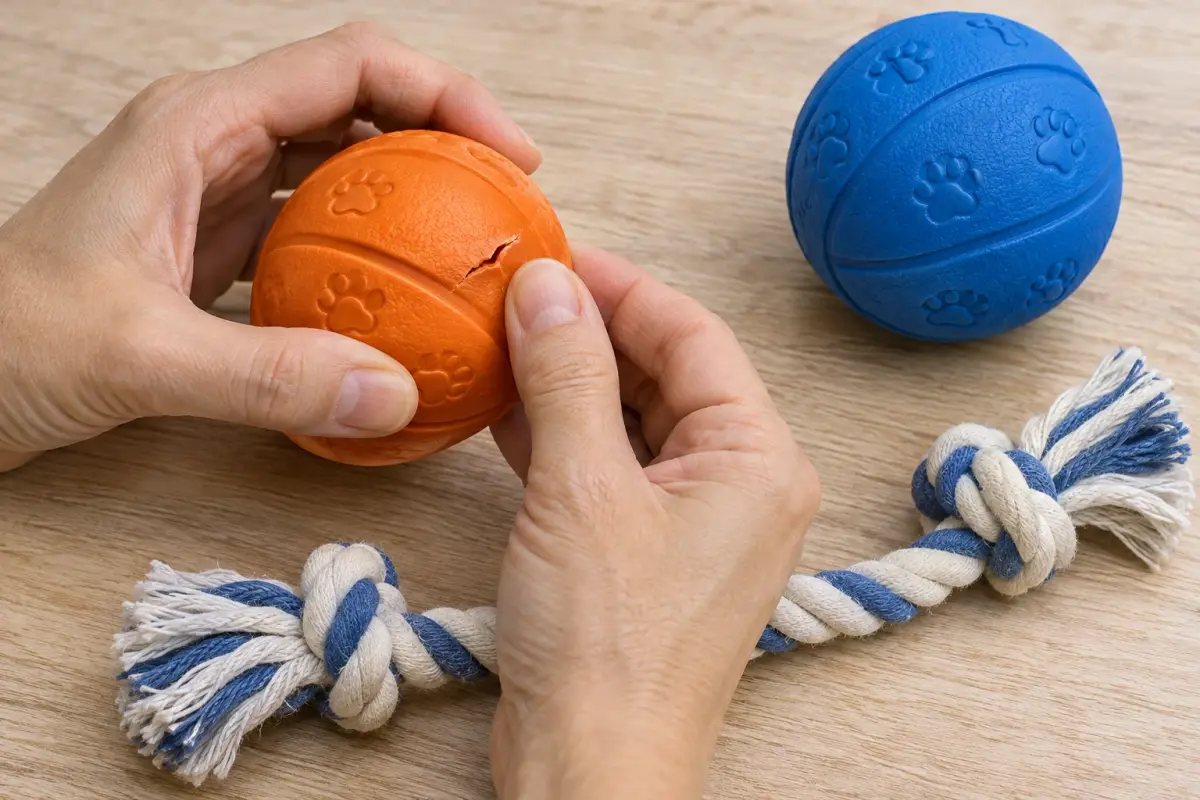
Supervise play, especially with balls that can be punctured and with flirt poles, which can strain joints if overused. Avoid long sessions of hard turning on slippery floors. Inspect toys and replace any that crack or tear.
Watch for limping, stiffness or exhaustion after play, and ask your vet about safe exercise for young puppies, whose joints are still developing, and for seniors.
Rotate toys rather than leaving them all out, because novelty keeps a clever herding dog interested. Store your herding balls and flirt poles after each session so they stay special, and keep one or two durable chew or puzzle toys available for quiet time between activities.
Play formats and how the object moves
| Format | Movement described | What to manage |
|---|---|---|
| Herding ball | A large ball is pushed and steered | Space and the individual dog’s interaction |
| Food puzzle | Food is hidden or dispensed | Difficulty and cleaning access |
| Fetch ball or disc | A person throws an object | Play space and retrieval |
| Tug toy | Handler and dog hold separate grip areas | Connections and rules for the game |
| Flirt pole | A lure moves on a line | Line,lure and handler-controlled space |
Common questions
What toys are best for Border Collies?
A mix of mental and physical toys: herding balls, puzzle feeders, treat-dispensing balls, tug toys and fetch toys, rotated and used alongside daily training and exercise.
What is a herding ball?
A large, hard ball too big for a dog to pick up, which the dog pushes and steers with its nose and shoulder. It channels the urge to gather and control movement.
How do I stop my herding dog herding my kids?
Give the instinct an outlet, such as herding-ball play or treibball, plenty of mental exercise, and positive training. Supervise play, and ask a trainer if nipping occurs.
Are puzzle toys good for herding dogs?
Yes. Herding breeds are bred to think and work, and puzzle toys give mental exercise that tires them as much as running does, which helps reduce boredom behaviors.
Sources we checked
This guide is general information, not veterinary advice. If your pet is unwell or injured, contact your veterinarian.


