






Buying guides
Best Herding Ball for Dogs: What to Look For Before You Buy
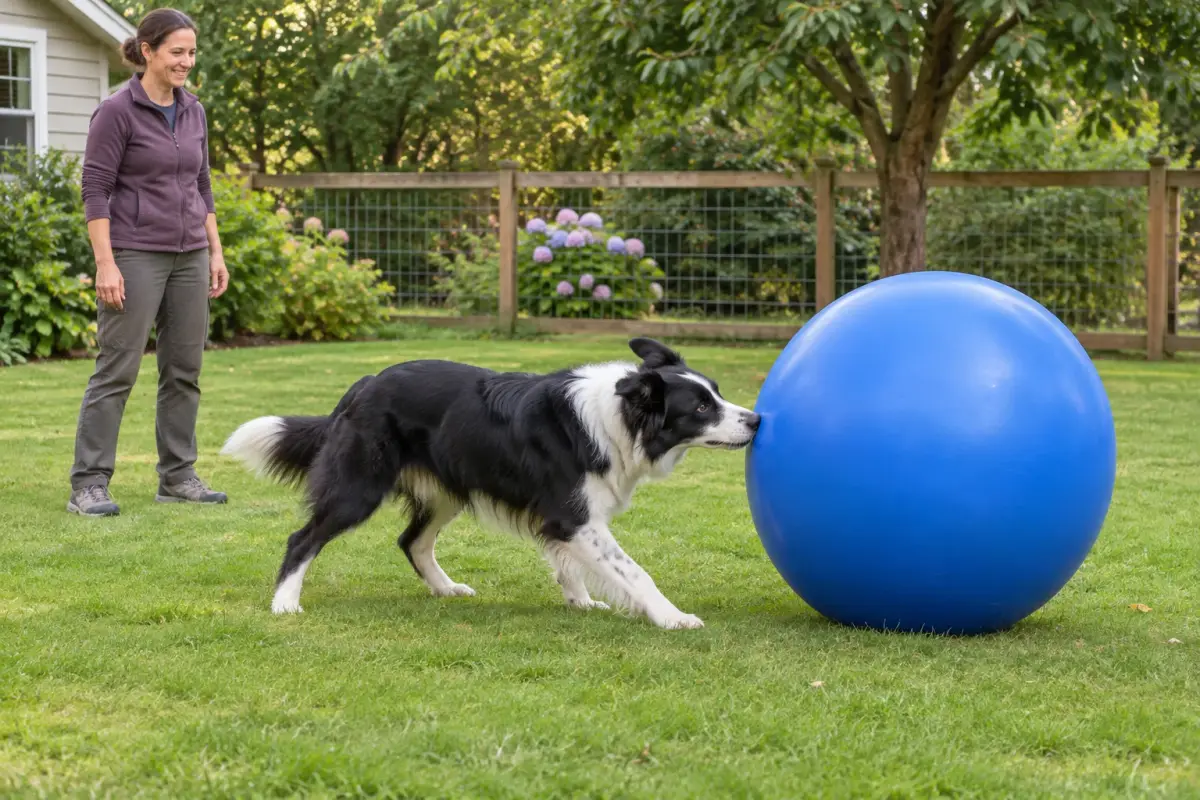
The best herding ball is one your dog cannot pick up or bite into, sturdy enough to survive pushing, and the right size for how your dog moves. Three things decide it: size relative to your dog, a tough smooth surface, and whether handles help or hurt. Browse our herding balls once you know which type fits.
By Matt GarnettUpdated November 14, 20265 min read3 sources
What matters most in a herding ball
Size comes first. A herding ball works because the dog has to push it with the nose, chest and shoulders instead of carrying it. Follow the same rule the VCA gives for chew toys: pick something too large to fit entirely in the mouth. If your dog can lift the ball or wrap its jaws around it, it has turned into a chewing project, and the point of the toy is lost.
Next is the surface and wall. A smooth, tough outer skin rolls predictably and is harder for teeth to grip. Thin, glossy balls tend to feel like prey to some dogs, so think about how your dog treats balls in general. Finally, check how the ball is inflated. A ball that comes with its own pump is easy to top up, which matters because a soft ball is awkward to steer and easier to bite.
The main types compared
A plain inflatable ball is the classic shape and the one used in treibball, the dog sport in which a dog pushes oversized inflatable balls into a goal, according to the AKC. It rolls straight and gives a nose-pushing dog the clearest feedback. A basic option such as an inflatable herding ball for dogs suits dogs that already like to bump and chase.
Handles on this inflatable herding ball give you a place to grip when carrying it back across the yard. If you choose the two-tone Oxford cloth ball, check which inflation accessories come with your selected option. For the patterned inflatable ball, check the diameter and quantity for the option you order. A listing showing several sizes can still be selling one ball at a time.
Best type for each dog
For a Border Collie, Australian Shepherd or similar herding breed, a plain inflatable ball suits best. The AKC notes that herding breeds are intelligent, very active and need both exercise and mental work, and that treibball lets them use herding instincts without livestock. Our page on herding balls for Border Collies goes into more detail on matching the ball to that breed.
For a dog that is not a herding breed, the AKC says any breed can take part in treibball, and its examples include Labradors, Papillons, Cairn Terriers, Rottweilers and a Pug. Small dogs need a ball they can really move, so go smaller rather than assuming bigger is better. For a heavy, strong dog, choose a firm, well-inflated ball. For a mouthy dog, a handle-free ball is the safer starting point, and one who punctures everything may need a different toy altogether such as a tough chew toy for aggressive chewers.
What to avoid
Avoid any ball your dog can fully pick up and carry, since it will be treated as a chew toy and can burst. Avoid leaving an inflated ball with a dog you cannot supervise, and take it away if your dog starts biting chunks out of it. The VCA advises removing a toy from a dog that bites off pieces, and swallowed pieces can lodge in the stomach and need surgery.
Be cautious with balls that look like decorations rather than gear: thin walls, loose seams and flimsy valves tend to fail first. Do not use a herding ball with a dog that chases it aggressively or nips at people who walk past. Dogs that herd by nipping should be taught alternatives, and a ball does not replace training. If your dog shows pain, limps after play, or has a medical condition, check with your vet before starting a new type of exercise.
How to get started and what to expect
Pushing a ball with the nose or shoulder is not instinctive for most dogs, so plan to teach it. The AKC says treibball training is reward-based, with a clicker used to mark the first nose touches, and recommends starting with a qualified trainer. Begin with the ball in an open, uncluttered area and reward any contact, then build up to steady pushes in a chosen direction.
Keep early sessions short and finish while your dog is still keen. Use a long line if recall is not reliable yet, because the sport is usually done off leash. Our guide on what a herding ball is and how it works walks through the basics for new owners, and a food puzzle toy can fill the quieter moments between sessions.
Care, inflation and when to replace it
Check the ball before each session for scuffs, soft spots, leaks at the valve or any sign that teeth have broken the surface. The same VCA advice for chew toys applies: retire a toy once it starts to come apart. A ball that has been patched and re-inflated more than once is not worth the risk of a burst in the middle of play.
Keep the ball inflated firmly but not rock hard, and store it indoors out of direct sun and away from sharp edges. Wipe it clean after muddy or wet sessions. Play on grass or smooth flat ground rather than gravel, and use it only when you are there to watch. When you want more choices, browse the full range of herding balls or take a look at our indestructible dog toys for chewers.
Herding-ball bodies and kit checks
| Format | Physical difference | Verify in the exact option |
|---|---|---|
| Plain inflatable | A round inflated body | Diameter,material and valve |
| Handled inflatable | An inflated body with handles | Handle attachment and intended use |
| Covered ball | An outer cover around an inner ball if listed | Whether cover and inner are both included |
| Pump bundle | An option expressly listing a pump | Complete included-parts list |
| Size options | Alternative diameters within a listing | Chosen variant rather than an assumed multi-ball set |
Common questions
What size herding ball should I choose?
Pick a ball that is too big for your dog to pick up or fit in its mouth, but small enough that it can still push it with its nose and shoulders. Check the maker's size chart against your dog's height.
Are herding balls safe for dogs?
They are safe when sized so a dog cannot bite into them and when you supervise play. Remove the ball if your dog bites chunks out of it, and replace it once the surface is damaged.
Can any dog use a herding ball?
According to the AKC, any breed can take part in treibball, though herding breeds have a slight edge. Dogs need to be taught to push the ball, and low-impact play suits many ages.
Do I need a pump for a herding ball?
Most herding balls are inflatable, so you will need a way to inflate and top them up. A ball that includes a pump is convenient because a soft ball is harder for your dog to steer.
Are herding balls good for dogs that chew everything?
Not usually. A dog that bites and tears at balls can puncture an inflatable one quickly. Start with supervision and consider a tougher chew toy if your dog goes straight to biting.
Sources we checked
This guide is general information, not veterinary advice. If your pet is unwell or injured, contact your veterinarian.


