






Buying guides
Best Travel Litter Boxes: What Actually Matters
The best travel litter box is one your cat will actually use, that folds small and does not leak. Choose between a foldable waterproof box, a disposable box and a plain plastic pan, make it big enough for your cat to turn around in, and fill it with your cat's usual litter. Browse our travel litter boxes once you have picked a type.
By Matt GarnettUpdated November 14, 20264 min read3 sources
What a travel litter box has to do
On the road a litter box has three jobs: stay put in a moving car or hotel room, hold liquid without leaking, and feel familiar enough that your cat uses it. Everything else, including how small it folds, comes second. A box that packs flat but slides around, leaks at a seam or smells wrong to your cat is a worse choice than a plain plastic pan.
VCA Animal Hospitals says a plastic dishpan can serve as a travel litter box, which is a useful benchmark: any purpose-made box should beat it on portability or leak protection, otherwise it is not worth the extra step. Pack a scoop, plastic bags for waste and a small supply of your cat's usual litter alongside it.
Types compared
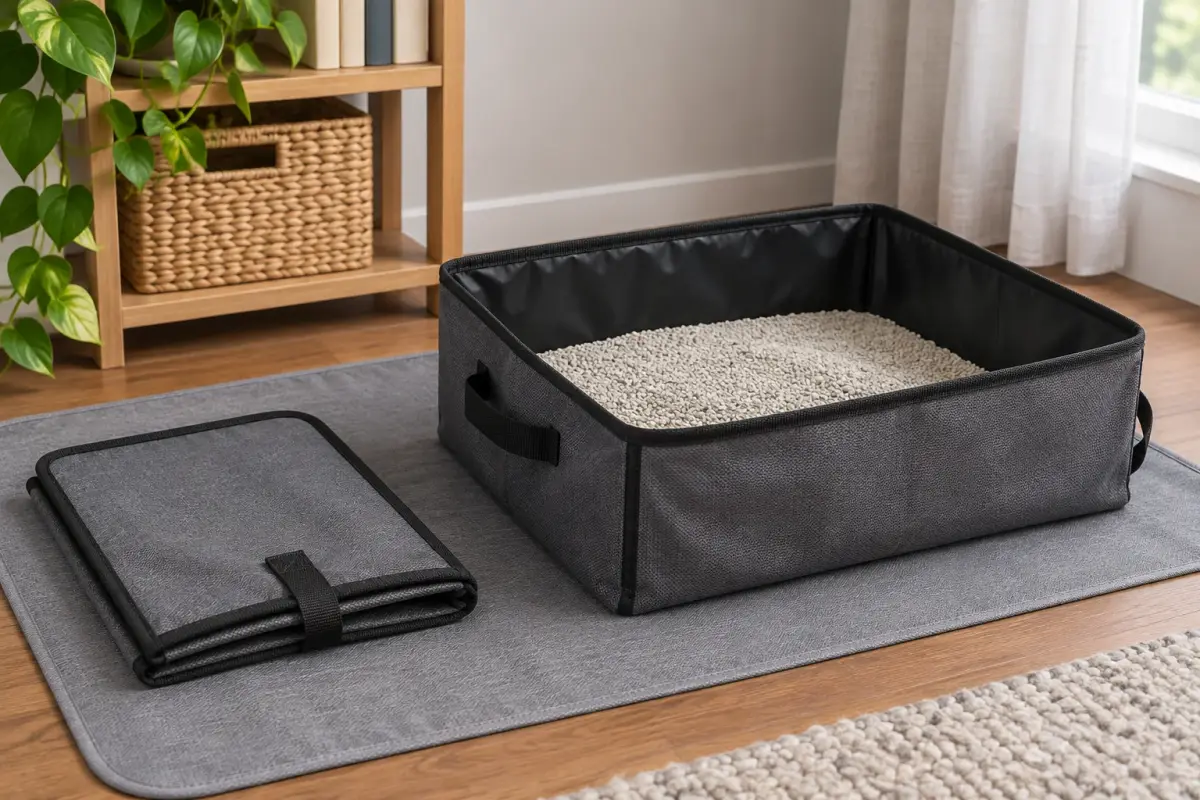
A foldable waterproof box has a fabric or coated base and stiff sides that collapse flat, so it suits a suitcase or a car trunk. A waterproof foldable litter box or a carry-style foldable litter box is the usual shape here. Check that the seams are sealed and that the sides stay upright once it has litter in it.
A folding box made for outdoor trips, such as an outdoor folding travel litter box, suits campers and cats on harnesses. A disposable cardboard box is the lightest option for a single overnight stay; see our disposable litter boxes for that style. A rigid pan is the most leak-proof and the least portable, so it fits a long road trip where space is no problem.
Size and shape for your cat
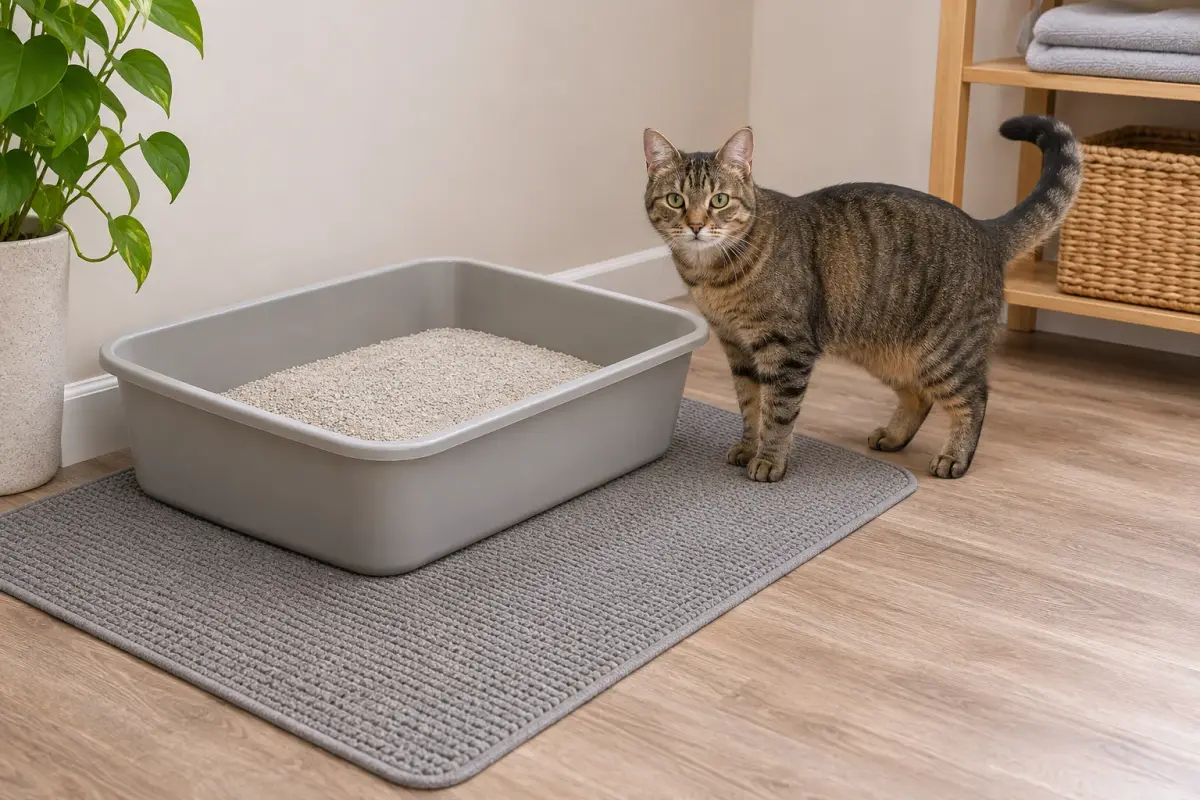
The ASPCA says overweight and large cats need bigger boxes, and that kittens, elderly cats and cats with mobility problems need low sides. Cornell's Feline Health Center adds that most cats prefer an uncovered box that lets odors escape and gives a full view of their surroundings. Together that points to an open, low box that is wide enough for your cat to turn around in comfortably.
Foldable boxes tend to be compact, so check the inside floor space against your cat's size, not just the folded size. A top-entry or hooded travel box can stop litter scatter in a car, but covered boxes can be hard for overweight or older cats to use and some cats avoid them. Try any covered design at home before the trip.
Litter and setup on the road
Bring your cat's usual litter. Cornell notes that a cat may reject litter after a recent sudden brand change, and a trip is a stressful time to find out. Fill the box with about one to two inches of litter, which is the depth cats usually prefer according to the ASPCA, and put it somewhere quiet and out of the way of food and water bowls.
In the car, VCA suggests lining the carrier with an absorbent potty pad in case your cat needs to go, and notes that a small litter pan can fit inside a large kennel if you have room. In a hotel, set the box in the bathroom or a quiet corner away from the door and use a litter mat underneath to catch scatter.
Safety, stops and identification
Keep your cat restrained: either in the carrier for the whole drive or, if she must come out, in a well-fitted harness with a leash. Offer water at every stop and never leave a cat alone in a parked car, because the interior can reach a dangerous temperature quickly. Your cat should wear ID, and VCA suggests a microchip for permanent identification plus a temporary tag with your destination address and phone number.
Many travel plans include the carrier as the main safe space, so read our guide to the road trip with a cat before you go, and see our cat carriers if yours is due for replacing.
When your cat refuses the travel box
Introduce the box at home a week or two before you leave, using the same litter and letting your cat explore it. If your cat avoids it anyway, do not scold her or force her in. The ASPCA recommends against that and says to try different litters and locations.
If your cat starts going outside the box, strains, makes frequent trips with little urine or cries while urinating, call your vet right away, because those can be signs of a urinary problem that needs treatment. For a longer-term setup at home, our litter box buying guide compares styles, and you can browse all travel litter boxes when you are ready. This page is general information, not veterinary advice, and it cannot replace an examination by the vet who knows your pet.
Travel tray construction
| Format | Physical difference | Check before packing |
|---|---|---|
| Foldable fabric | Soft or coated sides collapse for storage | Unfolded size,seams and cleaning instructions |
| Carry-style folding | Folding tray with a carrying arrangement | What folds and whether contents must be removed |
| Disposable cardboard | A cardboard tray intended for limited use | Exact lining and disposal instructions |
| Rigid pan | A fixed-shape tray | Full footprint and vehicle storage space |
Common questions
Can I use a regular litter box when traveling?
Yes, if there is space. A rigid pan is the most leak-proof option. VCA also notes that a plastic dishpan works as a travel box, so a purpose-made one only needs to beat that on portability.
How much litter should I put in a travel litter box?
About one to two inches, which is the depth the ASPCA says cats usually prefer. Deeper litter is not better, and it adds weight to carry and clean up.
Should I use my cat's normal litter on a trip?
Yes. Cornell says a cat may reject litter after a sudden brand change, so pack a small supply of the litter your cat already uses and the scoop and bags to go with it.
How do I get my cat used to a portable litter box?
Put it out at home a week or two ahead with the usual litter and let your cat investigate it. Never force or scold a cat that avoids it; try another spot or litter instead.
Can a cat use a litter box in the car?
Some will. VCA suggests lining the carrier with a potty pad in case your cat needs to go, and fitting a small pan inside a large kennel if you have the room.
Sources we checked
This guide is general information, not veterinary advice. If your pet is unwell or injured, contact your veterinarian.


