






Buying guides
Best Tofu Cat Litter: How to Choose and Switch
The best tofu litter is unscented, forms firm clumps, and comes in a pellet size your cat will actually step on. Tofu litter is a plant-based pellet litter, usually chosen for low dust and easy scooping, but cats are picky about texture, so switch gradually. If your cat avoids the box, rule out a health problem with your vet first.
By Matt GarnettUpdated November 14, 20264 min read3 sources
What tofu litter is and who it suits
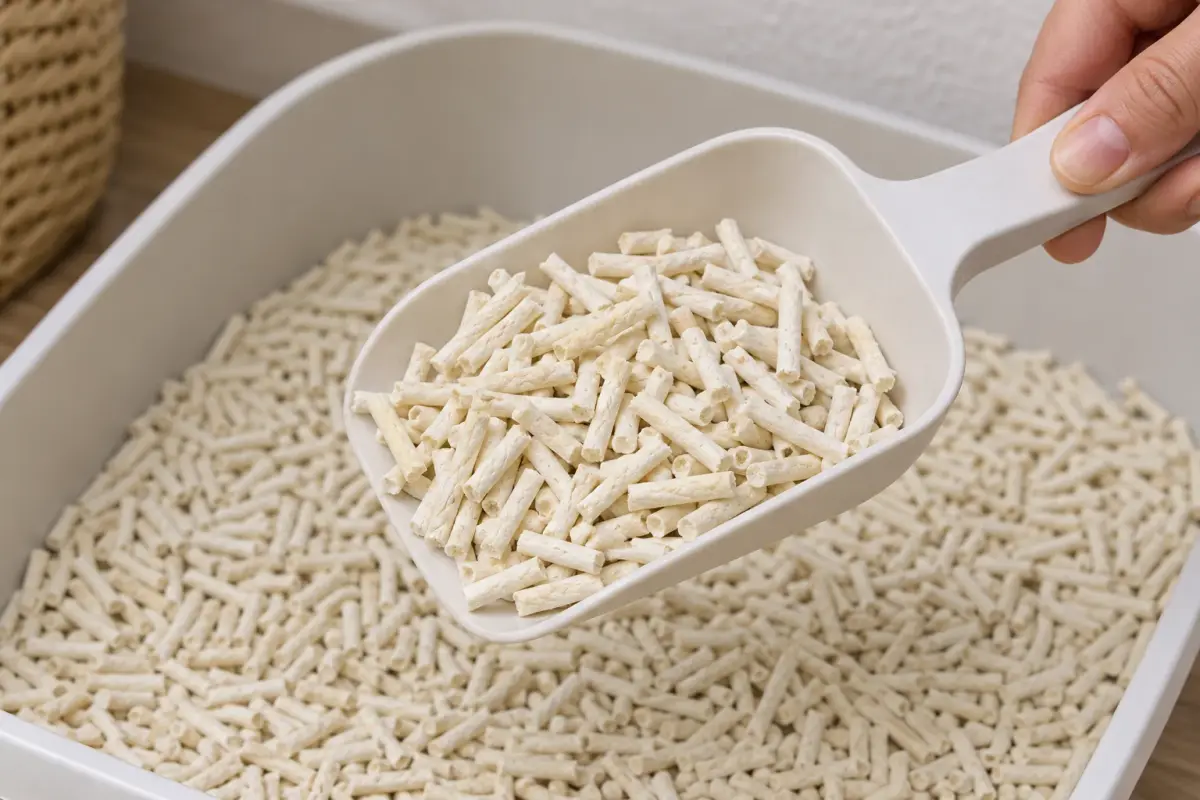
Tofu litter is a plant-based pellet litter. Owners tend to choose it because the pellets are larger than clay granules, which usually means less scatter around the box, and because most formulas clump and are marketed as low-dust. It suits households that want easy scooping, people sensitive to dusty litter, and anyone tired of finding clay granules through the house. Browse our tofu litter range when you are ready.
It is not a good fit for every cat. Pellets feel different underfoot from fine clay, and a cat that dislikes the texture may start using the carpet instead. Cats also have strong preferences about scent and surface, so the best tofu litter for your home is the one your cat will use, not simply the one with the best claims.
What cats actually prefer
Start from the cat's side. Cornell's Feline Health Center says most cats prefer unscented, finer-textured litter about one to two inches deep. The ASPCA agrees that most cats prefer clumping, unscented litter with a medium to fine texture, and keeps the layer shallow, about one to two inches rather than three or four. Tofu pellets are coarser than clay, so expect some cats to need time to adapt.
Both sources also warn against scented litter: many cats object to strong smells, and a cat can develop an aversion to a scent. That points you toward an unscented tofu formula. If you want odor control, scoop often rather than adding fragrance.
What to compare on the bag
Check clumping first. A tofu litter that forms firm clumps lets you scoop waste cleanly, which matters because both Cornell and the ASPCA recommend removing waste daily. Look at pellet size next. Small, finer pellets feel closer to clay and are easier for a hesitant cat to accept, while larger pellets scatter less but feel stranger underfoot.
Then look at scent, dust and the flushing instructions. Choose unscented. If dust bothers you or your cat, read reviews for how the litter pours and clumps, and check the label before flushing anything: flushing guidance varies by product and by local plumbing rules. If you are unsure, bag the waste and put it in the trash instead of flushing.
How to switch without upsetting your cat
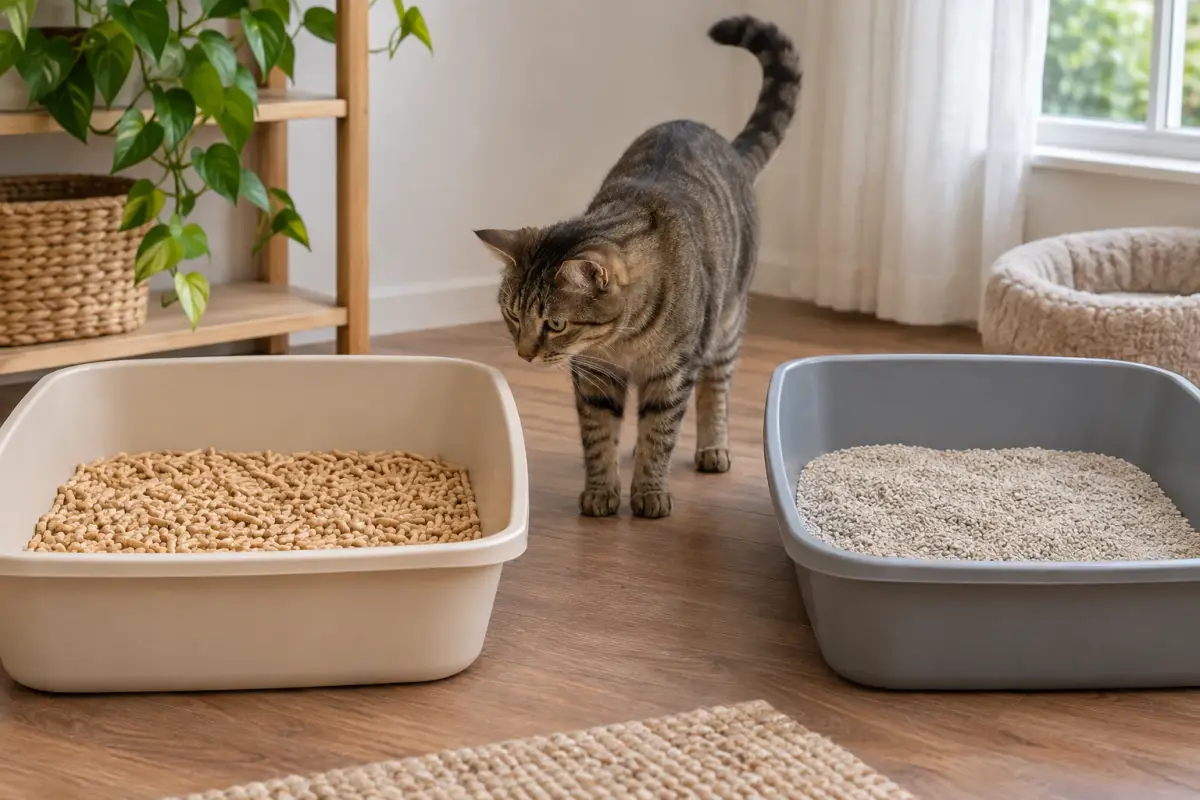
A sudden change can drive a cat away from the box. Cornell advises switching gradually, adding small amounts of new litter to the old. In practice, start with a thin top layer of tofu litter over the old litter, then increase the share over a couple of weeks.
The ASPCA suggests a simple test for a fussy cat: set out several boxes side by side with a different litter in each and see which one she uses. If you have more than one cat, keep a familiar box available while you test. Never throw out the old litter on day one.
Boxes, mats and cleaning routine
Provide one box per cat plus one extra, spread through the house, per Cornell and the ASPCA, and scoop at least once a day. The ASPCA also recommends washing boxes weekly with warm water and unscented soap and replacing all the litter. Cornell favors an uncovered box in a quiet, private spot away from the food.
Pellet litter can still end up on the floor, so a mat helps. A claw-shaped litter mat or a double-layer filter mat catches pellets that cling to paws, and a washable EVA litter mat is easy to rinse. For the box itself, see our litter boxes, and for how tofu stacks up against other types, read our guide to types of cat litter and the best cat litter.
When a litter problem is really a health problem
If a cat that used the box reliably suddenly stops, do not assume it is the litter. The ASPCA lists urinary tract infections, bladder inflammation, stones and blockage among the medical causes, with signs such as frequent trips that produce little urine, straining, crying, or blood in the urine. Some of these are emergencies.
Cornell notes that a cat with a urethral obstruction may strain, urinate often and pass little or no urine, and that this needs immediate veterinary treatment. Male cats are at greater risk. If you see this, call your vet or an emergency vet right away rather than changing litter.
This page is general information, not veterinary advice, and it cannot replace an examination by the vet who knows your pet.
Tofu-litter bag details to compare
| Label or physical detail | What to compare | Why it is a separate check |
|---|---|---|
| Clumping | How the exact litter forms a scoopable clump | Product behavior varies by formulation |
| Pellet size | Finer versus larger pieces | Granule size changes the physical feel and scatter |
| Scent | The actual fragrance declaration | Scent is not a dust measurement |
| Dust | How the exact product pours | Material type alone is not a dust rating |
| Disposal directions | The product label and local requirements | Flushing is not established by the word tofu |
Common questions
Is tofu litter safe for cats?
Tofu litter is generally sold as a plant-based litter, but read the label for your product. If your cat eats litter or shows any digestive upset, call your vet, and ask them about any health concern.
Is tofu litter flushable?
It depends on the product and on your local plumbing and sewer rules. Follow the instructions on the bag. If you are unsure, bag the waste and put it in the trash rather than flushing it.
Does tofu litter clump?
Most tofu litters are sold as clumping, though how firm the clumps are varies by product. Pick a clumping formula and scoop daily, which is what Cornell and the ASPCA recommend for any clumping litter.
How do I switch my cat to tofu litter?
Switch gradually. Cornell advises adding small amounts of the new litter to the old, so start with a thin layer on top and increase the share over a couple of weeks.
How deep should tofu litter be?
About one to two inches, according to Cornell and the ASPCA. A deeper layer is not better, and many cats prefer a shallow, even layer they can dig in comfortably.
Sources we checked
This guide is general information, not veterinary advice. If your pet is unwell or injured, contact your veterinarian.


