






Buying guides
Best Nesting Boxes for Chickens: What Actually Matters
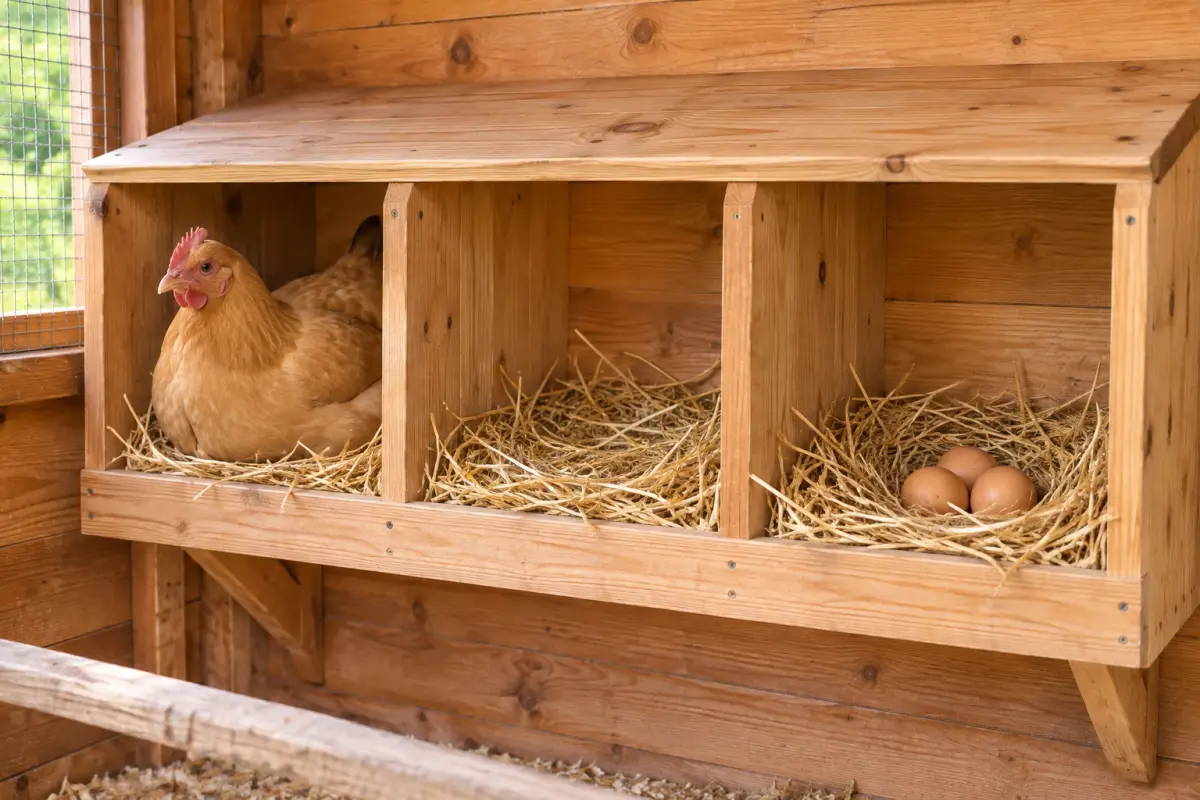
The best nesting boxes for chickens are about 12 inches wide, deep and high, with one box for every four hens and never fewer than four in total, according to Penn State Extension. Mount them 24 inches off the floor and away from the roosts, and keep the bedding clean and dry. Browse our chicken nesting boxes once you know your flock size.
By Matt GarnettUpdated November 13, 20264 min read2 sources
How many nesting boxes your flock needs
Penn State Extension's management guide for laying flocks says to provide a minimum of four nest boxes, with at least one 12-inch-by-12-inch nest for every four hens. Oregon State University Extension gives a similar rule of thumb: build one nest box for about every four birds. Hens do not need a private box each, and in practice a few favorite boxes get most of the use.
For a backyard flock of six hens, that works out to two boxes by the one-per-four rule, but Penn State's minimum of four still applies if you follow its guide. A flock of twelve would need three by the ratio, still rounded up to four. Treat the ratio as a floor, not a target, and add a box if you see hens queuing or laying on the floor.
Size, shape and what goes inside
Penn State specifies a 12-inch-by-12-inch nest as the standard footprint. That gives a standard-size hen room to turn and settle without leaving space for several hens to crowd in. If you keep very large breeds, check that your hens can comfortably turn around in the box, and if not, go a little bigger.
Penn State also advises keeping the nesting material clean and dry, which is the part that gets neglected. A thin layer of dry shavings or straw is easy to refresh, cushions the eggs and stops them from rolling together. See our guide to chicken coop bedding and cleaning for how often to change it.
Types of nesting box compared
Multi-compartment units combine separate nest spaces in one frame. Compare the three-compartment galvanized nesting box with the six-compartment steel nesting box with a roll-out tray. The six-compartment model has sloped nest floors that guide eggs toward a collection tray. Measure each compartment and entrance separately from the full assembled unit, and follow the exact mounting instructions.
If you are buying a coop at the same time, a wooden chicken coop with nesting boxes or a wooden pet coop with a nesting box builds the nests into the house. Check the listed dimensions and count the actual number of hens it claims to house against the one-box-per-four rule. Oregon State even notes that a 5-gallon bucket is a creative alternative to the traditional wooden nesting box, so a nest does not need to be fancy to work.
Height, placement and access
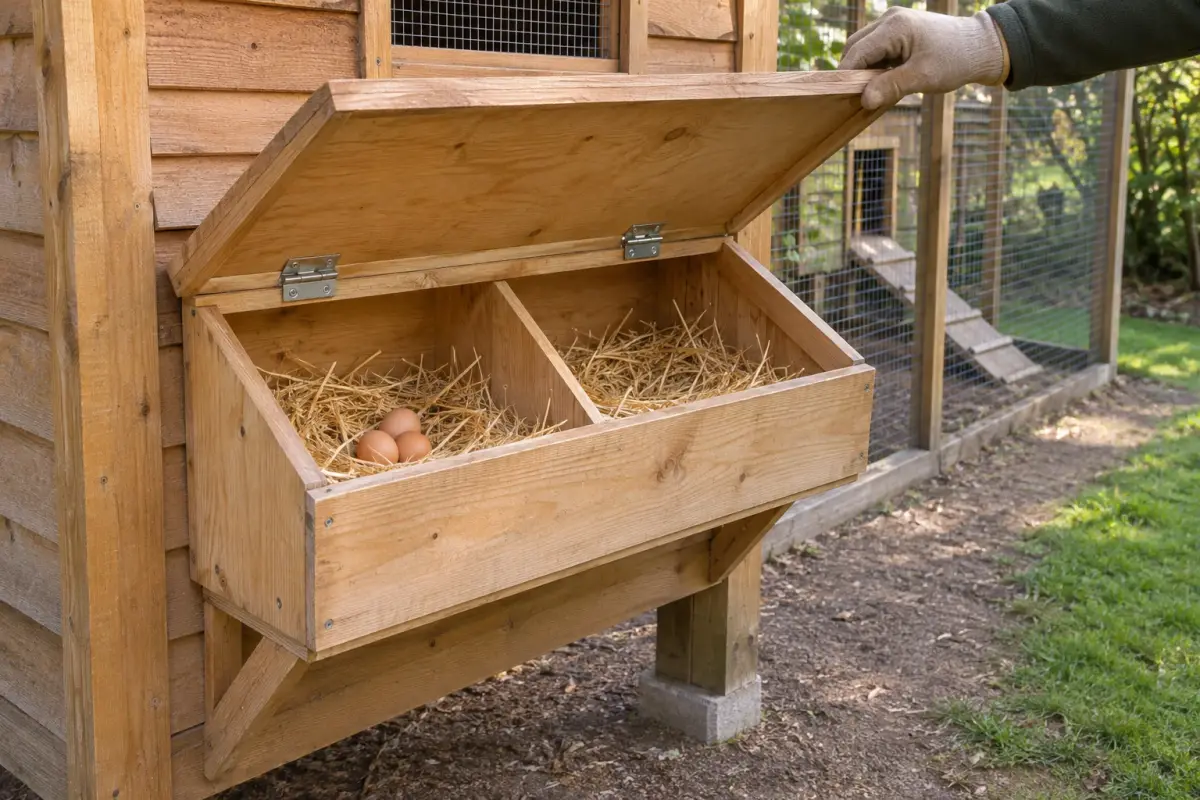
Penn State says to place nests 24 inches above the floor and away from the roosts. Oregon State adds that nest boxes should not sit directly on the ground or lower than the roosting poles. Hens prefer to sleep at the highest point available, so a nest lower than the roost keeps the nests clean, and a nest higher than the roost may become a sleeping spot that gets soiled.
Oregon State notes that you might need a chicken-size, ladder-like ramp set on a slant to help birds reach the boxes. A quiet, slightly shaded position helps hens settle. Before you buy, measure the coop wall where the boxes will go and leave a clear route for you to collect eggs from outside without entering the run, which saves time every morning.
Common problems and when to ask a vet
If hens lay on the floor or in corners instead of the boxes, check the basics first: boxes too low, too few, dirty or damp. Eggs that are cracked or eaten can have several causes, and our guide on why chickens eat their eggs goes through them. If eggs keep breaking, check the bedding and the number of boxes before you change anything else.
A hen that sits in the box for long periods, strains, looks unwell or lays soft-shelled eggs repeatedly should be seen by a veterinarian who treats poultry. Our page on an egg-bound chicken explains the warning signs. For wider planning, read our guides to coop size and browse our chicken coops, then return to our chicken nesting boxes.
Nest structures and collection access
| Format | Physical arrangement | Measure separately |
|---|---|---|
| Multi-compartment unit | Several nest spaces in one frame | Each compartment and complete frame |
| Single nest | One independent nest space | Interior and mounting points |
| Integrated coop nest | Nest attached to a larger house | Nest dimensions and outside access |
| Roll-out design | A collection area beyond the nest floor if listed | Actual floor and collection mechanism |
Common questions
How many nesting boxes do I need for my chickens?
Penn State Extension recommends at least one 12-inch-by-12-inch nest for every four hens, with a minimum of four boxes. Oregon State gives about one box for every four birds, so add boxes as the flock grows.
How big should a chicken nesting box be?
Penn State specifies 12 inches by 12 inches for a standard hen. Very large breeds may want slightly more room, but avoid boxes so big that several hens can crowd in together.
How high should chicken nesting boxes be off the ground?
Penn State says to place nests 24 inches above the floor and away from the roosts. Oregon State adds that boxes should not sit on the ground or lower than the roosting poles.
Can I use a bucket as a nesting box?
Oregon State Extension says a 5-gallon bucket is a creative alternative to a traditional wooden nesting box. Mount it securely at nest height, add clean dry bedding and make sure hens can reach it easily.
Sources we checked
This guide is general information, not veterinary advice. If your pet is unwell or injured, contact your veterinarian.


