






Care & how-to
Why Do Chickens Eat Their Eggs?
Chickens may start eating eggs after accidentally breaking one, then learn to repeat the behavior. Other hens can copy it. Missing eggs alone do not prove your flock is responsible, so observe before changing management. Reduce opportunities for breakage, collect eggs regularly, and ask a poultry veterinarian about repeated shell defects or changes in the birds’ health.
By Matt GarnettUpdated November 11, 20264 min read3 sources
Confirm what is happening before blaming a hen
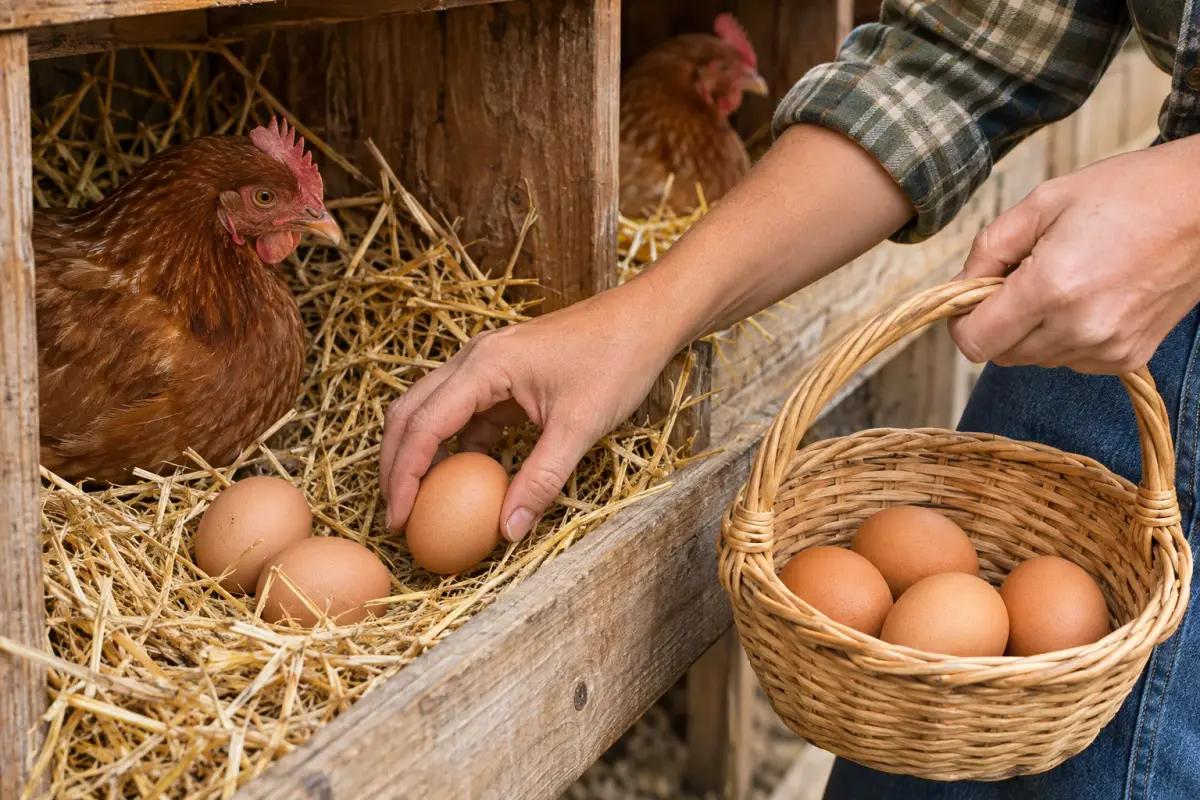
Watch the nesting area during normal visits and record when eggs appear or disappear. A hen investigating a broken egg is different from a bird repeatedly breaking intact ones. Cooperative Extension also notes that other animals can take eggs. Review coop security rather than assuming every missing egg has been eaten by a chicken.
Keep notes about broken shells, nest condition, and what you actually see. Do not frighten birds out of nests to inspect them or chase a suspected egg eater around the coop. Calm observation helps you identify the circumstances without creating another opportunity for an egg to break.
Make nests comfortable and reduce breakage
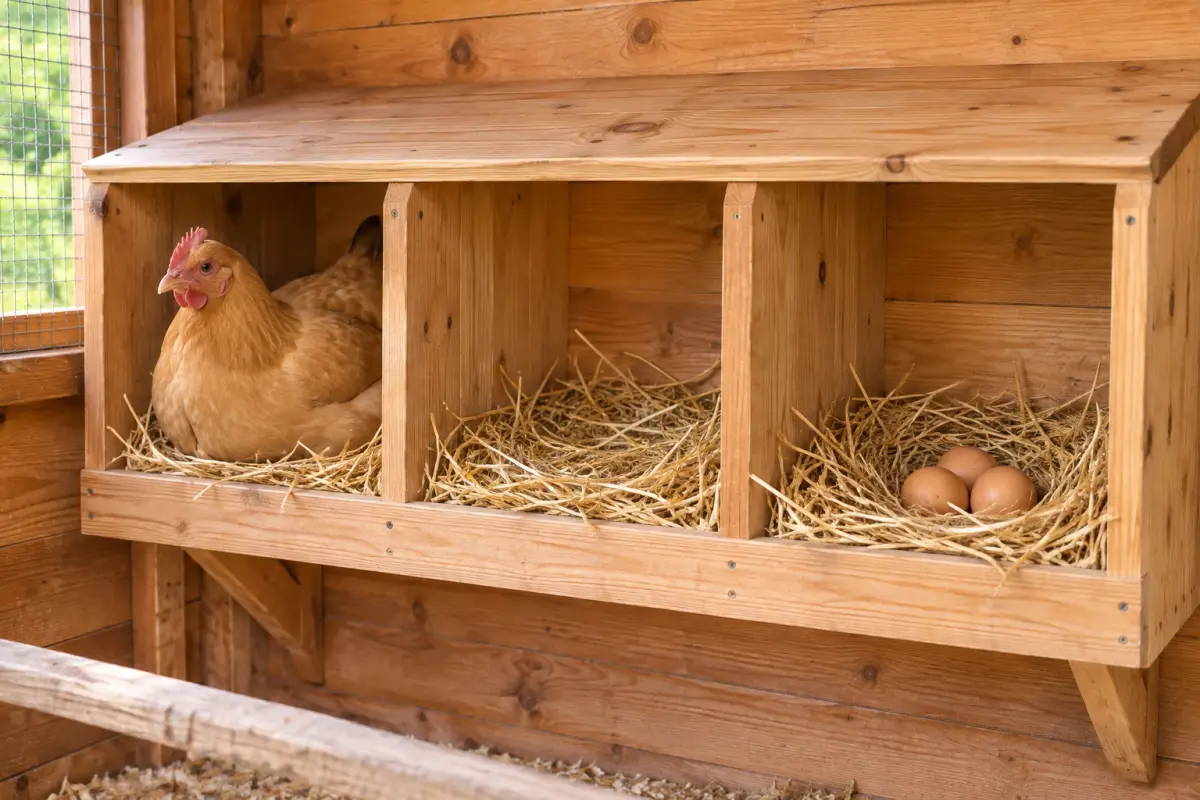
Check that nests have clean, dry cushioning and enough usable space for the laying flock. A nest that exists on paper but is wet, damaged, or difficult to reach does not provide the same practical choice as a comfortable one. Look for repeated crowding around one box and make other suitable nests accessible.
Cooperative Extension recommends avoiding bright lights near nesting areas and sudden disturbances that startle hens. Approach quietly and let a bird move naturally when possible. Check the nest after collecting eggs so damaged material is noticed early. These changes address opportunities for breakage without treating egg eating as a reason to punish a bird.
Collect eggs and keep the laying area clean
Minnesota Extension recommends picking up eggs twice a day. Build collection into a routine that suits the household and observe whether busy laying periods leave eggs accumulating in particular nests. Handle eggs gently when moving them; damage during collection still wastes an egg even if no hen was involved.
Remove broken egg material and replace soiled nest bedding promptly. Keep food preparation separate from poultry care and wash your hands after handling birds, eggs, or coop equipment. An egg found cracked or dirty needs food-safety consideration, rather than being treated as sound simply because a hen has not finished eating it.
Review the ration without guessing at a deficiency
Egg eating does not establish that a hen needs a mineral treatment. Keep an appropriate complete poultry ration as the main diet, with clean water available. Large quantities of scratch grain or kitchen extras can dilute that balance even when the birds eagerly choose them over their normal feed.
Write down the feed label, ages of the birds, laying status, and all extras before asking a poultry professional for advice. Do not build a correction from several supplements or borrow another flock’s feeding plan. Mixed ages and different purposes matter when assessing whether a diet is appropriate for the birds eating it.
Ask about repeated shell defects or illness
Utah State University describes several possible contributors to thin, soft, or otherwise abnormal shells, including nutrition, stress, age, and disease. Repeated defects therefore deserve a wider review than automatically adding calcium. Photograph examples and record which birds are laying if you can do so without distressing them.
Contact a poultry veterinarian when shell changes persist, production changes markedly, or birds become quiet, eat poorly, or show other concerning signs. Severe breathing difficulty, collapse, or several suddenly sick birds calls for urgent veterinary advice. Describe flock-wide patterns and recent introductions as well as the egg problem. A web page cannot determine the cause from shell appearance alone.
Choose calm management and reassess the pattern
Continue observing after improving nests, collection, and access to the appropriate ration. Record whether breakage becomes less frequent and whether eggs are still disappearing. If the pattern continues, ask a poultry veterinarian or extension poultry specialist to help review housing, flock interactions, and the evidence for the suspected cause.
Do not attempt beak cutting, force-feeding, or irritating food mixtures as a home remedy. Explain what you have already changed so professional advice can address the remaining problem. The practical aim is fewer broken eggs alongside comfortable, healthy birds, rather than a quick intervention whose effects you cannot assess.
Nest access and the wider flock layout both deserve attention. Review the Chicken Coops and Chicken Runs collections when considering housing changes, while keeping egg collection and flock observation part of the daily routine.
This page is general information, not veterinary advice, and it cannot replace advice from a veterinarian who treats poultry.
Common questions
Why do chickens eat their eggs?
The behavior can begin when a hen investigates an accidentally broken egg and learns to eat it. Other birds may copy her, while repeated breakage or disturbed nests can leave further opportunities.
Do chickens eating eggs always need more calcium?
No. The behavior alone does not diagnose a deficiency, and shell defects can have several causes. Review the complete diet and discuss persistent changes with a poultry veterinarian before adding supplements.
How can I reduce egg breakage in the nest?
Provide accessible nests with clean, dry cushioning, collect eggs regularly, and approach laying hens calmly. Check for crowding or damaged nest material and address those conditions without startling birds.
Does a missing egg prove that a chicken ate it?
No. Other animals can remove eggs, and a broken egg may have several explanations. Observe the nesting area, record the pattern, and check coop security before deciding which management change is appropriate.
Sources we checked
This guide is general information, not veterinary advice. If your pet is unwell or injured, contact your veterinarian.


