






Buying guides
Best Cat Carrier for Large Cats: Size, Doors and Sturdiness
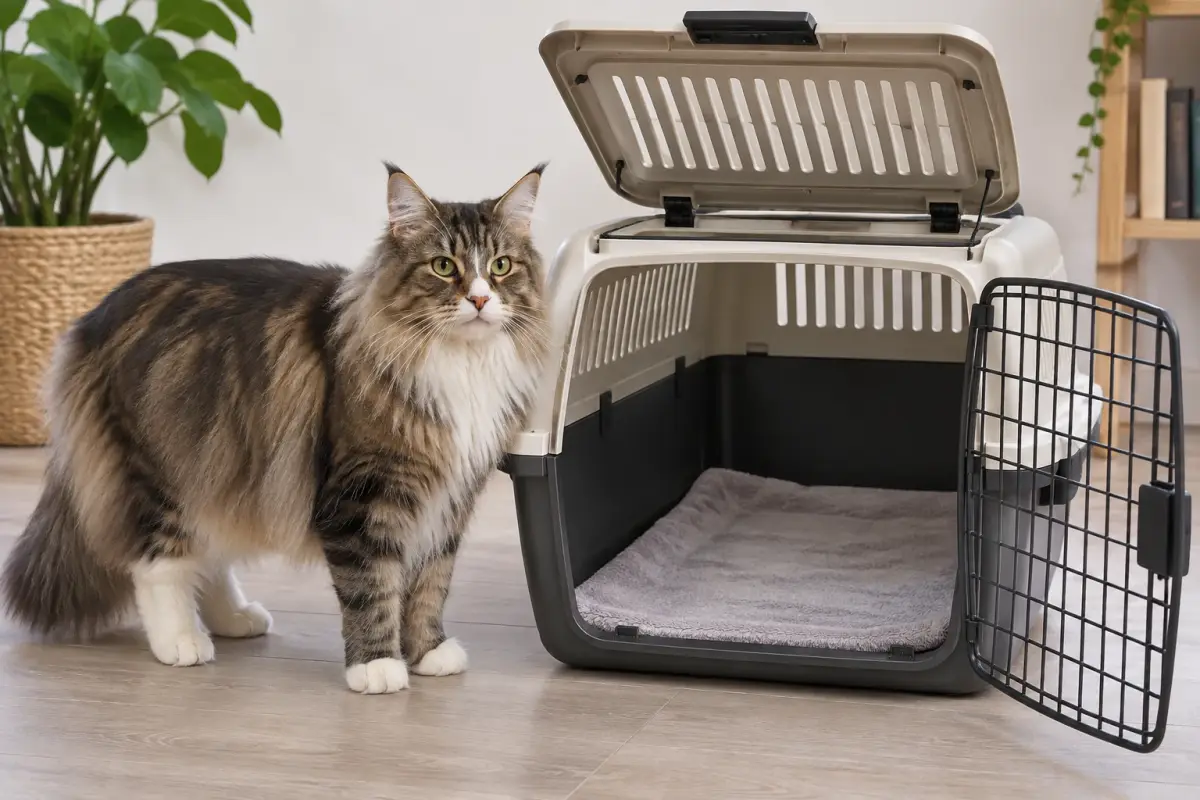
The best carrier for a large cat has an interior long and tall enough for your cat to stand and turn, a top opening as well as a front door, a removable top half for easy vet exams, and a rigid frame rated for your cat's weight. Hard-sided carriers are sturdiest for car trips and vet visits; well-framed soft carriers are lighter to carry. Check the inside dimensions, not the outer ones.
By Matt GarnettUpdated November 10, 20264 min read2 sources
What matters most: room, openings and strength
Large cats, such as Maine Coons, Norwegian Forest Cats and big mixed breeds, often outgrow standard carriers (see our general guide to cat carriers), and a cat crammed in a small one is more stressed. As for dog carriers, the AKC's general rule is that a pet should be able to sit, stand, lie down and turn around comfortably. Measure your cat and compare with the interior dimensions.
Openings matter almost as much. A top-loading door makes it far easier to lower a reluctant cat in, rather than pushing it through the front. A carrier whose top half unclips lets a vet examine a nervous cat in the bottom half without pulling it out. Strength comes third: handles, latches and the base must cope with 15 to 25 pounds of moving cat.
Hard-sided, soft-sided and other types compared
Hard plastic carriers are sturdy, easy to clean and can be belted into a car. The best for large cats have a top door, a front door and a removable top. Soft-sided carriers with a rigid frame and floor are lighter and more comfortable to carry, and some expand; check that the floor does not sag under a heavy cat.
Backpack carriers spread weight across your shoulders, which helps with a heavy cat on longer walks, but many are too small for large breeds. Rolling carriers with wheels help if you have a long walk to the vet. For airline travel, cabin rules usually limit size, so very large cats may not fit.
Best carrier for each situation
For vet visits, a large hard-sided cat carrier with top and front doors and a removable top half is the most practical. For car trips, the same carrier secured with a seat belt. For a heavy cat and a long walk, a framed soft carrier with a shoulder strap or a backpack rated for its weight.
For two cats traveling together, a carrier for each is safer and calmer than one shared carrier. For anxious cats, a carrier with fewer windows, or a towel over it, helps them feel hidden. For senior or arthritic cats, a top-opening carrier avoids pushing a stiff cat through a small door.
What to avoid
Avoid carriers rated below your cat's weight, cardboard carriers for anything but emergencies, and soft carriers with sagging floors or weak zips. Avoid front-only doors for cats that resist; they turn loading into a struggle. Avoid carrying a large carrier by one flimsy handle; support the base.
Avoid only bringing the carrier out for vet trips, which teaches cats to hide when they see it. If your cat becomes extremely distressed in transit, ask your vet about ways to make visits easier; never give human medication to a cat.
How to measure a large cat for a carrier
Measure your cat standing, nose to the base of the tail, and floor to the top of the head. Choose a carrier whose interior exceeds the length by a few inches and allows your cat to stand without crouching. Many large cats need a carrier around 22 to 24 inches long.
Check the weight rating and the carrier's own weight, since a big hard carrier plus a 20-pound cat is heavy to carry. A shoulder strap or wheels can make a real difference for regular trips. A luggage-style carrier with a backpack design is one example of a carrier that offers more than one way to carry.
Getting your cat used to it, and care
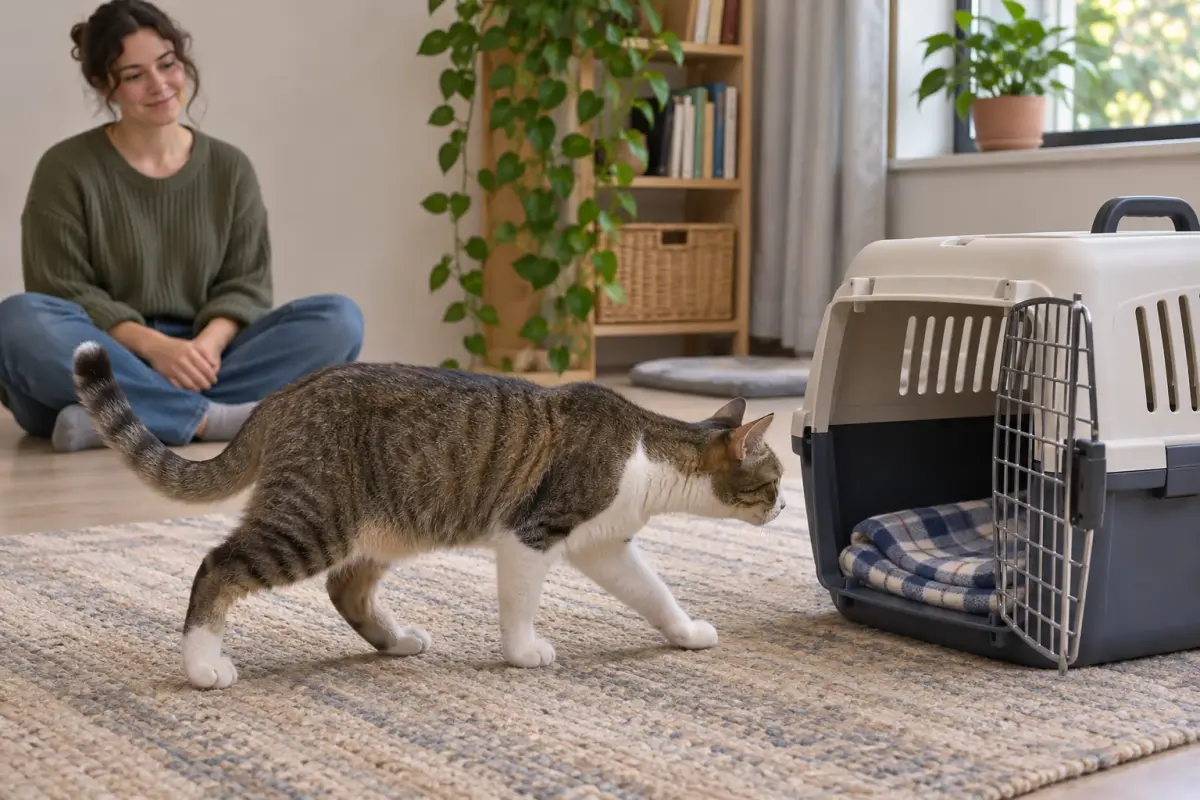
Leave the carrier out as furniture, with a soft blanket and treats inside, so your cat uses it as a bed. Practice closing the door briefly, then short car rides. This makes vet visits far calmer; our guide to getting a cat into a carrier has more steps.
Clean the carrier after each trip with mild, unscented soap, and wash bedding. Check latches, screws and handles before every trip. A good hard carrier lasts many years (browse our cat carriers); replace soft carriers when seams, zips or floors weaken.
Carrier shells and transport supports
| Format | Physical arrangement | Measure or inspect |
|---|---|---|
| Hard-sided | A rigid body with doors | Usable inside area and opening sizes |
| Soft-sided | Fabric around a supported frame and floor | Floor support and closure |
| Expandable | Extra space opens from a travel body | Closed and expanded dimensions separately |
| Backpack | Carrier worn on shoulder straps | Interior space and strap adjustment |
| Rolling | A carrier on wheels | Wheel,handle and base arrangement |
Common questions
What size carrier does a Maine Coon need?
Often a carrier with an interior of about 22 to 24 inches long, tall enough to stand in. Measure your cat nose to tail base and compare with the inside dimensions.
Is a hard or soft carrier better for a large cat?
Hard carriers are sturdier, easier to clean and safer in the car. Soft carriers with rigid frames are lighter to carry. Either works if it is big enough and rated for your cat's weight.
Why is a top-loading carrier better?
It lets you lower your cat in gently instead of pushing it through a front door, and a removable top lets the vet examine your cat without pulling it out.
How do I get my cat into a carrier?
Leave it out daily as a bed with treats inside, so it is familiar. On trip day, lower your cat in through the top door calmly.
Sources we checked
This guide is general information, not veterinary advice. If your pet is unwell or injured, contact your veterinarian.


