






Buying guides
Best Kitten Essentials: What a New Kitten Actually Needs
A new kitten needs a litter box with litter, food and water dishes, kitten food, a scratching post, a few safe toys, a carrier and an ID tag on a breakaway collar. The rest can wait. Browse our kitten essentials and read on for how to choose each item and which ones matter most.
By Matt GarnettUpdated November 13, 20264 min read3 sources
The short list for the first week
VCA Animal Hospitals' new kitten checklist covers the core kit: a litter box and litter, a scoop, food and water dishes, kitten food, scratching posts, toys, a carrier and identification. It also lists grooming tools, cleaners and gates, but those are second-wave purchases once you know your kitten.
Set up before the kitten arrives. A quiet safe space, a feeding area, a litter box and something to scratch mean the first hours are calm. Our new kitten checklist lays out the first days in order, and the kitten essentials collection gathers the gear in one place.
Litter box and litter
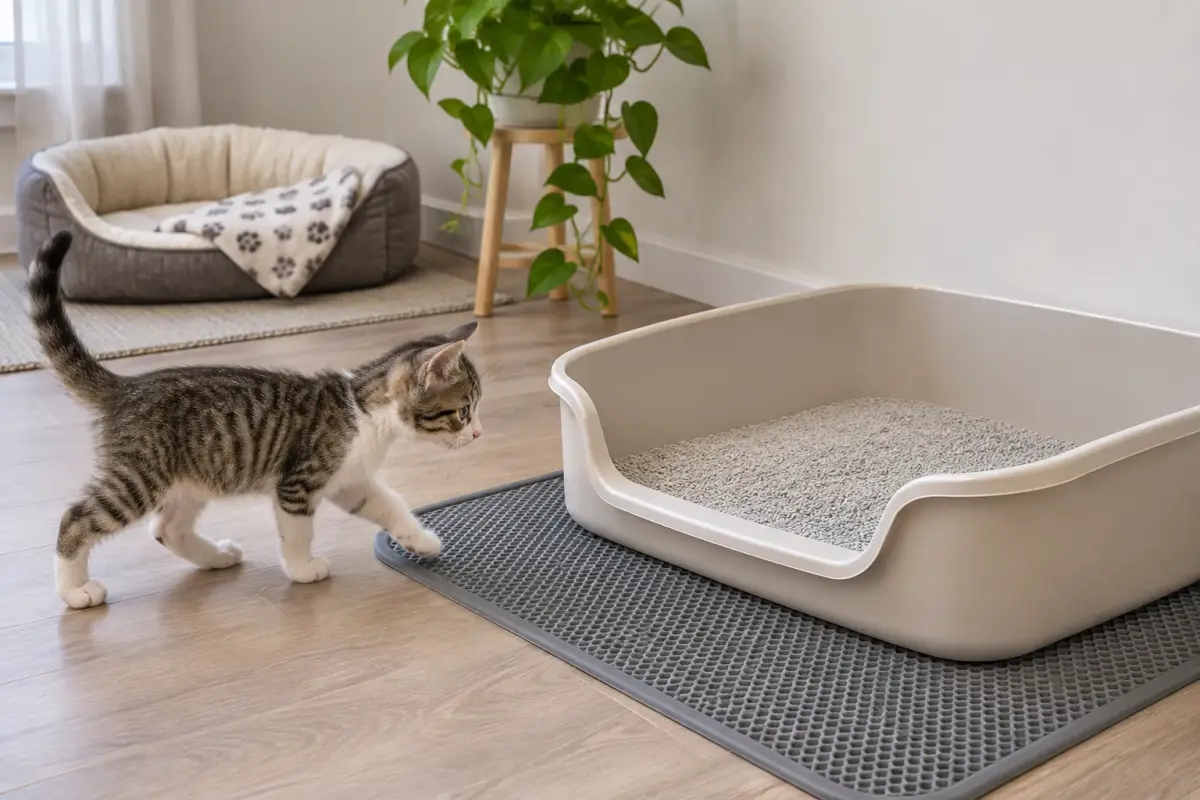
VCA suggests a box with enough room for about 3 inches of diggable material and high sides to limit splatter, large enough for the kitten to turn around and bury waste without stepping in it. The ASPCA, on the other hand, says most cats prefer one to two inches of litter, so avoid deep fills, and Cornell notes kittens and elderly cats need low sides to get in easily. A low entry point matters most for very young kittens.
VCA says clumping litter is preferred and warns that most robotic litter boxes are not safe for kittens who are 6 to 8 weeks old. Put the box in a quiet, accessible spot away from food and water, and plan on at least two boxes in a larger home. Our guide to litter training a kitten covers the routine.
Feeding gear and food
Choose washable dishes, ideally ones that resist flipping, and a latching container for dry food so the kitten cannot get into it. VCA advises kitten food labeled by AAFCO as suitable for growing kittens or for all life stages. A shallow stainless steel weaning bowl works for small portions and softened food.
A silicone treat spoon can make hand-feeding treats cleaner and help build trust. Kittens that cannot feed on their own, such as orphans, need guidance from a veterinarian, and a small feeding bottle with a pacifier-style nipple is only an aid for that situation. Our guide on how much to feed a kitten and your vet can help with amounts.
Scratching, play and climbing
VCA recommends offering both vertical posts and horizontal pads, plus couch protectors, so the kitten has an appropriate outlet. Start with shorter cat trees while the kitten learns the space, since tall ones are harder for a small kitten to climb safely. See our cat trees for kittens for suitable heights.
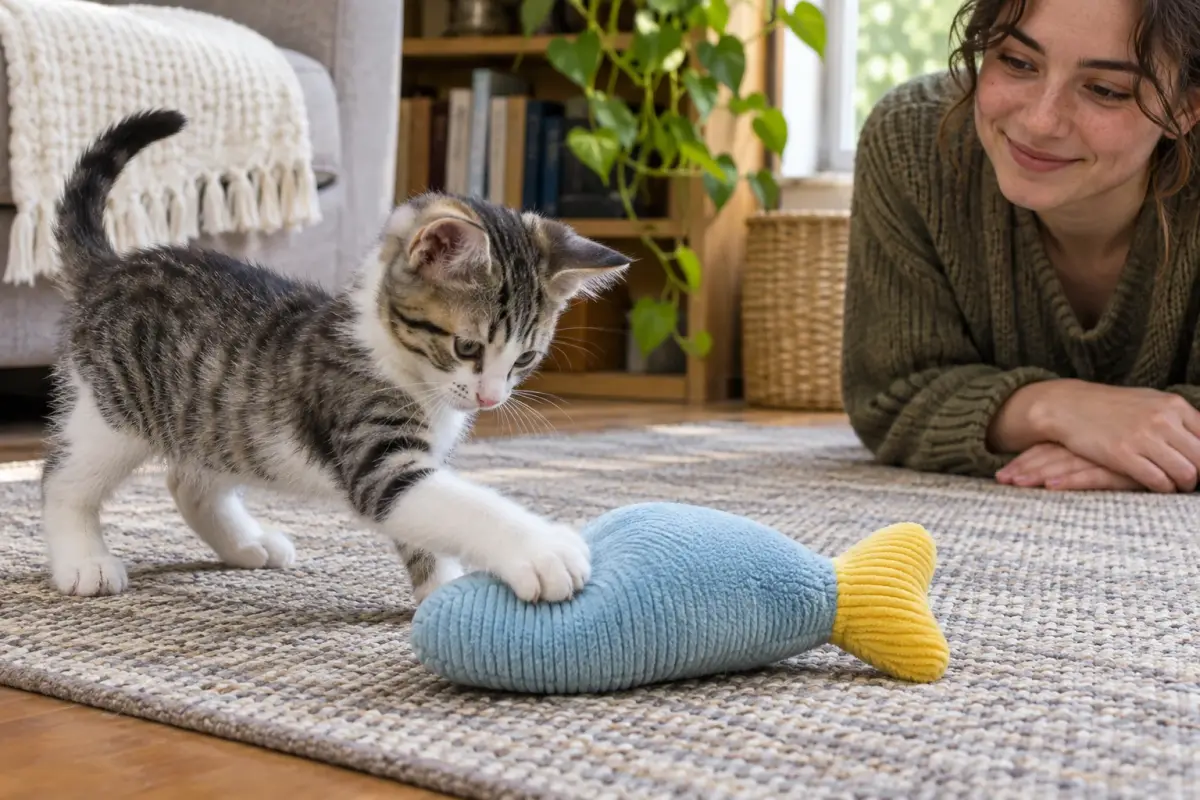
Toys should be varied: catnip toys, puzzle toys and wand toys used with supervision. VCA says yarn and string are not safe, so keep them away. Rotate toys to keep a kitten interested, and put away anything with loose parts that could be swallowed.
Carrier, collar and ID
VCA says kittens should be restrained in a moving vehicle, so a carrier is a must-have for the first vet trip. Line it with a soft blanket that has no holes or loose strings. Choose a carrier with a secure latch and enough room for the kitten to turn around.
If you use a collar, VCA advises a breakaway design to lower choking risk, and you may need a larger one as the kitten grows. Add an ID tag with the kitten's name and your contact details. Ask your vet about microchipping at the first visit.
Kitten-proofing and the first vet visit
VCA's kitten-proofing advice: latch doors and windows, secure blind cords, put away strings, yarn and rubber bands, tuck away electrical cords, keep washers and dryers closed and check inside before starting them, and lock up cleaning supplies and medications. Lilies, onions, garlic, chocolate and many household products are toxic to cats.
Keep your vet's number and the nearest emergency hospital handy, along with the ASPCA Animal Poison Control Center at (888) 426-4435 and Pet Poison Helpline at (855) 764-7661 (a fee may apply). Book a first veterinary visit soon after the kitten arrives so the vet can plan vaccines, parasite prevention and feeding.
This page is general information, not veterinary advice, and it cannot replace an examination by the vet who knows your pet.
Common questions
What do I need before bringing a kitten home?
A litter box with litter and a scoop, food and water dishes, kitten food, a scratching post, a few safe toys, a carrier and an ID tag. Kitten-proof the home and prepare a quiet space for the first days.
How much litter should I put in a kitten's litter box?
Sources differ slightly: the ASPCA says most cats prefer one to two inches of litter, while VCA mentions about 3 inches of diggable material. Start shallow and use a box with low entry sides for very young kittens.
Do kittens need a collar?
Not necessarily, but if you use one, choose a breakaway collar with an ID tag and replace it as the kitten grows. Many owners also ask a vet about a microchip.
What kitten food should I buy?
Choose food labeled by AAFCO as complete and balanced for growing kittens or all life stages. Your veterinarian can advise on the specific diet and how much to feed.
Sources we checked
This guide is general information, not veterinary advice. If your pet is unwell or injured, contact your veterinarian.


