






Care & how-to
New Kitten Checklist: What You Need Before Bringing a Kitten Home
Before your kitten comes home, have a carrier, a low-sided litter box with unscented litter, kitten food labeled for growth, shallow bowls, scratching posts, safe toys, a breakaway collar with an ID tag and a cozy bed ready. Set up one quiet kitten room, remove string, cords and small objects, and book a vet visit for the first week, around 8 weeks of age.
By Matt GarnettUpdated November 9, 20264 min read3 sources
A safe home base

Start your kitten in one quiet room, such as a spare bedroom or bathroom, with everything they need: bed, food, water, litter box, scratching post and a hiding spot like a covered bed or a box on its side. Keep the litter box well away from the food and water. A small territory helps a kitten feel secure and learn the litter box quickly. Our kitten essentials collection gathers many of the basics in one place.
Have a sturdy carrier ready for the journey home and vet visits. Put a towel or blanket that smells of the kitten's previous home inside, and leave the carrier open in the kitten room so it becomes a familiar place rather than something that only means a trip to the clinic.
Food, bowls and water
Buy the same food your kitten has been eating, so the move does not bring a sudden diet change. Choose a food labeled complete and balanced for growth or all life stages. Use shallow, washable cat bowls that are hard to tip, such as this stainless steel weaning bowl, and a latching bin for storing dry food.
Many cats drink more from a wide bowl or a pet fountain. Keep fresh water available at all times. If you want to switch foods, do it gradually over a week or more, and ask your vet how much and how often a kitten of your kitten's age and weight should eat.
Litter box setup
Choose a box with a low entry your kitten can climb into easily, big enough to turn around in, with 2 to 3 inches of unscented litter, ideally the type your kitten used before. VCA warns that most automatic, self-cleaning boxes are not safe for kittens around 6 to 8 weeks old.
Plan for one litter box per cat plus one extra once your kitten has the run of the house, with one on each floor. Have a scoop, enzymatic cleaner for accidents and a plan to scoop daily.
Scratchers, toys and climbing
Scratching is a normal need, not bad behavior, so offer both a tall, sturdy vertical post and a flat or angled horizontal cat scratcher, such as a sisal scratching floor mat. Put them near where your kitten sleeps and near furniture you want to protect. A short cat tree with a perch gives climbing space; you can move up to a taller one as your kitten grows.
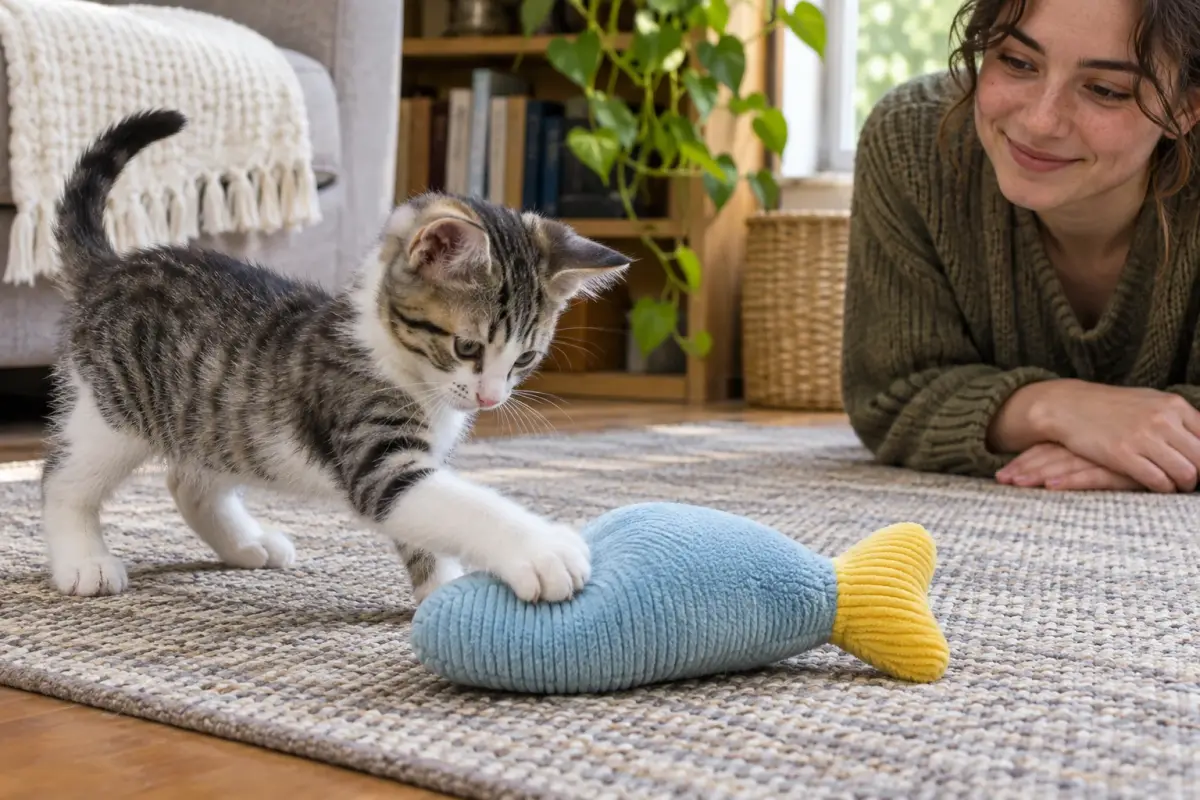
Choose toys that are too big to swallow, such as wand toys, small balls and crinkle toys. Put wand toys away after play. Avoid yarn, string, ribbon, rubber bands and tinsel, which can cause serious intestinal problems if swallowed.
Collar, ID, grooming and cleaning
A breakaway collar reduces the risk of a kitten getting caught, and an ID tag with your phone number helps if they slip outside. Ask your vet about microchipping, and register the chip as soon as it is placed. A kitten harness and leash are optional, for supervised outdoor time later.
For grooming, have a soft brush or comb, cat nail trimmers, and a cat toothbrush with cat-safe toothpaste. Never use human toothpaste or shampoo on a cat. Start gentle handling of paws, ears and mouth early, with treats, so grooming and vet exams stay easy.
Kitten-proofing your home
Kittens climb, squeeze and chew. Tidy away electrical cords, hair ties, rubber bands, string, sewing supplies and small objects; close toilet lids, washer and dryer doors and recliners; and check behind appliances for gaps a kitten could get stuck in. Keep medicines, cleaning products and human foods out of reach.
Lilies, including Easter, tiger and daylilies, are highly toxic to cats, even the pollen, so keep them out of the house entirely. If you think your kitten has eaten something toxic, call your vet or the ASPCA Animal Poison Control Center at (888) 426-4435 or the Pet Poison Helpline at (855) 764-7661; a fee may apply.
First vet visit and the weeks ahead
Book a vet visit within the first week, commonly around 8 weeks of age. Expect a full physical exam, the first round of kitten vaccines, deworming, a stool check and a talk about parasite prevention, testing, microchipping and spay or neuter timing. Bring any records from the breeder or shelter and a fresh stool sample. Once the visit is booked, you can browse our kitten essentials to fill any gaps in your list, and our kitten essentials guide explains what is worth buying first.
Kittens usually return every 3 to 4 weeks for boosters until around 16 to 20 weeks. Call your vet sooner if your kitten stops eating, has diarrhea or vomiting, sneezes with eye or nose discharge, or seems unusually sleepy.
This page is general information, not veterinary advice, and it cannot replace an examination by the vet who knows your pet.
Common questions
What do kittens need on the first day home?
A quiet room with a litter box, food, water, a bed, a hiding spot and a scratcher. Let your kitten explore at their own pace, and keep visitors and other pets away at first.
What age can a kitten leave its mother?
Most kittens are ready to go home at around 8 weeks or older, once they are weaned, eating solid food and using a litter box. Many shelters and breeders prefer 10 to 12 weeks.
Should my kitten wear a collar?
A breakaway collar with an ID tag is a sensible backup, even for indoor kittens. It releases if caught on something. Pair it with a registered microchip for permanent ID.
How soon should a new kitten see a vet?
Within the first week of coming home, or sooner if your kitten seems unwell. The visit starts vaccines and parasite treatment and screens for common kitten illnesses.
Sources we checked
This guide is general information, not veterinary advice. If your pet is unwell or injured, contact your veterinarian.
