Buying guides
Best Interactive Puppy Toys: How to Choose Safe Ones
The best interactive puppy toys are easy food puzzles, treat-dispensing toys and soft hide-and-seek toys, chosen to be too large to swallow and tough enough not to break into pieces. Start with the simplest version, supervise every session at first, and count any treats you put inside as part of the day's food.
By Matt GarnettUpdated November 14, 20264 min read2 sources
What matters most in an interactive puppy toy
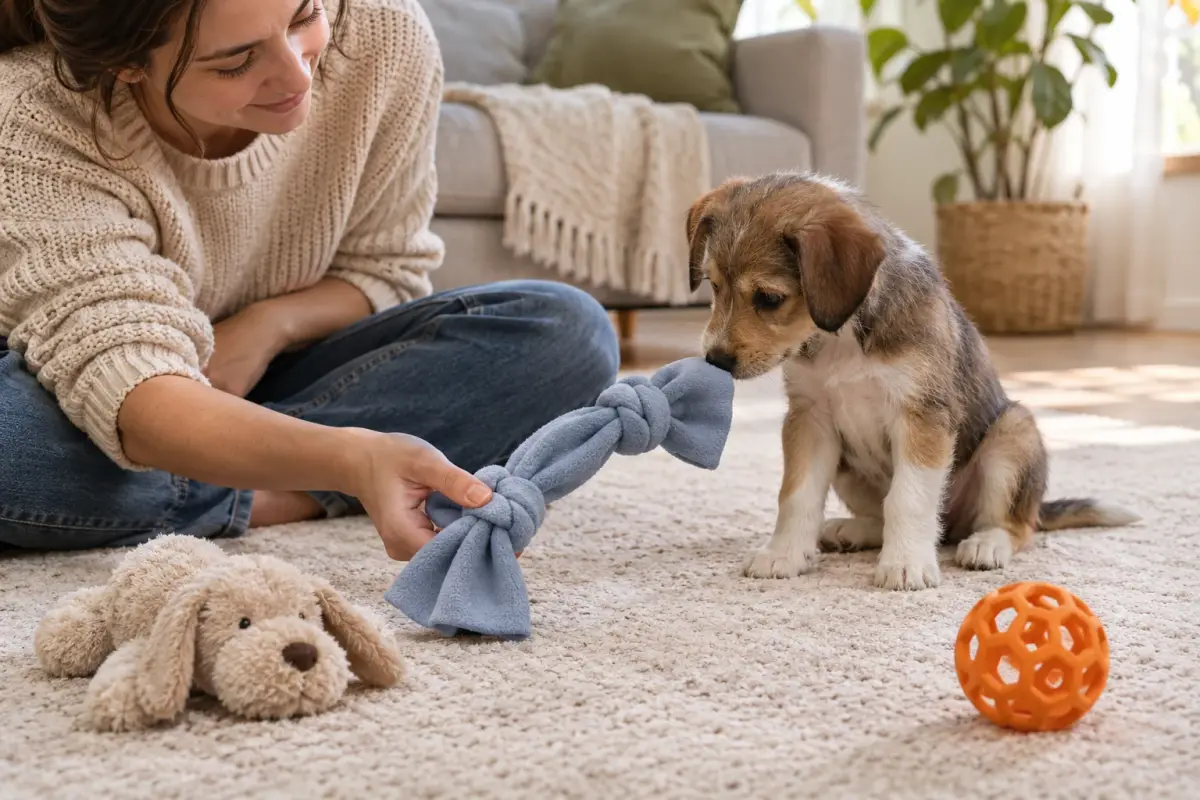
Interactive toys ask a puppy to work for a reward, whether that is pushing a pod apart, nosing a slide open or rolling a toy to release a treat. That effort is the point. VCA notes that young pets explore with their mouths, and that giving them an appropriate outlet for oral behavior can reduce nuisance behaviors such as chewing the furniture.
Because puppies mouth everything, safety criteria come first. VCA advises choosing a toy that is size-appropriate, cannot be accidentally swallowed, and is durable enough not to fracture into pieces. The AKC adds that the toy should match the dog's size and bite strength. A toy small enough to fit entirely in the mouth is the wrong size for that puppy, however clever its design.
The main interactive toy types compared
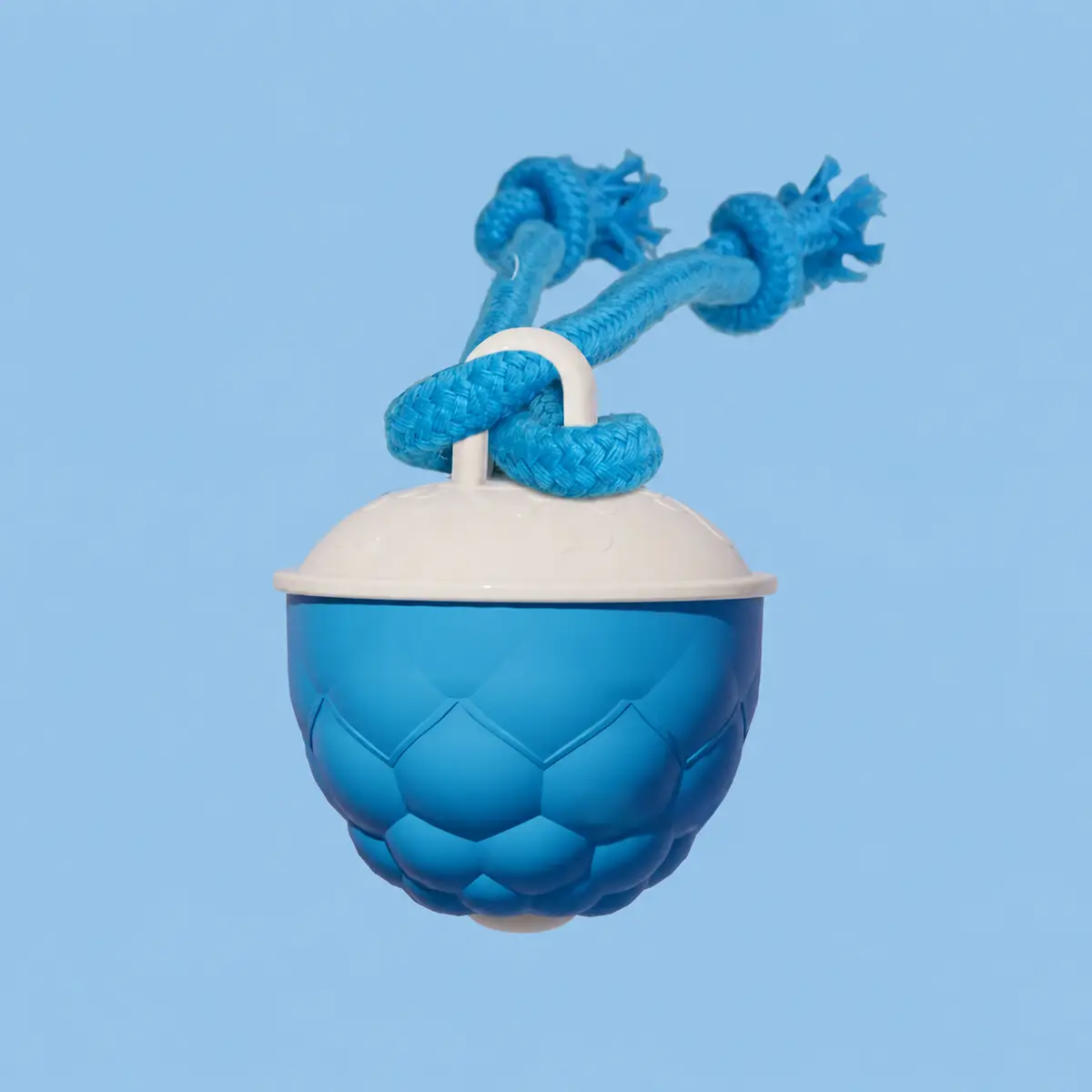
Treat-dispensing puzzles hide kibble or small treats behind slides, flaps or compartments, so a puppy pushes and noses to get the food. A slide puzzle treat dispenser is an example. Rubber toys that can be filled with soft food are another type, and the AKC mentions pre-stuffing and freezing them so they take longer to work out. Browse our interactive dog toys to compare the shapes.
Soft hide-and-seek toys, such as a plush puzzle toy with removable squirrels, suit play with you. Check the pieces against your puppy's size, since small removable parts are the first thing a puppy may try to swallow. Some feeders are made for bigger mouths: the 3-in-1 puzzle feeder is listed for medium and large dogs, so check the size before choosing it for a young small-breed puppy.
Best toy for each puppy
For a first-timer, begin with the easiest toy you can find. VCA recommends starting with a toy easy enough to hold interest without causing frustration, and suggests snuffle mats as a low-impact beginner option, with sticky fillings such as peanut butter for the first tries. A hollow toy with a big opening is easier than one with a tiny hole.
For a puppy that is restless while you work, a filled toy gives it something to do in its crate or pen. For a toy-breed puppy, size down. For a big, bouncy puppy, look for thicker, sturdier build. Puppies that are teething may also need chews made for that stage, which we cover in our puppy toys guide and puppy teething toys.
How to introduce and supervise
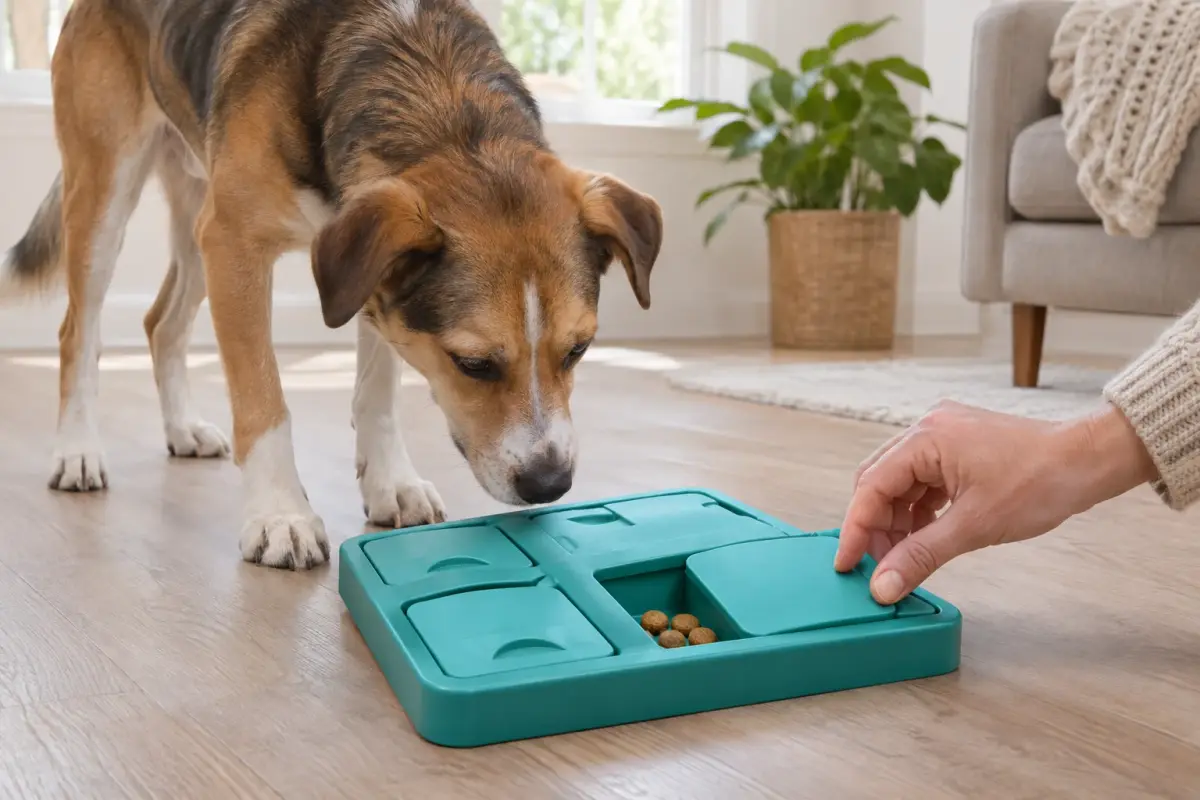
VCA says pets should be monitored and supervised with all toys, at least initially. Sit with your puppy for the first sessions, and watch how it plays rather than handing over a toy and leaving. If the puppy gets frustrated, make the puzzle easier or help it win once, so the toy stays fun.
Ask your veterinarian for calorie guidelines for your puppy's size and age before using food in toys, and count what goes in as part of the daily ration. VCA notes that toys can replace a bowl as long as the puppy still gets a full daily ration of nutritious food. If multiple pets share your home, separate them, as some guard food-filled toys.
What to avoid, and care
Remove any toy that cracks, loses pieces or is being chewed apart, because broken pieces can be swallowed. Be cautious with training toys such as Lotus-style balls: the AKC says they are not to be left alone with your dog and are not meant for chewing. Cardboard and paper puzzles are fine for a moment but should be thrown away after use.
Wash and dry food toys after every use, and watch for a sudden loss of interest in a favorite toy. VCA says that may point to dental or neck pain, which is a reason to check with your vet.
This page is general information, not veterinary advice, and it cannot replace an examination by the vet who knows your pet.
Puppy puzzle layouts and removable pieces
| Format | Where the reward or toy sits | Inspection focus |
|---|---|---|
| Slide or flap puzzle | Food beneath movable covers | Moving parts and difficulty |
| Stuffable rubber | Food inside a cavity | Cavity access and cleaning |
| Plush hide-and-seek | Small toys inside a larger body | Removable-piece sizes and seams |
| Multi-function feeder | Several feeding/puzzle areas | Actual size and intended user range |
Common questions
What are the best interactive toys for puppies?
Easy treat-dispensing puzzles, fillable rubber toys and soft hide-and-seek toys work well, provided they are too big to swallow and durable enough not to break into pieces.
At what age can a puppy use a puzzle toy?
Sources give no fixed age. Choose the easiest toy, size it to the puppy, supervise at first, and ask your vet if you are unsure whether a toy suits your puppy's stage.
Can puppies be left alone with interactive toys?
Not at first. VCA says pets should be supervised with all toys, at least initially. Once you have watched how your puppy plays, ask your vet what is sensible when you are away.
Are puzzle toys good for puppy chewing?
They can help by giving young dogs an appropriate outlet for mouthing, which VCA says may reduce nuisance behaviors. Teething puppies may also need a separate chew made for that stage.
Sources we checked
This guide is general information, not veterinary advice. If your pet is unwell or injured, contact your veterinarian.