Buying guides
Best Interactive Dog Toys: How to Choose the Right Challenge
The best interactive dog toy is one your dog can solve with a little effort and cannot destroy. Treat-dispensing balls and stuffable rubber toys suit most dogs, sliding and flip puzzles suit dogs that like problem-solving, and snuffle mats suit sniffers. For strong chewers, choose solid rubber over plastic. Start easy, so your dog wins, and supervise until you know how it plays.
By Matt GarnettUpdated November 10, 20264 min read3 sources
What matters most: difficulty, durability and the reward
An interactive toy works when your dog has to think or work for a reward. The AKC describes puzzle toys as a way to stimulate a dog both mentally and physically, and notes that putting kibble in a food-releasing toy can turn a two-minute meal into a half-hour game. The first thing to match is difficulty. A toy that is too hard frustrates a dog, which then gives up or chews the toy apart.
Durability is the second factor, and it depends on your dog's chewing style more than the toy's label. Plastic puzzles are fine for gentle dogs but become chew toys for strong jaws. The reward is the third: most toys use kibble or small treats, and some take soft food that can be frozen. Count the food in your dog's daily ration.
The main types compared
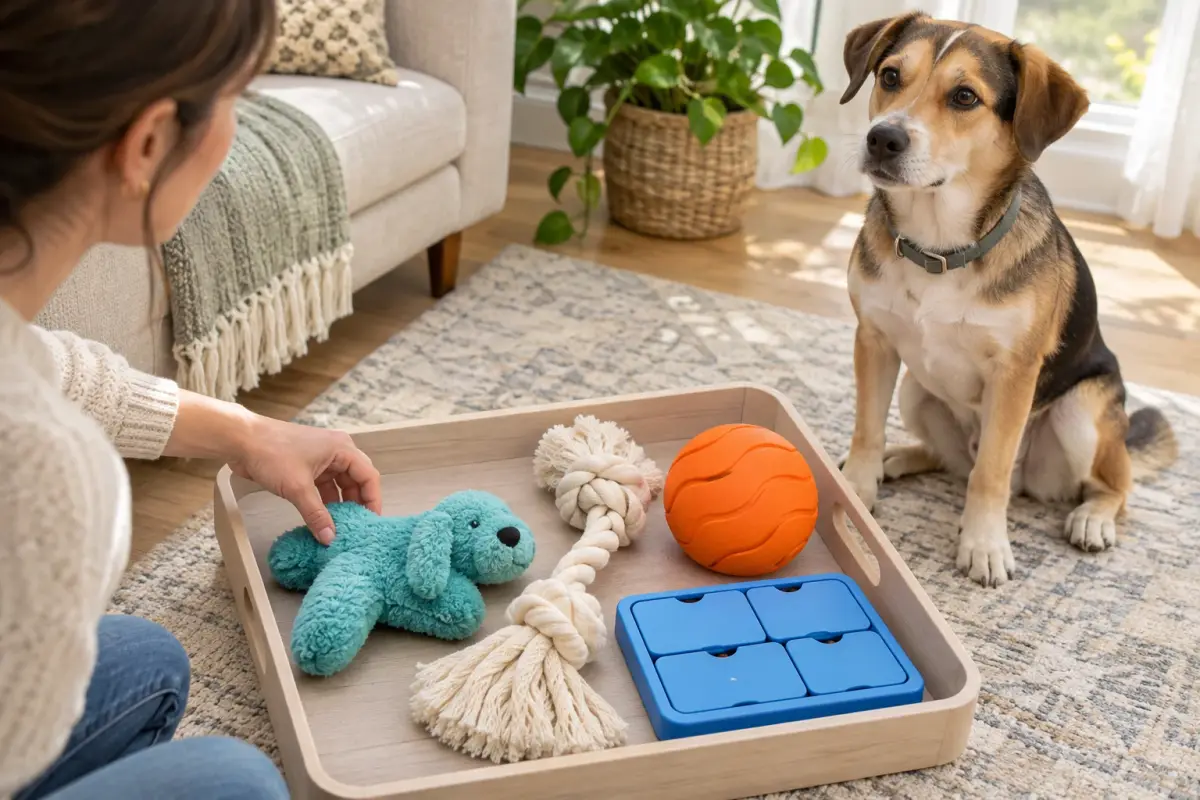
Treat-dispensing balls and wobblers release kibble as your dog rolls or pushes them, giving physical play as well as a reward. Stuffable rubber toys hold soft food or treats and can be frozen for a longer challenge; they are the most durable option. Board puzzles have sliding panels, flip lids or cups that hide treats, and come in levels, which suits clever dogs that like to work things out.
Snuffle mats are fabric mats with loops and flaps that hide food, and the AKC recommends them as a way to let dogs use their nose. Lick mats spread soft food in grooves for slow, calming licking. Interactive tug and flirt-pole toys involve you directly and burn energy fast (see also dog zoomies). Automatic ball and treat launchers, such as this doggie treat launcher, suit dogs that love fetch but need careful use to avoid overexertion.
Best type for each dog
For puppies, choose soft rubber stuffable toys and easy puzzles, since puppies tire quickly and need early wins. For high-energy working breeds, combine a level-two or level-three board puzzle with active tug or fetch games. For senior dogs, snuffle mats and lick mats give mental work without strain on joints. For dogs left alone for short periods, a frozen stuffed rubber toy is the safest solo choice.
For aggressive or power chewers, choose solid natural rubber toys in a size larger than you think, and skip plastic puzzles and fabric mats unless you supervise closely. For fast eaters, a treat ball or puzzle feeder at mealtime slows eating (see how to slow down a dog eating). For anxious dogs, licking and sniffing toys can help them settle, alongside training and advice from your vet.
What to avoid
Avoid toys small enough to swallow, toys with removable parts that come out easily and toys made of thin plastic for strong chewers. Avoid leaving board puzzles and snuffle mats with a dog unsupervised, because they are not chew toys. Avoid toys with a single hole that can trap a tongue by suction; look for rubber toys with a hole at each end.
Avoid overfeeding through toys. Every treat and spoon of filling counts toward the day's food, so take it out of the main meal. If your dog breaks off and swallows pieces of a toy, or vomits, strains or stops eating afterwards, call your vet right away.
How to choose the right size and level
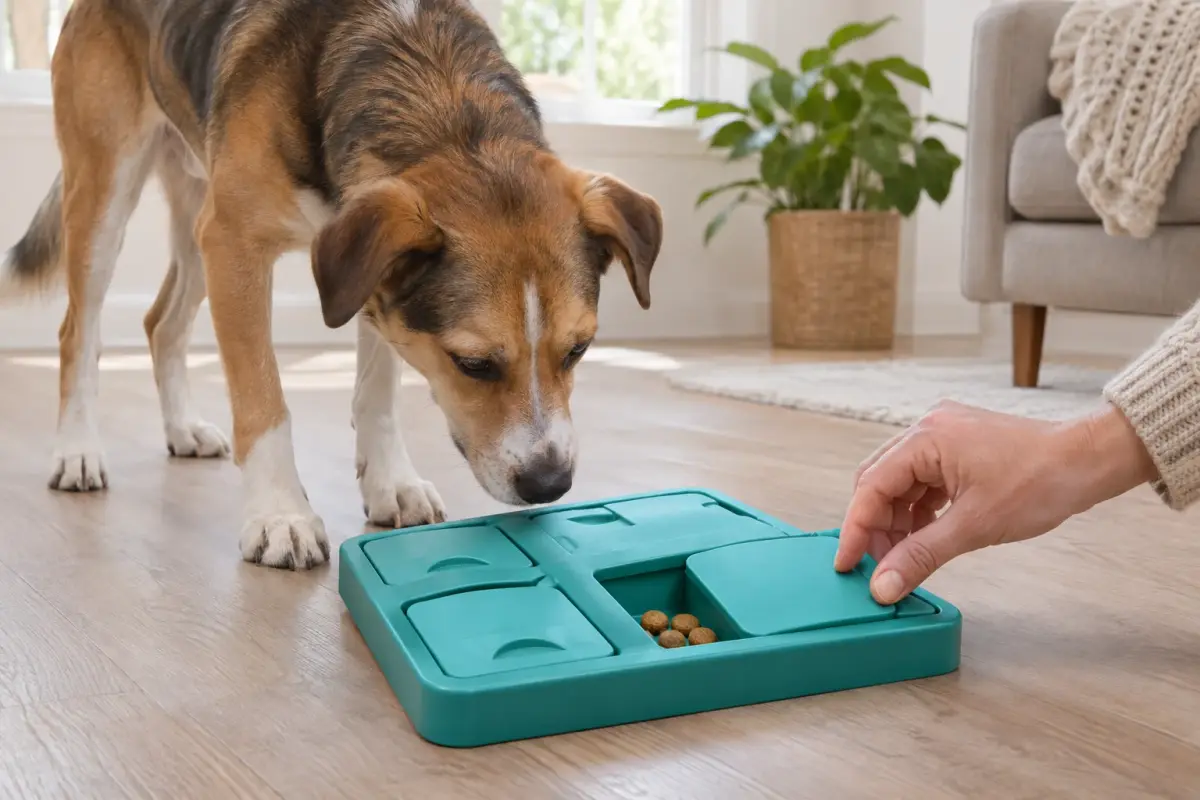
For balls and rubber toys, choose a size your dog cannot fit fully into its mouth, and size up for strong jaws. For puzzles, start at the easiest level and show your dog how it works by letting it watch you hide a treat. Most makers grade puzzles from level one to level three or four; move up once your dog solves the current level quickly.
Watch your dog with any new toy for the first few sessions. Note whether it solves the toy, gives up, or starts chewing it. That tells you whether the difficulty and material are right. A dog that chews a puzzle instead of solving it either finds it too hard or needs a sturdier design.
Rotation, cleaning and how long toys last
Rotate interactive toys so they stay interesting; the AKC notes that an old toy seems new when a dog has not seen it for a few days. Two or three short sessions a day suit most dogs. Put board puzzles away after use, both to protect them and to keep them special.
Wash food toys after every use, since food residue grows bacteria; most rubber toys can go in the dishwasher. Shake out and machine wash snuffle mats regularly. Replace rubber toys with deep cracks or missing chunks, and puzzles with broken hinges or loose parts. A well-made rubber toy can last years; plastic puzzles last as long as your dog leaves them alone. Browse all our interactive dog toys.
Interactive toy reward and movement mechanisms
| Format | Where food or play happens | What changes the task |
|---|---|---|
| Treat ball or wobbler | Food inside a moving body | Rolling or rocking |
| Stuffable rubber | Food in an internal cavity | Cavity shape and filling |
| Board puzzle | Food beneath covers or cups | Slides,lids and removable pieces |
| Snuffle mat | Food in fabric folds | Fold depth and hiding spaces |
| Lick mat | Soft food on a textured surface | Surface pattern |
| Tug or flirt pole | Handler controls a grip or lure | Shared movement |
| Launcher | A mechanism projects a ball or treat | Controls and the exact operating method |
Common questions
What are the best interactive toys for aggressive chewers?
Solid natural rubber toys that can be stuffed and frozen, sized larger than your dog's mouth. Avoid plastic puzzles and fabric mats unless you supervise closely, since strong jaws can break and swallow pieces.
What are the best interactive puppy toys?
Soft rubber stuffable toys, easy treat balls and beginner puzzles. Keep sessions short, start at the easiest level and supervise, since puppies chew everything. Short, easy wins build confidence.
Are puzzle toys good for dogs?
Yes. They provide mental exercise, slow fast eaters and help with boredom. Match the difficulty to your dog so it succeeds, and count the treats in its daily food.
How long should a dog play with a puzzle toy?
Ten to twenty minutes per session suits most dogs. Stop while your dog is still interested, and put board puzzles away afterward so they are not chewed.
Sources we checked
This guide is general information, not veterinary advice. If your pet is unwell or injured, contact your veterinarian.