Buying guides
Best Interactive Dog Toys for Large Dogs: What Actually Matters
The best interactive toys for large dogs are big enough that they can never fit fully in the mouth, tough enough to survive a strong bite, and simple enough that a powerful dog cannot break off pieces. Size and construction matter more than gimmicks. Use this guide, then browse our interactive dog toys with those checks in mind.
By Matt GarnettUpdated November 13, 20264 min read2 sources
Why large dogs need different interactive toys
A large dog has a bigger mouth, a stronger bite and usually more energy to burn, and all three change what counts as a good toy. The American Kennel Club notes that large and giant breeds may need larger toys because their mouths are bigger, and that stronger dogs may need more durable rope toys or balls. A puzzle or treat toy sized for a small dog can be swallowed, crushed or destroyed in minutes by a big one.
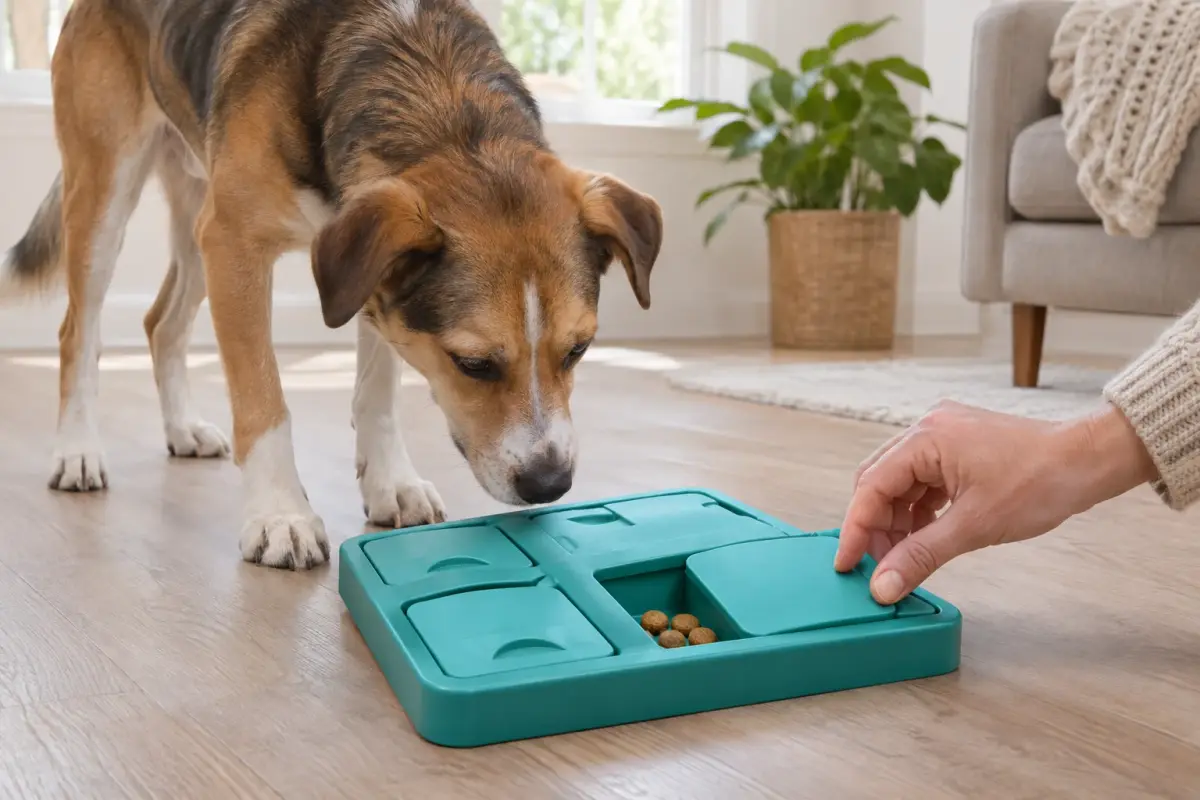
Interactive toys also do a different job from simple chew toys. They make a dog work, whether that is pushing a toy to release treats, chasing a moving ball or tugging against you. For a large dog, that mental work matters as much as the exercise, because a bored, powerful dog is the one most likely to chew furniture. The aim is a toy that is both engaging and physically safe at that dog's size.
Size and the swallow test
Size is the first safety check. VCA Hospitals advises choosing a toy that is too large to fit entirely in your dog's mouth, because smaller toys raise the risk of choking. The AKC gives the same advice about balls: pick one big enough that your dog cannot choke on or swallow it by accident, which is a common problem for large dogs with small tennis-ball-sized toys.
Apply this to every part of an interactive toy, not just the whole. Look at lids, plugs, tabs and rope ends, and ask whether a large dog could pull any piece free. Skip toys with ribbons, eyes or other parts that can come off. If a toy already looks small in your hand next to your dog's jaw, it is too small, whatever the label says.
Durability: matching the toy to your dog's bite
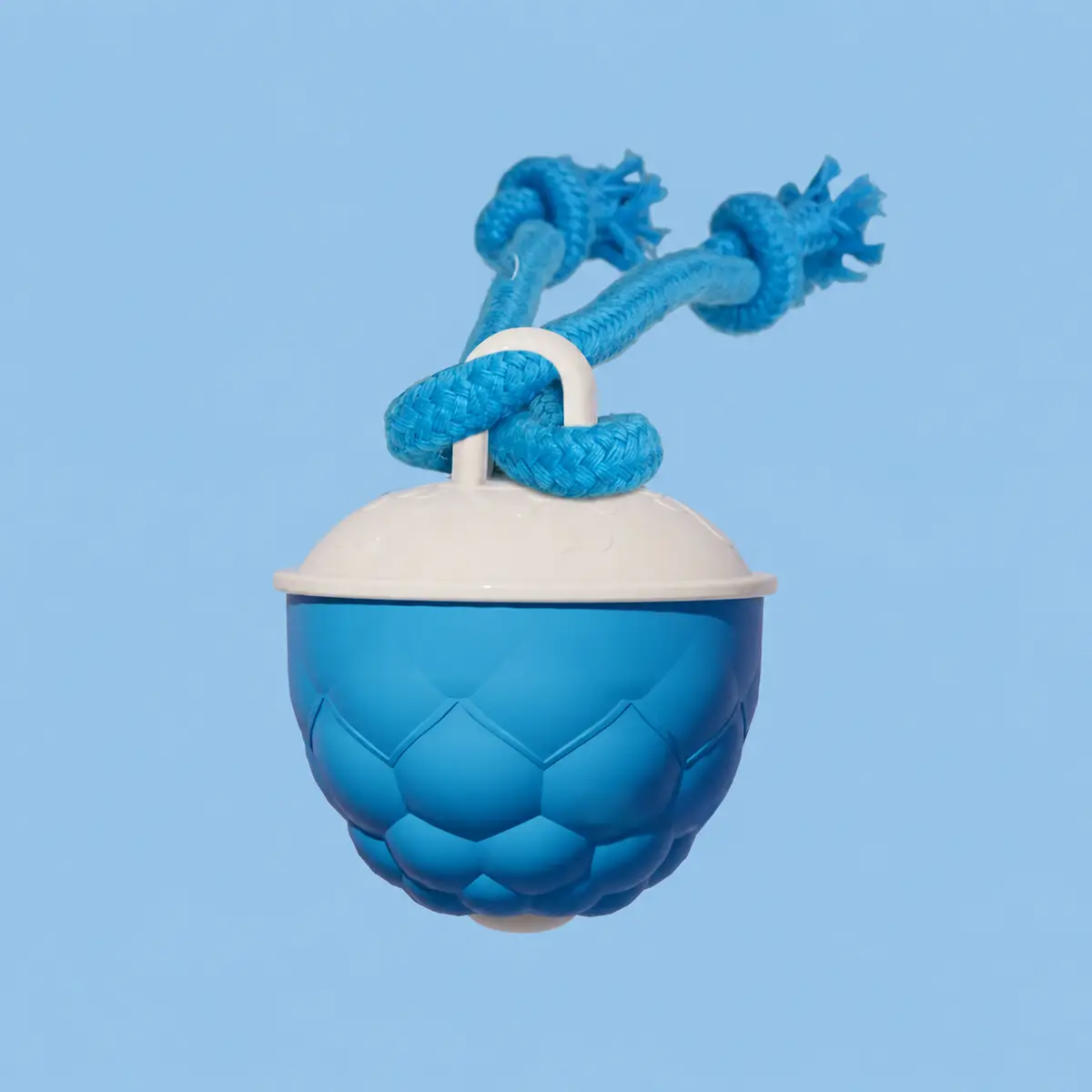
VCA Hospitals warns that some dogs destroy even rubber toys within minutes and that swallowed pieces can require surgery. Match the toy to how your dog actually chews. A gentle retriever may enjoy a ball on a rope, while a determined chewer needs dense, thick construction. For a toy that doubles as a treat puzzle, such as this interactive chew puzzle toy, watch how your dog treats it in the first few sessions.
VCA also suggests a simple check: a good chew toy should be soft enough to dent with a fingernail, and long toys should bend slightly in your hands. Very hard items can chip teeth. If your dog is a heavy chewer, see our guide to toys for aggressive chewers, which goes deeper on construction.
Types of interactive toy compared
Treat-dispensing and puzzle toys suit dogs that like to think and are best for rainy days and quiet time. Ball-on-rope and tug toys, such as an interactive chew ball on braided rope, suit active dogs and let you join in, which AKC points out dogs enjoy more. Launchers and moving toys suit fetch lovers, but add a hazard if a dog grabs the moving part.
For most large dogs, a mix works better than one perfect toy. Keep a puzzle for calm periods, a tug or fetch toy for play with you, and a tough chew for solo time. Our broader guide to the best interactive dog toys compares all the types across sizes, and a treat launcher can add variety for dogs that enjoy chasing.
What to avoid
Avoid toys with small removable parts, thin plastic that cracks into sharp edges, and anything a large dog can swallow whole. Avoid very hard materials, since VCA lists bones, hooves, hard rawhides and large ice cubes as items that can fracture teeth. Skip heavy chewing on tennis balls, because their rough surface can wear teeth down over time.
Do not leave a new toy with your dog unwatched. VCA recommends always supervising chew time and removing the toy if your dog is biting off chunks. Rotate toys instead of leaving them all out: the AKC suggests storing some and bringing them back later to keep them interesting.
Wear, rotation and when to retire a toy
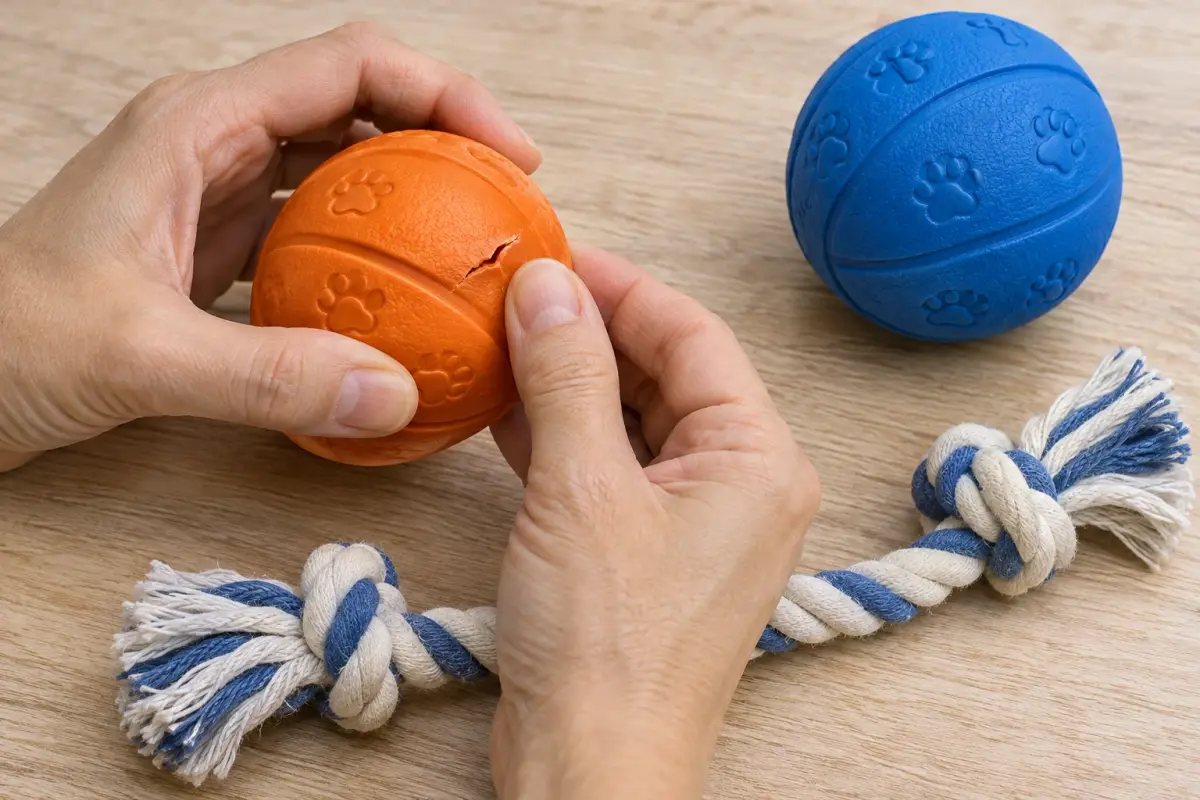
Check toys every few days. VCA Hospitals puts it plainly: if stuffing is showing, rope is frayed or rubber is broken, it is time to retire the toy. A large dog can turn a frayed rope into swallowable strands very quickly, so retire it earlier rather than later.
If your dog suddenly loses interest in play, seems sore when chewing, or is dribbling or pawing at its mouth, that is a reason to call your vet rather than buy another toy. Once you have checked size, strength and condition, browse our interactive dog toys and choose the sturdiest option for your dog's size.
Interactive toy movement and handler roles
| Format | Main activity | What to inspect |
|---|---|---|
| Food puzzle | Finding food behind a mechanism | Parts,size and cleaning access |
| Treat dispenser | Food released as a body moves | Outlet and food compatibility |
| Ball-on-rope or tug | Shared grip and pulling play | Rope ends and connections |
| Launcher | A mechanism projects an object | Exact controls and moving parts |
| Moving toy | A powered or mechanical body moves | Power model and accessible moving pieces |
Common questions
How big should an interactive toy be for a large dog?
It should be too large to fit entirely in your dog's mouth. VCA Hospitals and the AKC both advise sizing up to avoid choking, and large breeds often need larger toys than the standard size.
Are puzzle toys safe for strong chewers?
They can be if the toy is durable and sized for your dog, but strong chewers can destroy weaker ones quickly. Supervise early sessions and remove the toy if your dog is biting off pieces.
How do I know if a toy is too hard?
VCA Hospitals suggests the fingernail test: a toy should be soft enough to dent slightly, and long toys should bend a little. Very hard items such as bones and hooves can chip or fracture teeth.
How often should I replace dog toys?
Replace them as soon as they are damaged. VCA Hospitals says to retire a toy when stuffing shows, rope is frayed or rubber is broken, and inspecting toys every few days catches problems early.
Should I leave interactive toys out all day?
Usually not. Supervise play, and rotate a few toys at a time, because the AKC notes that storing toys and bringing them back later keeps them interesting.
Sources we checked
This guide is general information, not veterinary advice. If your pet is unwell or injured, contact your veterinarian.