






Buying guides
Best Dog Toys for Aggressive Chewers: How to Choose Safely
The best toys for aggressive chewers are tough enough not to come apart, but not so hard they break teeth. That balance rules out a lot of indestructible toys. Choose solid natural rubber or similar material that still dents under a fingernail, size up so the toy cannot fit fully in the mouth, and supervise. No toy is truly indestructible, so the real test is how it fails.
By Matt GarnettUpdated November 14, 20264 min read2 sources
What matters most: tough but not too hard
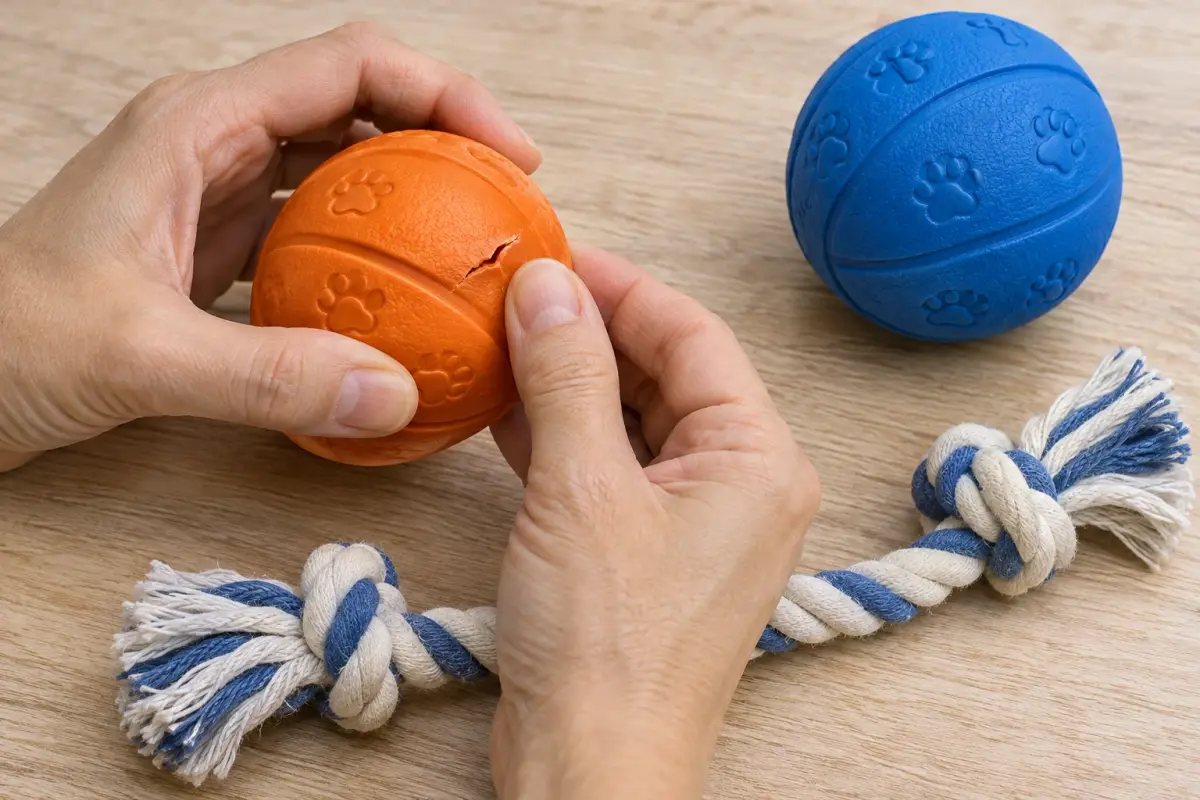
Heavy chewers push owners toward the hardest toy they can find, and that is where teeth get broken. VCA's fingernail rule is the safety check: a chew toy should be soft enough to indent with a fingernail, and a long toy should bend a little between your hands. If it does not give at all, it can fracture a tooth.
Toughness comes from material and thickness instead. Solid, dense rubber with thick walls survives far longer than thin rubber or plush, while still giving under the teeth. Look at how a toy is described for power chewers, then apply the fingernail test yourself.
Materials compared
Natural rubber is the best all-round material for strong chewers: it flexes, bounces and is gentle on teeth, and solid or thick-walled rubber toys last longest. Thermoplastic and synthetic rubber toys are similar and often float. Ballistic nylon and fire-hose fabric tug toys hold up well to tugging but not to dedicated chewing.
Hard nylon bones, antlers, hooves and real bones are the materials most often linked to fractured teeth; VCA lists bones, cow hooves, pig ears, hard rawhides and large ice cubes among items that can chip or break teeth. Plush toys and rope toys rarely last more than minutes with an aggressive chewer, and swallowed rope fibers can cause blockages.
Best type for each chewer
For a dog that chews to pass time, a solid rubber toy that can be stuffed with food keeps it busy and gives it something legal to work on. For a dog that shreds and dissects, skip plush and squeakers entirely, since the squeaker is the first thing it will try to remove and swallow.
For large, powerful breeds, size up beyond the label: a toy that suits a 40 lb dog may be swallowable for a 90 lb one. For puppies, choose puppy-specific rubber, which is softer for developing teeth. For seniors with worn or sore teeth, softer rubber and lick mats are kinder than any hard chew.
Size: the rule that prevents choking
VCA says to choose a toy too large to fit entirely in the dog's mouth, which reduces choking risk. For balls, that means noticeably larger than a tennis ball for big dogs. For bone-shaped toys, the ends should sit outside the mouth when the dog holds it.
As a toy wears down, it gets smaller. A chew that started too big to swallow can become swallowable after weeks of gnawing. Check toy size every week and retire any that has worn down, cracked or lost chunks.
What to avoid
Avoid anything marketed as unbreakable that fails the fingernail test, cooked bones of any kind, antlers, and very hard nylon. Avoid toys with small attached parts, eyes, or squeakers for shredders. Avoid tennis balls for obsessive chewers; their abrasive surface can wear teeth over time.
Avoid leaving a power chewer alone with any new toy. Watch how the first few sessions go. If pieces break off, remove the toy. If your dog vomits, strains, stops eating, or seems painful in the belly after chewing, call your vet the same day, as a swallowed piece can block the gut.
Rotation, care and lifespan
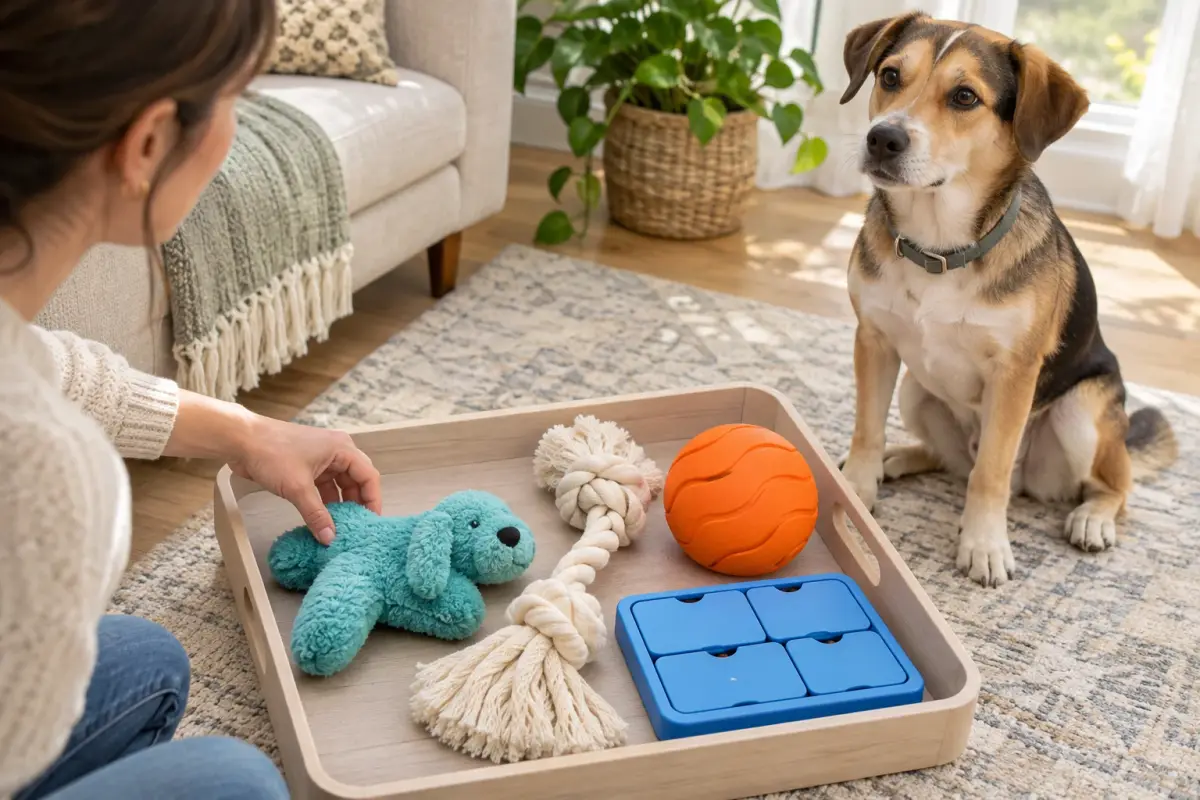
Rotate two or three tough toys rather than leaving one out all the time; it slows wear and keeps interest. Wash rubber toys in warm soapy water or on the top rack of a dishwasher if the maker allows it, and dry stuffed toys thoroughly.
Expect even the toughest toy to be a consumable for a true power chewer. Retire a toy at the first deep crack, torn edge or missing chunk. A dog that breaks every toy within minutes may be bored or anxious, and more exercise, enrichment or a talk with your vet or a trainer can help.
This page is general information, not veterinary advice, and it cannot replace an examination by the vet who knows your pet.
Toy materials and damage to inspect
| Material group | Physical construction | Inspection point |
|---|---|---|
| Natural or synthetic rubber | Flexible molded body | Wall thickness,tears and missing pieces |
| TPR | Thermoplastic rubber-like body | Exact material and surface damage |
| Ballistic or fire-hose fabric | Fabric tug construction | Seams and fabric wear |
| Hard nylon or natural hard chew | Rigid chewing surface | Exact instructions and tooth-risk advice |
| Plush or rope | Fabric shell or braided strands | Loose filling,seams and fraying |
Common questions
What toys are truly indestructible for dogs?
None are. Some solid rubber toys last a very long time, but any toy can be broken by a determined chewer. Choose thick, dense rubber that still dents with a fingernail, and inspect it weekly.
Are nylon bones safe for aggressive chewers?
Very hard nylon toys can fracture teeth. VCA advises the fingernail test: if you cannot dent the toy, it is too hard. Softer, flexible rubber is the safer choice for strong chewers.
What are the best toys for heavy chewers that are puppies?
Puppy-formula rubber toys, which are softer for baby and adult teeth coming in, sized so they cannot be swallowed. Supervise, and avoid hard bones, antlers and nylon until adult teeth are fully in and even then.
Why does my dog destroy every toy?
Some dogs simply love to chew; others shred out of boredom or stress. More exercise, food puzzles and training help. If destruction is sudden or extreme, ask your vet or a qualified trainer for advice.
Sources we checked
This guide is general information, not veterinary advice. If your pet is unwell or injured, contact your veterinarian.


